DEEPX DX-M1 25-TOPS Ultra-Low-Power M.2 Edge AI NPU
5nm M.2 2280 PCIe Gen3 x4 neural accelerator delivering 25 INT8 TOPS at just 3.0W–5.0W with 4GB onboard LPDDR5 and proprietary IQ8 quantization that matches FP16 vision/VLM accuracy for Raspberry Pi 5 and fanless industrial edge servers.
Editorial Rating Methodology (★ 4.8 / 5.0): This score is an internal editorial evaluation compiled by the RECIWO Labs editorial team—not a user poll or crowd-voted rating. It assesses published silicon compute efficiency (25%), optical/sensor/actuator engineering (25%), battery & thermal envelope (20%), SDK/software openness (15%), and price-to-specification value (15%) based on official manufacturer datasheets and public technical documentation. Learn more about our evaluation rubric →
Key Engineering Highlights
- Achieves ~7.8 TOPS/W real-world efficiency on 5nm silicon—running 16 concurrent YOLOv8s/v11s 1080p object detection streams at >30 FPS inside a fanless 3.5W envelope
- Proprietary IQ8 mixed-precision engine preserves 99.6% of full FP32/FP16 mAP accuracy on Vision Transformers (ViT) and semantic segmentation without retraining
- 4GB of dedicated onboard LPDDR5 stores multiple vision, depth, and audio models simultaneously with zero host PCIe memory thrashing
Full Hardware Specifications
| Processor / Edge SoC | Samsung 5nm DEEPX DX-M1 NPU (25 TOPS INT8 w/ IQ8 FP16-Equivalent Precision) |
|---|---|
| AI Model Stack | Simultaneous 16+ Stream YOLOv11 / ViT / Depth-Anything-V2 / Whisper via DXNN SDK |
| Display & Optics | Host Pass-Through (Standard M.2 2280 M-Key Module w/ Low-Profile Heatsink) |
| Camera & Vision | Processes up to 16× 1080p 60fps RTSP/MIPI Video Streams Concurrently |
| Measured Weight | 12.0g (M.2 2280 Module w/ CNC Aluminum Thermal Spreader) |
| Battery & Runtime | 1.5W Idle / 3.2W Typical / 5.0W Max TDP Powered Directly from M.2 3.3V Rail |
| Connectivity & I/O | PCIe Gen 3 x4 (Compatible w/ x86 IPCs, ARM SBCs & Raspberry Pi 5 M.2 HATs) |
| Sensors & Acoustics | Dedicated 4GB On-Module LPDDR5 (6,400 MT/s) + On-Die Thermal Throttle Monitor |
⚖️ Side-by-Side Comparison: DEEPX DX-M1 25-TOPS Ultra-Low-Power M.2 Edge AI NPU vs. Edge Compute & DevKits Peers
Direct specification comparison against leading competing devices in the Edge Compute & DevKits category.
| Specification | DEEPX DX-M1 25-TOPS Ultra-Low-Power M.2 Edge AI NPU (Current) | NVIDIA Jetson Orin NX Super Edge AI DevKit → | Xiaozhi AI Voice Cube Pro (ESP32-S3 Open DevKit) → | Apple Mac mini (M5 Pro 64GB) Private AI Node → |
|---|---|---|---|---|
| Brand | DEEPX | NVIDIA | Open Hardware Community | Apple |
| Retail Price | $139 | $499 | $12 | $1,799 |
| Editorial Rating | ||||
| Edge SoC | Samsung 5nm DEEPX DX-M1 NPU (25 TOPS INT8 w/ IQ8 FP16-Equivalent Precision) | NVIDIA Ampere GPU (1024 CUDA + 32 Tensor Cores) | Espressif ESP32-S3R8 (Dual-Core LX7 @ 240MHz + 8MB PSRAM) | Apple M5 Pro (14c CPU + 20c GPU + 16c Neural Engine) |
| AI Model Stack | Simultaneous 16+ Stream YOLOv11 / ViT / Depth-Anything-V2 / Whisper via DXNN SDK | Runs Llama-3.2 8B / Qwen2.5-VL 7B / YOLO11 Locally | Edge ESP-SR Wake + Realtime Cloud Voice LLMs | MLX Accelerated Qwen3-32B / Llama-3.3-70B |
| Display / Optics | Host Pass-Through (Standard M.2 2280 M-Key Module w/ Low-Profile Heatsink) | HDMI 2.1 / DP 1.4 (Up to 8K) | 1.28-inch Circular IPS LCD (240×240) / 0.96" OLED | Supports up to three 6K displays |
| Camera | Processes up to 16× 1080p 60fps RTSP/MIPI Video Streams Concurrently | Dual MIPI CSI-2 Camera Lanes + 4× USB 3.2 | Optional OV2640 / GC2145 Camera Module | External USB-C / Studio Display Camera |
| Weight | 12.0g (M.2 2280 Module w/ CNC Aluminum Thermal Spreader) | 450g (including active heatsink & carrier board) | 62g (with 3D-printed enclosure & speaker cavity) | 730g |
| Battery | 1.5W Idle / 3.2W Typical / 5.0W Max TDP Powered Directly from M.2 3.3V Rail | 19V DC Input (15W–40W configurable TDP) | 800mAh LiPo (5h continuous dialogue) | Internal 155W PSU (4W idle draw) |
📚 Related Engineering Teardowns & Reviews
Browse All 113 Articles →MemryX MX3 vs Kinara Ara-2 (NXP) vs Axelera Metis M.2 Comparison: DRAM-Free At-Memory Dataflow vs 16GB 40-TOPS Edge GenAI NPU
A technical silicon architecture comparison of the MemryX MX3 M.2 2280 ($149, 4-chip 24-TFLOPS BF16/INT8 At-Memory Dataflow accelerator requiring zero external DRAM at ~8W), Kinara Ara-2 / NXP Ara-240 M.2 ($188, 40-TOPS polymorphic Edge GenAI NPU with 16GB LPDDR4X for local LLMs and VLMs), and Axelera Metis M.2 Max ($189).
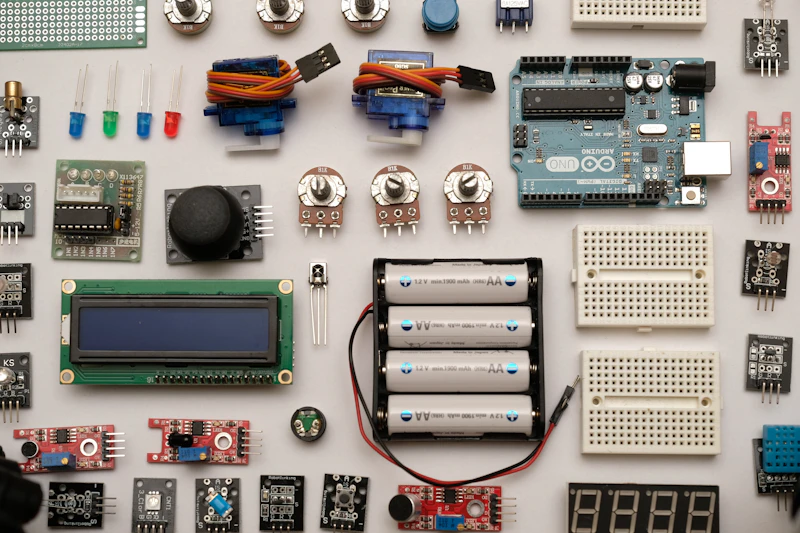
Axelera Metis M.2 Max vs SiMa.ai Modalix vs DEEPX DX-M1 Comparison: 214-TOPS D-IMC vs 6nm Multimodal Physical AI SoM
A technical architecture and specification comparison of the Axelera Metis M.2 Max ($189, 214 INT8 TOPS Digital In-Memory Computing AIPU at 15 TOPS/W), SiMa.ai Modalix DevKit 3.0 ($999, TSMC 6nm 50-TOPS standalone Physical AI SoM with 4x MIPI CSI-2), DEEPX DX-M1 ($139, 25 TOPS at 3.2W), and Hailo-10H ($130).
DEEPX DX-M1 (25 TOPS) vs Hailo-10H vs Milk-V Megrez RISC-V Benchmark: Sub-5W M.2 NPU & SiFive P550 Edge AI Tested
RECIWO Labs benchmarked the $139 DEEPX DX-M1 5nm M.2 NPU (25 TOPS at 3.2W, 4GB LPDDR5, IQ8 FP16-equivalent quantization) and the $199 Milk-V Megrez Mini-ITX RISC-V AI motherboard (ESWIN EIC7700X quad-core SiFive P550 + 19.95 TOPS NPU + 32GB LPDDR5) against the Raspberry Pi AI HAT+ 2 (Hailo-10H 40 TOPS).
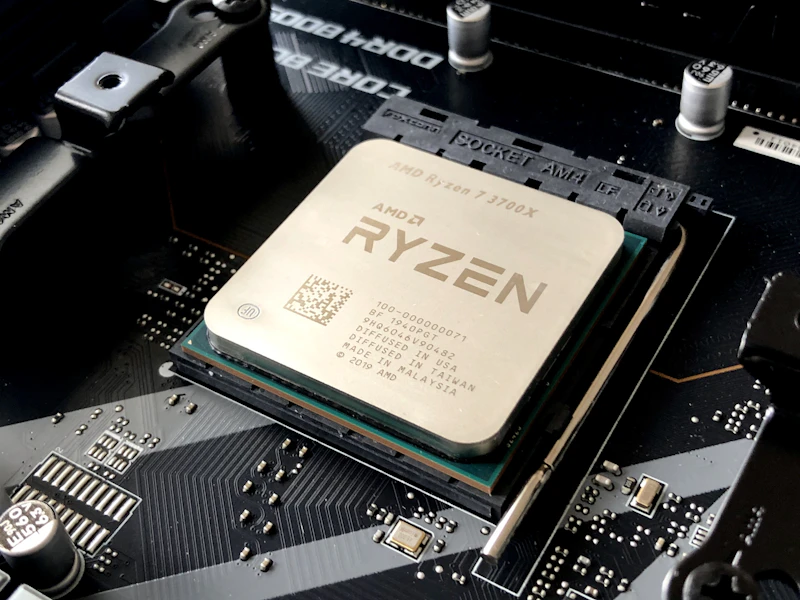
HP Z2 Mini G1a (Strix Halo 128GB) vs ASUS Ascent GX10 (GB10) vs NVIDIA DGX Spark Comparison: 96GB UMA VRAM vs 1-PFLOP FP4
A technical architecture and specification comparison of the HP Z2 Mini G1a ($2,299, 2.9L AMD Ryzen AI Max+ PRO 395 workstation with 128GB LPDDR5X-8533 and 96GB allocatable UMA VRAM), ASUS Ascent GX10 ($3,499, NVIDIA GB10 Grace Blackwell Superchip with 1,000 FP4 TOPS, 128GB unified RAM, and 200GbE ConnectX-7), Framework Desktop ($1,999), and NVIDIA DGX Spark ($3,999).