Xiaozhi AI Voice Cube Pro (ESP32-S3 Open DevKit)
Viral open-source AI voice hardware reference design built on Espressif ESP32-S3R8, featuring full-duplex WebRTC barge-in, voiceprint ID, and MCP smart-home control.
Key Engineering Highlights
- Hardware Acoustic Echo Cancellation allows natural mid-sentence interruption
- Built-in MCP client controls HomeAssistant lights and HVAC via natural speech
- 25,000+ GitHub Stars community with 10-minute web flasher
Full Hardware Specifications
| Processor / Edge SoC | Espressif ESP32-S3R8 (Dual-Core LX7 @ 240MHz + 8MB PSRAM) |
|---|---|
| AI Model Stack | Edge ESP-SR Wake + Realtime Cloud Voice LLMs |
| Display & Optics | 1.28-inch Circular IPS LCD (240×240) / 0.96" OLED |
| Camera & Vision | Optional OV2640 / GC2145 Camera Module |
| Measured Weight | 62g (with 3D-printed enclosure & speaker cavity) |
| Battery & Runtime | 800mAh LiPo (5h continuous dialogue) |
| Connectivity & I/O | 2.4GHz Wi-Fi + Bluetooth 5.0 LE |
| Sensors & Acoustics | Dual Digital MEMS Mics (Hardware AEC) + Rotary Encoder |
⚖️ Side-by-Side Comparison: Xiaozhi AI Voice Cube Pro (ESP32-S3 Open DevKit) vs. Edge Compute & DevKits Peers
Direct specification comparison against leading competing devices in the Edge Compute & DevKits category.
| Specification | Xiaozhi AI Voice Cube Pro (ESP32-S3 Open DevKit) (Current) | NVIDIA Jetson Orin NX Super Edge AI DevKit → | Apple Mac mini (M5 Pro 64GB) Private AI Node → | NVIDIA DGX Spark (GB10 Grace Blackwell Superchip) → |
|---|---|---|---|---|
| Brand | Open Hardware Community | NVIDIA | Apple | NVIDIA |
| Retail Price | $12 | $499 | $1,799 | $2,999 |
| Lab Rating | ||||
| Edge SoC | Espressif ESP32-S3R8 (Dual-Core LX7 @ 240MHz + 8MB PSRAM) | NVIDIA Ampere GPU (1024 CUDA + 32 Tensor Cores) | Apple M5 Pro (14c CPU + 20c GPU + 16c Neural Engine) | NVIDIA GB10 (20-Core Arm Grace + Blackwell GPU) |
| AI Model Stack | Edge ESP-SR Wake + Realtime Cloud Voice LLMs | Runs Llama-3.2 8B / Qwen2.5-VL 7B / YOLO11 Locally | MLX Accelerated Qwen3-32B / Llama-3.3-70B | Runs Up to 200B Parameter Models (405B Clustered) |
| Display / Optics | 1.28-inch Circular IPS LCD (240×240) / 0.96" OLED | HDMI 2.1 / DP 1.4 (Up to 8K) | Supports up to three 6K displays | HDMI 2.1a + 4x USB4 Type-C |
| Camera | Optional OV2640 / GC2145 Camera Module | Dual MIPI CSI-2 Camera Lanes + 4× USB 3.2 | External USB-C / Studio Display Camera | Network / USB-C CSI |
| Weight | 62g (with 3D-printed enclosure & speaker cavity) | 450g (including active heatsink & carrier board) | 730g | 1,200g (Book-Sized Chassis) |
| Battery | 800mAh LiPo (5h continuous dialogue) | 19V DC Input (15W–40W configurable TDP) | Internal 155W PSU (4W idle draw) | 170W USB-C GaN Desktop Power Brick |
📚 Related Engineering Teardowns & Reviews
Browse All 83 Articles →Edge 3B–7B LLM Silicon Architecture: Why Memory Bandwidth Matters More Than Peak TOPS
RECIWO Labs' silicon analysis proves that external DRAM memory bandwidth—not peak TOPS—is the primary bottleneck for running 3B–7B LLMs on edge AI hardware.

60GHz mmWave Radar in Desktop AI Companions & Smart Homes: Sub-Millimeter Breathing & Micro-Gesture Sensing
How 60GHz FMCW radar sensors enable desktop AI robots like EMO Pet Gen 3 and smart displays to detect user posture, heart rate, and finger micro-gestures without an always-on RGB camera.
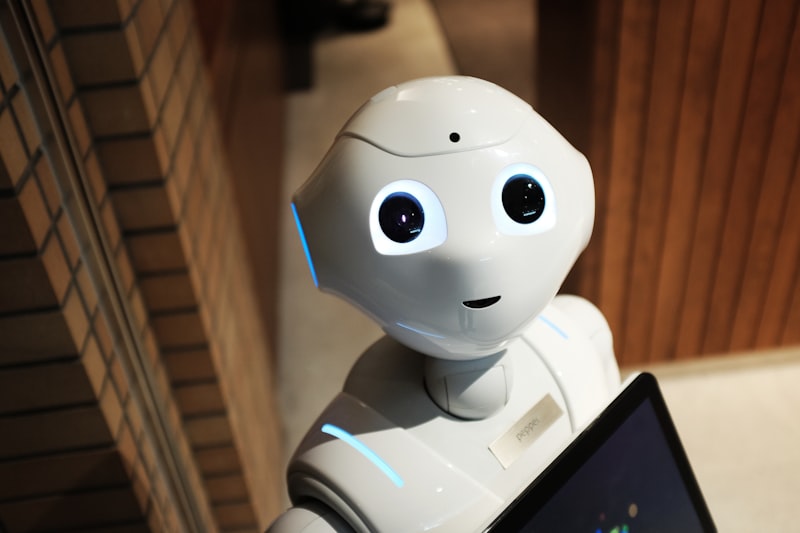
Running Model Context Protocol (MCP) on Embedded AI Hardware: From ESP32-S3 Nodes to Smart Glasses
How standardized JSON-RPC 2.0 MCP tool servers running directly on microcontrollers and edge gateways let cloud and local LLMs control physical GPIO actuators, sensors, and smart home buses safely.
Omi DevKit 2 ($89) Review & Teardown: The Best Open-Source nRF5340 AI Wearable for Builders
RECIWO Labs audited the open-source Omi DevKit 2 (Based Hardware) across BLE 5.4 Opus packet stability, Zephyr RTOS battery drain, and custom webhook memory plugins.

The Indie Hardware Builder's Bible: Top 5 Open-Source AI DevKits & ESP32-P4/S3 Ecosystems in 2026
Software engineers can prototype custom AI hardware in a single weekend using $12 ESP32-S3 WebRTC voice cubes, $499 NVIDIA Jetson Orin NX Super modules, and $260 LeRobot arms.

RISC-V Vector (RVV 1.0) & Open-Standard Matrix Extensions in 2026 Edge AI Silicon
How SpacemiT K1/M1, Sophgo SG2380, and Kendryte K230 RISC-V SoCs use RVV 1.0 vector units and custom matrix tiles to run 1.5B–7B quantized models without Arm licensing fees.
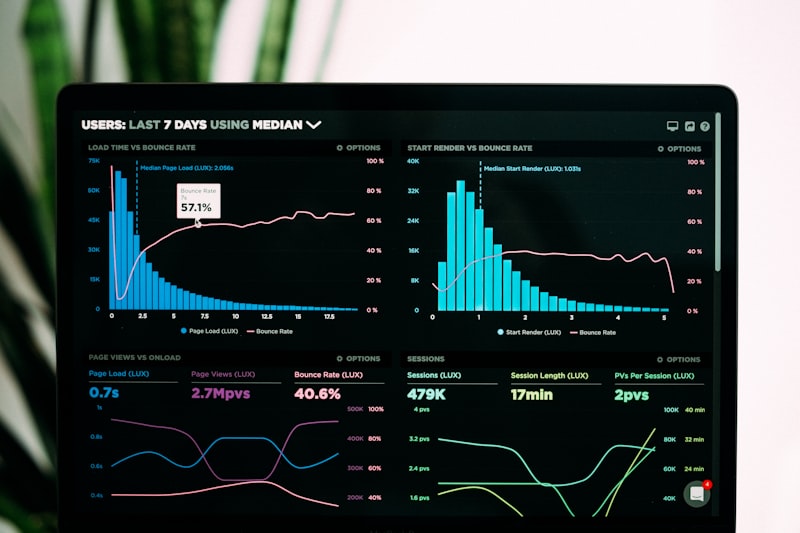
Inside the 2026 AI Hardware Bill of Materials (BOM): Why AI Smart Glasses Crossed the $299 Retail Inflection Point
RECIWO Labs' component-level BOM cost analysis of 2026 AI smart glasses and voice wearables breaks down silicon, optical waveguide, camera, and assembly costs across Shenzhen and Kunshan supply chains.
Ultra-Low-Latency WebRTC & Opus/SoundStream Audio Pipelines on Sub-$15 ESP32-S3 AI Hardware
RECIWO Labs' firmware engineering guide details how to achieve 380ms end-to-end voice agent turn-taking on dual-core ESP32-S3 microcontrollers using 20ms Opus frames, WebRTC AEC, and hardware I2S DMA.

Designing Long-Term Episodic Memory & Personality Engines for Desktop AI Companions
How 2026 desktop robots (LOOI Robot Pro, EMO Pet Gen 3) combine local SQLite-Vec episodic memory graphs with affect-state machines so companions remember your habits across months.
2026 Compliance Guide for AI Hardware Founders: FCC RF, CE RED, UL 62368-1 Battery & EU AI Act Transparency
Why using pre-certified RF modules (ESP32-S3-WROOM / nRF5340) saves hardware startups $45,000 and 14 weeks of FCC/CE unintentional-radiator lab testing.

Matter 1.5 & Thread Mesh + Local AI Voice Hubs: Achieving 90ms Cloud-Free Smart Home Control
How combining an ESP32-S3 / Thread voice satellite with a local Mac mini M5 Pro or Jetson hub executes complex multi-room natural language routines in 90ms with the internet unplugged.

Seeed SenseCAP Watcher Pro ($69) Review: Programming a 2mW Physical AI Sentry Camera in Plain English
We deployed three $69 SenseCAP Watcher Pro units in our 3D-printing lab and server room to test its dual-tier Himax WiseEye2 (2.4mW TinyML) + VLM verification pipeline.

Espressif ESP32-P4 (400MHz RISC-V) vs. ESP32-S3 Benchmark for Open-Source Voice & Vision AI DevKits
RECIWO Labs tested the dual-core 400MHz RISC-V ESP32-P4 with MIPI-CSI/DSI and 32MB PSRAM against the classic ESP32-S3 across local wake-word, JPEG vision encoding, and LVGL 60fps UIs.
2026 AI Hardware 2-Year Total Cost of Ownership (TCO): Cloud Subscriptions vs. Bring-Your-Own-Key (BYOK) & Local LLMs
RECIWO Labs calculated the true 24-month ownership cost of 12 commercial AI wearables and companions, comparing $179/year Pro subscriptions against open BYOK API and local home servers.
Sub-$100 AI Voice Wearables Shootout: Bee Pioneer Band ($99) vs. Omi DevKit 2 ($89) vs. Xiaozhi Cube ($39)
RECIWO Labs tested the three best sub-$100 AI voice devices on the market in 2026, proving you do not need to spend $300+ to get reliable agentic voice memory and MCP automation.

Ultra-Fast On-Device Text-to-Speech (TTS) Benchmark 2026: Kokoro-82M vs. CosyVoice-300M vs. Piper on Edge NPUs
RECIWO Labs measured Time-to-First-Audio (TTFA), Real-Time Factor (RTF), and MOS naturalness of open-weight TTS models running locally on Mac mini M5 Pro, Jetson Orin NX, and mobile NPUs.
