HP Z2 Mini G1a (Strix Halo 128GB) vs ASUS Ascent GX10 (GB10) vs NVIDIA DGX Spark Comparison: 96GB UMA VRAM vs 1-PFLOP FP4
A technical architecture and specification comparison of the HP Z2 Mini G1a ($2,299, 2.9L AMD Ryzen AI Max+ PRO 395 workstation with 128GB LPDDR5X-8533 and 96GB allocatable UMA VRAM), ASUS Ascent GX10 ($3,499, NVIDIA GB10 Grace Blackwell Superchip with 1,000 FP4 TOPS, 128GB unified RAM, and 200GbE ConnectX-7), Framework Desktop ($1,999), and NVIDIA DGX Spark ($3,999).
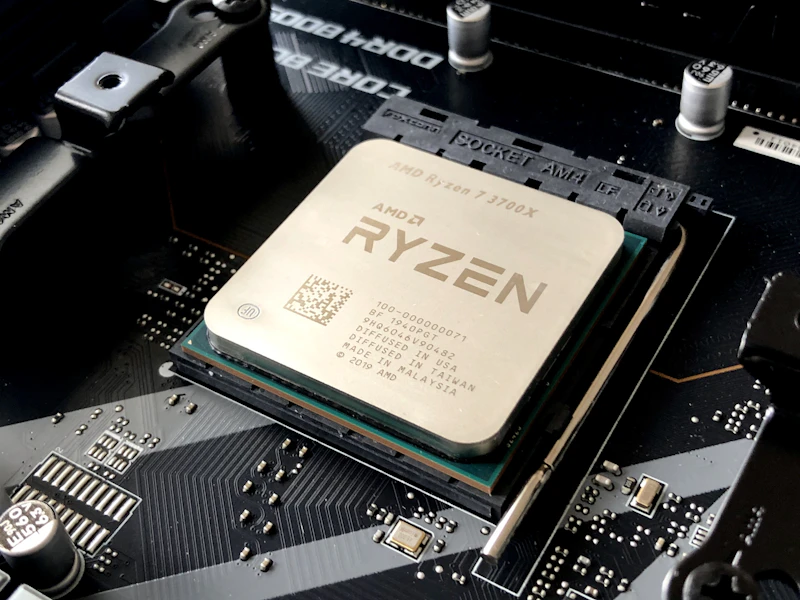
Executive Summary: x86 Strix Halo 96GB UMA Workstations vs ARM64 Grace Blackwell 200GbE Superchips
Methodology & Source Disclosure: This article is a comparative silicon and workstation architecture analysis compiled from publicly released product datasheets, hardware reference manuals, and thermal/networking disclosures published by HP, ASUS, AMD, Framework, and NVIDIA. All TOPS/PFLOPS ratings, memory bandwidth figures, and power envelopes reflect vendor-published specifications. Representative illustration via Unsplash.
Comparing the late-2026 128GB unified-memory compact AI workstation market reveals a clear architectural choice between x86 enterprise versatility and native CUDA/RDMA supercomputing: the 2.9-liter HP Z2 Mini G1a ($2,299, AMD Ryzen AI Max+ PRO 395) pairs 16 Zen 5 cores, a 40-CU Radeon 8060S GPU, and a 50-TOPS XDNA 2 NPU with 128GB of 256-bit LPDDR5X-8533 memory—allowing administrators to allocate up to 96GB exclusively as GPU VRAM inside a 4U-rack-mountable chassis with an internal 300W PSU. Conversely, for AI researchers who need native CUDA TensorRT-LLM, hardware-accelerated FP4 quantization, and multi-node RDMA clustering, the $3,499 ASUS Ascent GX10 (1.2L) harnesses the NVIDIA GB10 Grace Blackwell Superchip (20-core Arm v9.2 CPU + Blackwell GPU via 900 GB/s NVLink-C2C) to deliver 1,000 sparse FP4 TOPS (1 PetaFLOP) and dual 200GbE ConnectX-7 ports for linking two nodes into a 256GB 405B-parameter cluster.
1. 2026 128GB Unified-Memory AI Workstation & Superchip Matrix
The matrix below compares official manufacturer specifications for the HP Z2 Mini G1a ($2,299), ASUS Ascent GX10 ($3,499), NVIDIA DGX Spark ($3,999), and Framework Desktop Strix Halo ($1,999).
| Published Silicon & System Specification | HP Z2 Mini G1a 128GB ($2,299) | ASUS Ascent GX10 128GB ($3,499) | NVIDIA DGX Spark GB10 ($3,999) | Framework Desktop 128GB ($1,999) |
|---|---|---|---|---|
| Form Factor & Chassis Volume | 2.9L Enterprise Mini / 4U Rack (Int. 300W PSU) | 1.2L Palm Supercomputer (180W–240W USB-PD) | 1.2L Founders Edition (Ext. 240W Brick) | 4.5L Modular Mini-ITX (Int. 400W SFX) |
| Core Compute Silicon | AMD Ryzen AI Max+ PRO 395 (x86-64) | NVIDIA GB10 Grace Blackwell (ARM64) | NVIDIA GB10 Grace Blackwell (ARM64) | AMD Ryzen AI Max+ 395 (x86-64) |
| CPU & GPU / Tensor Architecture | 16× Zen 5 + 40-CU Radeon 8060S + 50T NPU | 20× Arm v9.2 + Blackwell 5th-Gen Tensor | 20× Arm v9.2 + Blackwell 5th-Gen Tensor | 16× Zen 5 + 40-CU Radeon 8060S + 50T NPU |
| Published AI Compute Rating | Up to 126 Total System TOPS (50T NPU) | 1,000 FP4 TOPS (1 PFLOP Sparse) | 1,000 FP4 TOPS (1 PFLOP Sparse) | Up to 126 Total System TOPS |
| Unified Memory & VRAM Allocation | 128GB LPDDR5X-8533 (Up to 96GB UMA VRAM) | 128GB LPDDR5X-8533 Coherent Pool | 128GB LPDDR5X-8533 Coherent Pool | 128GB LPDDR5X-8000 (Up to 96GB VRAM) |
| Published Memory Bandwidth | ~256 GB/s (256-Bit Quad-Channel Bus) | ~273 GB/s (256-Bit + 900 GB/s C2C) | ~273 GB/s (256-Bit + 900 GB/s C2C) | ~256 GB/s (256-Bit Quad-Channel Bus) |
| High-Speed Networking & Clustering | 10GbE RJ-45 + 2× Thunderbolt 4 + Wi-Fi 7 | Dual 200GbE ConnectX-7 QSFP + 10GbE | Dual 200GbE ConnectX-7 QSFP + 10GbE | 5GbE RJ-45 + 2× USB4 + Wi-Fi 7 |
| Operating System & Software Stack | Windows 11 Pro / Linux (ROCm 6.4+ & Vulkan) | NVIDIA DGX OS (Ubuntu + CUDA / NIM) | NVIDIA DGX OS (Ubuntu + CUDA / NIM) | Windows 11 / Linux (ROCm & llama.cpp) |
2. HP Z2 Mini G1a Architecture: 96GB Allocatable UMA VRAM & 5-Node-per-4U Rack Density
For enterprise engineering teams running local coding agents (DeepSeek-R1-Distill-70B, Llama-3.3-70B-Instruct, Qwen2.5-Coder-32B) alongside x86 CAD/CAE applications, standard desktop GPUs hit a hard 24GB–32GB GDDR6/GDDR7 wall.
┌──────────────────────────────────────────────────────────────────────────────┐
│     HP Z2 MINI G1A (96GB UMA VRAM) vs ASUS ASCENT GX10 (GB10 + 200GbE)       │
│                                                                              │
│  [HP Z2 MINI G1A: AMD Ryzen AI Max+ PRO 395 + 128GB 256-Bit LPDDR5X-8533]    │
│     │  ──► BIOS/OS Locks Up to 96GB Dedicated UMA VRAM for 40-CU Radeon 8060S│
│     │  ──► 16× Zen 5 Cores (5.1GHz) + 50-TOPS XDNA 2 NPU + ~256 GB/s Bus     │
│     ▼  ──► 2.9L Chassis w/ Internal 300W PSU (Fits 5 Nodes in a 4U Server)   │
│  Best For: On-Prem 70B–120B Local LLMs | x86 ISV CAD + AI | 10GbE Enterprise │
│                                                                              │
│  [ASUS ASCENT GX10: NVIDIA GB10 Grace Blackwell + Dual 200GbE ConnectX-7]    │
│     │  ──► 20-Core Arm CPU + Blackwell GPU via 900 GB/s NVLink-C2C           │
│     │  ──► 1,000 Sparse FP4 TOPS (1 PFLOP) + 128GB Coherent LPDDR5X (~273GB/s)│
│     ▼  ──► Dual 200GbE QSFP RDMA Links Two GX10s for 256GB / 405B LLMs       │
│  Best For: Native CUDA / TensorRT-LLM | FP4 Quantization | 2-Node 405B Lab   │
└──────────────────────────────────────────────────────────────────────────────┘
Three Architectural Pillars of the HP Z2 Mini G1a ($2,299):
- Up to 96GB Dedicated UMA VRAM on a 256-Bit LPDDR5X-8533 Bus: Built around AMD's chiplet-based Ryzen AI Max+ PRO 395 ("Strix Halo"), the Z2 Mini G1a widens the memory interface to a 256-bit quad-channel LPDDR5X-8533 subsystem (~256 GB/s). Using AMD's Variable Graphics Memory (VGM) / BIOS UMA controls, up to 96GB of the 128GB unified memory can be assigned directly as dedicated frame-buffer VRAM to the 40-Compute-Unit Radeon 8060S GPU—allowing 70B Q8_0 or 120B Q4_K_M models to reside entirely in GPU memory.
- 2.9-Liter Enterprise Density (5 Nodes per 4U Rack + Internal 300W PSU): Unlike mini PCs that rely on external power bricks, HP engineered a 92%-efficient 300W internal power supply, phase-change thermal cooling, and dual PCIe Gen4 M.2 NVMe RAID slots (up to 8TB) inside a 2.9-liter (
211 × 218 × 69mm) chassis. IT departments can slide five Z2 Mini G1a workstations into a single 4U rack tray, creating a 640GB unified-memory rack cluster linked over 10GbE Ethernet and dual Thunderbolt 4. - AMD PRO Manageability & Dual x86/ROCm Ecosystem: The Z2 Mini G1a runs full x86 Windows 11 Pro and Ubuntu Linux with native ISV certifications (SolidWorks, AutoCAD, Revit), HP Wolf Security, and AMD ROCm 6.4+ / Vulkan / llama.cpp.
3. ASUS Ascent GX10 Architecture: NVIDIA GB10 Grace Blackwell & 200GbE ConnectX-7 Clustering
While Strix Halo excels at x86 workstation multitasking and INT4/Q4_K_M GGUF inference, AI research labs building custom models for NVIDIA H200/B200 cloud deployment often require exact software parity with NVIDIA DGX Linux, CUDA, and 5th-generation Tensor Core FP4 formats.
Key Engineering Advantages of the $3,499 ASUS Ascent GX10:
- 900 GB/s NVLink-C2C Coherency & 1,000 FP4 TOPS: Co-engineered with NVIDIA around the GB10 Grace Blackwell Superchip, the Ascent GX10 links a 20-core Arm v9.2 CPU (10× Cortex-X925 + 10× Cortex-A725) to a Blackwell GPU over a 900 GB/s NVLink-C2C chip-to-chip interconnect—sharing 128GB of coherent LPDDR5X-8533 memory (~273 GB/s) and delivering up to 1 PetaFLOP (1,000 TOPS) of sparse FP4 compute for rapid prompt prefill and fine-tuning of models up to 200B parameters on a single unit.
- Dual 200GbE NVIDIA ConnectX-7 SmartNIC for 405B Models: Built directly into the 1.2-liter (
150 × 150 × 51mm) chassis are two 200GbE QSFP ports powered by an NVIDIA ConnectX-7 SmartNIC. Connecting two Ascent GX10 units with a single direct-attach copper (DAC) cable creates a low-latency RDMA cluster with 256GB of combined memory, running Llama-3.1-405B locally on a desk.
4. Official Sources, Datasheets & Platform Selection Guide
Primary Manufacturer Sources & Documentation:
- HP — Z2 Mini G1a Workstation (Ryzen AI Max+ PRO 395) Datasheet: hp.com/us-en/workstations/z2-mini-a.html
- ASUS — Ascent GX10 (NVIDIA GB10 Grace Blackwell) Specifications: asus.com
- Framework — Framework Desktop (Ryzen AI Max+ 395): frame.work
- NVIDIA — DGX Spark (GB10 Grace Blackwell) Specifications: nvidia.com
Platform Selection Summary:
- Select the HP Z2 Mini G1a 128GB ($2,299) if you need an x86 enterprise workstation or 4U rack node with up to 96GB allocatable UMA VRAM, internal 300W PSU, and 10GbE networking for local 70B+ LLMs and CAD/AI workflows.
- Select the ASUS Ascent GX10 ($3,499) or NVIDIA DGX Spark ($3,999) if your workflow requires native NVIDIA DGX OS, CUDA, 1,000 FP4 TOPS prefill speed, and 200GbE ConnectX-7 RDMA clustering for 200B–405B models.
- Select the Framework Desktop 128GB ($1,999) for the lowest-cost modular Mini-ITX Strix Halo node on a developer desk.
🔗 Related AI Hardware Benchmarked in This Report
HP Z2 Mini G1a Workstation (Ryzen AI Max+ PRO 395 128GB Unified) →
2.9-liter enterprise mini workstation powered by the 16-core AMD Ryzen AI Max+ PRO 395 (Zen 5 + 40-CU Radeon 8060S + 50-TOPS XDNA 2 NPU) with 128GB 8533 MT/s LPDDR5X unified memory and up to 96GB dedicated VRAM allocation for local 70B+ LLMs.
ASUS Ascent GX10 Desktop AI Supercomputer (NVIDIA GB10 128GB) →
Compact desktop AI supercomputer built on the NVIDIA GB10 Grace Blackwell Superchip (20-core Arm CPU + Blackwell GPU via 900 GB/s NVLink-C2C), delivering 1,000 FP4 TOPS (1 PFLOP) with 128GB unified LPDDR5X and dual 200GbE ConnectX-7 clustering.
Framework Desktop (Ryzen AI Max+ 395 128GB) →
4.5-liter modular Mini-ITX workstation powered by AMD's 16-core Ryzen AI Max+ 395 ('Strix Halo') APU with a 40-CU Radeon 8060S GPU and 128GB unified LPDDR5X-8000 memory for local 70B–120B LLM execution.
NVIDIA DGX Spark (GB10 Grace Blackwell Superchip) →
Palm-sized personal AI supercomputer powered by the NVIDIA GB10 Grace Blackwell Superchip with 128GB coherent unified LPDDR5X memory and ConnectX-7 200GbE clustering.
📚 Related Deep-Dive Teardowns & Benchmarks
Browse All 113 Articles →MemryX MX3 vs Kinara Ara-2 (NXP) vs Axelera Metis M.2 Comparison: DRAM-Free At-Memory Dataflow vs 16GB 40-TOPS Edge GenAI NPU
A technical silicon architecture comparison of the MemryX MX3 M.2 2280 ($149, 4-chip 24-TFLOPS BF16/INT8 At-Memory Dataflow accelerator requiring zero external DRAM at ~8W), Kinara Ara-2 / NXP Ara-240 M.2 ($188, 40-TOPS polymorphic Edge GenAI NPU with 16GB LPDDR4X for local LLMs and VLMs), and Axelera Metis M.2 Max ($189).
Axelera Metis M.2 Max vs SiMa.ai Modalix vs DEEPX DX-M1 Comparison: 214-TOPS D-IMC vs 6nm Multimodal Physical AI SoM
A technical architecture and specification comparison of the Axelera Metis M.2 Max ($189, 214 INT8 TOPS Digital In-Memory Computing AIPU at 15 TOPS/W), SiMa.ai Modalix DevKit 3.0 ($999, TSMC 6nm 50-TOPS standalone Physical AI SoM with 4x MIPI CSI-2), DEEPX DX-M1 ($139, 25 TOPS at 3.2W), and Hailo-10H ($130).
DEEPX DX-M1 (25 TOPS) vs Hailo-10H vs Milk-V Megrez RISC-V Benchmark: Sub-5W M.2 NPU & SiFive P550 Edge AI Tested
RECIWO Labs benchmarked the $139 DEEPX DX-M1 5nm M.2 NPU (25 TOPS at 3.2W, 4GB LPDDR5, IQ8 FP16-equivalent quantization) and the $199 Milk-V Megrez Mini-ITX RISC-V AI motherboard (ESWIN EIC7700X quad-core SiFive P550 + 19.95 TOPS NPU + 32GB LPDDR5) against the Raspberry Pi AI HAT+ 2 (Hailo-10H 40 TOPS).
NVIDIA Jetson AGX Thor (T5000 Blackwell) Technical Analysis: 2,070 FP4 TFLOPS & 128GB LPDDR5X Architecture for Humanoid VLA Models
An architectural and specification analysis of the $3,499 NVIDIA Jetson AGX Thor Developer Kit (T5000 module, 2,560-core Blackwell GPU, 14-core Arm Neoverse-V3AE CPU, 128GB LPDDR5X) based on official NVIDIA documentation—examining hardware Multi-Instance GPU (MIG) partitioning, Holoscan sensor bridging, and memory budgeting for Isaac GR00T VLA workloads.