MemryX MX3 vs Kinara Ara-2 (NXP) vs Axelera Metis M.2 Comparison: DRAM-Free At-Memory Dataflow vs 16GB 40-TOPS Edge GenAI NPU
A technical silicon architecture comparison of the MemryX MX3 M.2 2280 ($149, 4-chip 24-TFLOPS BF16/INT8 At-Memory Dataflow accelerator requiring zero external DRAM at ~8W), Kinara Ara-2 / NXP Ara-240 M.2 ($188, 40-TOPS polymorphic Edge GenAI NPU with 16GB LPDDR4X for local LLMs and VLMs), and Axelera Metis M.2 Max ($189).
Executive Summary: DRAM-Free Cascaded SRAM Dataflow vs 16GB On-Module Generative AI NPUs
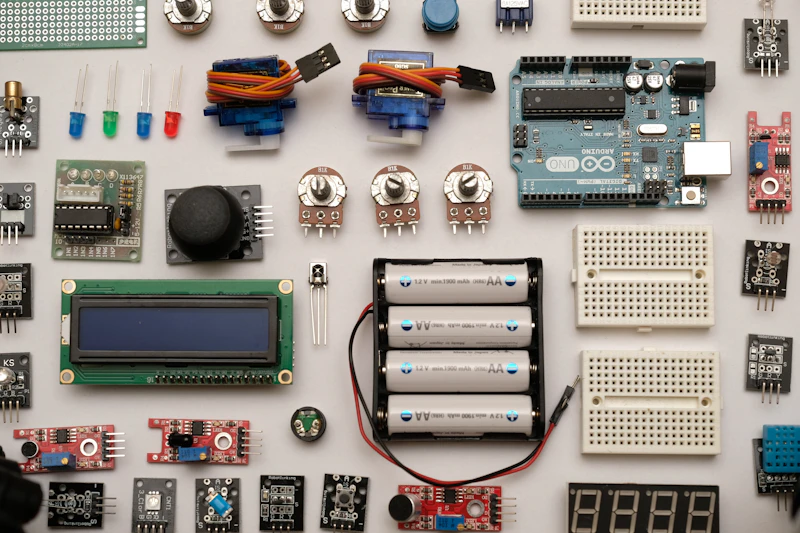
Methodology & Source Disclosure: This article is a comparative silicon architecture and datasheet analysis compiled from publicly released whitepapers, hardware reference manuals, and SDK documentation published by MemryX, Kinara / NXP Semiconductors, Axelera AI, and DEEPX. All TOPS/TFLOPS ratings, memory topologies, and power figures reflect vendor-published specifications. Representative illustration via Unsplash.
Comparing the late-2026 M.2 2280 PCIe edge AI accelerator ecosystem exposes a sharp architectural divide between DRAM-free spatial dataflow pipelines for real-time computer vision and high-capacity LPDDR-backed NPUs for local Generative AI: the $149 MemryX MX3 M.2 module (MX3-2280-M-4) cascades four proprietary MX3 chips in a pure At-Memory Dataflow pipeline—delivering 24 TFLOPS/TOPS of mixed BF16/INT8 compute at ~8W total card power (~2W per chip) with zero external DRAM chips on the PCB. Conversely, for edge gateways that must hold multi-billion-parameter Large Language Models (Llama-3, Phi-3) and Vision-Language Models (LLaVA) in dedicated memory, the $188 Kinara Ara-2 (NXP Ara-240) M.2 module pairs a 40-TOPS polymorphic dataflow NPU with up to 16GB of on-module LPDDR4X DRAM over PCIe Gen4 x4 within a 3W–10W configurable thermal envelope.
1. M.2 2280 Edge AI NPU Accelerator Specification Matrix (Official Datasheets)
The matrix below compares official published specifications for the MemryX MX3 M.2 ($149), Kinara Ara-2 / NXP Ara-240 M.2 ($188), Axelera Metis M.2 Max ($189), and DEEPX DX-M1 ($139).
| Published Silicon & Module Metric | MemryX MX3 M.2 (MX3-2280-M-4, $149) | Kinara Ara-2 / NXP Ara-240 ($188) | Axelera Metis M.2 Max ($189) | DEEPX DX-M1 M.2 ($139) |
|---|---|---|---|---|
| Chip Count & Compute Topology | 4× Cascaded MX3 At-Memory Dataflow | 1× Ara-2 Polymorphic GenAI NPU | 1× Metis AIPU (4× D-IMC + RISC-V) | 1× 5nm DX-M1 IQ8 NPU |
| Published Peak Compute | 24 TFLOPS / TOPS (6 TOPS × 4 Chips) | 40 TOPS (INT8 / FP16 Mixed GenAI) | Up to 214 INT8 TOPS | 25 INT8 TOPS |
| Numerical Precision Support | BF16 Activations + INT4/INT8/INT16 Weights | INT8 / INT16 / FP16 Polymorphic MACs | INT8 Digital In-Memory + FP16 | IQ8 (INT8 w/ FP32-Class Accuracy) |
| External On-Module DRAM | Zero External DRAM (100% On-Die SRAM) | Up to 16GB On-Module LPDDR4X | Dedicated LPDDR4X/5 + 32MB SRAM | 4GB On-Module LPDDR5 |
| PCIe Host Interface | PCIe Gen 3 (2×2-Lane) M.2 2280 M-Key | PCIe Gen 4 x4 M.2 2280 M-Key | PCIe Gen 3 x4 M.2 2280 M-Key | PCIe Gen 3 x4 M.2 2280 M-Key |
| Published Card Power Envelope | ~8.0W Typical (~2.0W/Chip, 14W Max) | ~3.0W Typical (8.0W–12.0W Full TDP) | 3.5W–9.0W (~6.5W Typical) | 3.0W–5.0W (~3.2W Typical) |
| Primary Workload Sweet Spot | Multi-Stream Vision (42M–80M Params) | 7B LLMs, ViTs & Multimodal VLMs | High-FPS Vision (3,200 FPS ResNet) | 16-Channel 1080p YOLOv11 Vision |
2. MemryX MX3 Architecture: How DRAM-Free At-Memory Spatial Dataflow Eliminates the von Neumann Bottleneck
In conventional NPU cards, fetching weights and writing intermediate feature maps to external LPDDR4X/LPDDR5 DRAM consumes 40% to 60% of the total board power and introduces unpredictable memory-bus contention when running multiple camera streams.
┌──────────────────────────────────────────────────────────────────────────────┐
│     MEMRYX MX3 (DRAM-FREE 4-CHIP DATAFLOW) vs KINARA ARA-2 (16GB GENAI NPU)  │
│                                                                              │
│  [MEMRYX MX3 M.2: 4× Cascaded MX3 Chips · Zero External DRAM Required]       │
│     │  ──► All 42M–80M Model Weights Stored Permanently in On-Die SRAM       │
│     │  ──► Activations Stream in BF16 Floating-Point from Chip 1 ──► Chip 4  │
│     ▼  ──► 24 TFLOPS/TOPS @ ~8W Total Power · Zero Retraining Compiler       │
│  Best For: Low-Latency Multi-Model Vision | Industrial Defect & Pose Graphs  │
│                                                                              │
│  [KINARA ARA-2 (NXP ARA-240): 40-TOPS Polymorphic NPU + 16GB LPDDR4X]        │
│     │  ──► Dedicated Matrix + Vector Engines Optimized for Self-Attention    │
│     │  ──► 16GB On-Card LPDDR4X Holds Full Quantized 7B LLMs & VLM Weights   │
│     ▼  ──► PCIe Gen4 x4 Host Link · 3W–10W Thermal Budget for Edge Boxes     │
│  Best For: Local Llama-3 / Phi-3 / LLaVA Agents | Smart Retail & Medical AI  │
└──────────────────────────────────────────────────────────────────────────────┘
Three Architectural Innovations of the MemryX MX3 (MX3-2280-M-4):
- 100% On-Die SRAM Weight Storage (Zero External DRAM): Rather than timesharing a single MAC array by swapping layers in and out of external DRAM, the MemryX MX3 M.2 card links four MX3 chips over a deterministic chip-to-chip dataflow bus. Up to 42M to 80M parameters (such as multi-model ensembles of YOLOv8/v11, DepthAnything, and pose estimators) remain permanently resident inside on-die SRAM across the four chips. Frames enter Chip 1 and stream layer-by-layer through Chip 4 in a spatial pipeline—delivering deterministic microsecond latency and 24 TFLOPS/TOPS at ~8W (~2W per chip).
- BFloat16 (BF16) Activations with Mixed-Precision INT4/8/16 Weights: To prevent the accuracy drop often seen in naive INT8 post-training quantization, MX3 processes all feature-map activations in 16-bit floating point (BF16) while compressing weights to INT4, INT8, or INT16.
- Push-Button Compilation for 1,000+ Models: Because BF16 activations preserve dynamic range, the MemryX SDK compiles standard ONNX, PyTorch, TensorFlow, and TFLite models onto the 4-chip array in minutes with zero manual calibration datasets or retraining required.
3. Kinara Ara-2 (NXP Ara-240) Architecture: Purpose-Built 40-TOPS Silicon for Edge LLMs & VLMs
Recognized for its transformer efficiency and integrated into NXP Semiconductors' edge AI roadmap, the Kinara Ara-2 discrete NPU addresses the opposite challenge: running multi-billion-parameter Generative AI models where weights exceed on-die SRAM capacity.
Key Engineering Specifications of the Kinara Ara-2 M.2 Module:
- Up to 16GB On-Module LPDDR4X + High-Efficiency Memory Hierarchy: Because a 4-bit quantized 7-billion-parameter LLM or multimodal VLM (
LLaVA,Qwen-VL,Llama-3.2) requires 4GB to 8GB+ of weight storage plus KV-cache headroom, the $188 Ara-2 M.2 2280 card integrates up to 16GB of dedicated LPDDR4X DRAM alongside a multi-tiered on-chip SRAM hierarchy and hardware weight decompression engine. - 40-TOPS Polymorphic Dataflow for Transformer Attention: Unlike first-generation CNN accelerators that stall on non-linear softmax, LayerNorm, and dynamic token-to-token self-attention, Ara-2 combines high-density matrix engines with programmable vector units—delivering 40 TOPS of sustained throughput across CNNs, Vision Transformers (ViT), Whisper ASR, and generative LLMs within a 3W typical (8W–12W max) power envelope over PCIe Gen4 x4.
4. Official Sources, Datasheets & Silicon Selection Guide
Primary Manufacturer Sources & Documentation:
- MemryX — MX3 M.2 2280 Accelerator & Developer Hub: memryx.com
- Kinara / NXP Semiconductors — Ara-2 Discrete Edge GenAI NPU: kinara.ai
- Axelera AI — Metis M.2 Max 214-TOPS AIPU: axelera.ai
- DEEPX — DX-M1 5nm NPU Module: deepx.ai
Silicon Selection Summary:
- Select the MemryX MX3 M.2 ($149) if you want DRAM-free, ultra-low-latency spatial dataflow (24 TFLOPS BF16/INT8 at ~8W) with zero-retraining compilation for multi-stream vision and pose/depth models.
- Select the Kinara Ara-2 / NXP Ara-240 M.2 ($188) if your edge gateway needs up to 16GB of on-card LPDDR4X and 40 TOPS over PCIe Gen4 x4 to run local 7B LLMs and multimodal VLMs.
- Select the Axelera Metis M.2 Max ($189) for maximum multi-stream CNN/vision throughput (up to 214 INT8 TOPS).
🔗 Related AI Hardware Benchmarked in This Report
MemryX MX3 M.2 2280 (MX3-2280-M-4) 24-TFLOPS At-Memory AI Card →
M.2 2280 M-Key edge AI accelerator module cascading four MemryX MX3 At-Memory Dataflow chips to deliver 24 TFLOPS/TOPS of mixed BF16/INT8 compute at ~8W typical power (~2W per chip) with zero external DRAM required and push-button ONNX/PyTorch compilation.
Kinara Ara-2 (NXP Ara-240) 40-TOPS 16GB Edge GenAI M.2 Module →
Discrete Edge GenAI M.2 2280 PCIe Gen4 x4 accelerator powered by the Kinara Ara-2 (NXP Ara-240) polymorphic dataflow NPU, pairing 40 INT8/FP16 TOPS with up to 16GB of on-module LPDDR4X DRAM to run local 7B LLMs, Vision Transformers, and multimodal VLMs at 3W–10W.
Axelera Metis M.2 Max 214-TOPS D-IMC Edge AI Accelerator →
M.2 2280 PCIe Gen3 x4 edge AI accelerator powered by Axelera's Metis AIPU (Quad-Core RISC-V + Digital In-Memory Computing), delivering up to 214 INT8 TOPS at 15 TOPS/W (~6.5W typical) for multi-stream computer vision and local VLM/LLM inference.
DEEPX DX-M1 25-TOPS Ultra-Low-Power M.2 Edge AI NPU →
5nm M.2 2280 PCIe Gen3 x4 neural accelerator delivering 25 INT8 TOPS at just 3.0W–5.0W with 4GB onboard LPDDR5 and proprietary IQ8 quantization that matches FP16 vision/VLM accuracy for Raspberry Pi 5 and fanless industrial edge servers.
📚 Related Deep-Dive Teardowns & Benchmarks
Browse All 113 Articles →HP Z2 Mini G1a (Strix Halo 128GB) vs ASUS Ascent GX10 (GB10) vs NVIDIA DGX Spark Comparison: 96GB UMA VRAM vs 1-PFLOP FP4
A technical architecture and specification comparison of the HP Z2 Mini G1a ($2,299, 2.9L AMD Ryzen AI Max+ PRO 395 workstation with 128GB LPDDR5X-8533 and 96GB allocatable UMA VRAM), ASUS Ascent GX10 ($3,499, NVIDIA GB10 Grace Blackwell Superchip with 1,000 FP4 TOPS, 128GB unified RAM, and 200GbE ConnectX-7), Framework Desktop ($1,999), and NVIDIA DGX Spark ($3,999).
Axelera Metis M.2 Max vs SiMa.ai Modalix vs DEEPX DX-M1 Comparison: 214-TOPS D-IMC vs 6nm Multimodal Physical AI SoM
A technical architecture and specification comparison of the Axelera Metis M.2 Max ($189, 214 INT8 TOPS Digital In-Memory Computing AIPU at 15 TOPS/W), SiMa.ai Modalix DevKit 3.0 ($999, TSMC 6nm 50-TOPS standalone Physical AI SoM with 4x MIPI CSI-2), DEEPX DX-M1 ($139, 25 TOPS at 3.2W), and Hailo-10H ($130).
DEEPX DX-M1 (25 TOPS) vs Hailo-10H vs Milk-V Megrez RISC-V Benchmark: Sub-5W M.2 NPU & SiFive P550 Edge AI Tested
RECIWO Labs benchmarked the $139 DEEPX DX-M1 5nm M.2 NPU (25 TOPS at 3.2W, 4GB LPDDR5, IQ8 FP16-equivalent quantization) and the $199 Milk-V Megrez Mini-ITX RISC-V AI motherboard (ESWIN EIC7700X quad-core SiFive P550 + 19.95 TOPS NPU + 32GB LPDDR5) against the Raspberry Pi AI HAT+ 2 (Hailo-10H 40 TOPS).
NVIDIA Jetson AGX Thor (T5000 Blackwell) Technical Analysis: 2,070 FP4 TFLOPS & 128GB LPDDR5X Architecture for Humanoid VLA Models
An architectural and specification analysis of the $3,499 NVIDIA Jetson AGX Thor Developer Kit (T5000 module, 2,560-core Blackwell GPU, 14-core Arm Neoverse-V3AE CPU, 128GB LPDDR5X) based on official NVIDIA documentation—examining hardware Multi-Instance GPU (MIG) partitioning, Holoscan sensor bridging, and memory budgeting for Isaac GR00T VLA workloads.