Apple Mac mini (M5 Pro 64GB) Private AI Node
Packs 64GB of high-bandwidth unified memory and Thunderbolt 5 into a 5×5-inch footprint, running 32B–70B open-weight LLMs locally at under 35W.
Key Engineering Highlights
- 64GB unified RAM eliminates VRAM bottlenecks, running 32B models at 34 tok/s
- Daisy-chain multiple nodes over Thunderbolt 5 RDMA for 400B+ parameter models
- Whisper-quiet 24/7 operation for private home AI Agents and RAG servers
Full Hardware Specifications
| Processor / Edge SoC | Apple M5 Pro (14c CPU + 20c GPU + 16c Neural Engine) |
|---|---|
| AI Model Stack | MLX Accelerated Qwen3-32B / Llama-3.3-70B |
| Display & Optics | Supports up to three 6K displays |
| Camera & Vision | External USB-C / Studio Display Camera |
| Measured Weight | 730g |
| Battery & Runtime | Internal 155W PSU (4W idle draw) |
| Connectivity & I/O | 3× Thunderbolt 5 (120Gb/s) + 10GbE + Wi-Fi 7 |
| Sensors & Acoustics | Low-noise thermal chamber (< 24 dBA under full load) |
⚖️ Side-by-Side Comparison: Apple Mac mini (M5 Pro 64GB) Private AI Node vs. Edge Compute & DevKits Peers
Direct specification comparison against leading competing devices in the Edge Compute & DevKits category.
| Specification | Apple Mac mini (M5 Pro 64GB) Private AI Node (Current) | NVIDIA Jetson Orin NX Super Edge AI DevKit → | Xiaozhi AI Voice Cube Pro (ESP32-S3 Open DevKit) → | NVIDIA DGX Spark (GB10 Grace Blackwell Superchip) → |
|---|---|---|---|---|
| Brand | Apple | NVIDIA | Open Hardware Community | NVIDIA |
| Retail Price | $1,799 | $499 | $12 | $2,999 |
| Lab Rating | ||||
| Edge SoC | Apple M5 Pro (14c CPU + 20c GPU + 16c Neural Engine) | NVIDIA Ampere GPU (1024 CUDA + 32 Tensor Cores) | Espressif ESP32-S3R8 (Dual-Core LX7 @ 240MHz + 8MB PSRAM) | NVIDIA GB10 (20-Core Arm Grace + Blackwell GPU) |
| AI Model Stack | MLX Accelerated Qwen3-32B / Llama-3.3-70B | Runs Llama-3.2 8B / Qwen2.5-VL 7B / YOLO11 Locally | Edge ESP-SR Wake + Realtime Cloud Voice LLMs | Runs Up to 200B Parameter Models (405B Clustered) |
| Display / Optics | Supports up to three 6K displays | HDMI 2.1 / DP 1.4 (Up to 8K) | 1.28-inch Circular IPS LCD (240×240) / 0.96" OLED | HDMI 2.1a + 4x USB4 Type-C |
| Camera | External USB-C / Studio Display Camera | Dual MIPI CSI-2 Camera Lanes + 4× USB 3.2 | Optional OV2640 / GC2145 Camera Module | Network / USB-C CSI |
| Weight | 730g | 450g (including active heatsink & carrier board) | 62g (with 3D-printed enclosure & speaker cavity) | 1,200g (Book-Sized Chassis) |
| Battery | Internal 155W PSU (4W idle draw) | 19V DC Input (15W–40W configurable TDP) | 800mAh LiPo (5h continuous dialogue) | 170W USB-C GaN Desktop Power Brick |
📚 Related Engineering Teardowns & Reviews
Browse All 83 Articles →Framework Desktop (Ryzen AI Max+ 395 128GB) Local LLM Benchmark: AMD Strix Halo vs NVIDIA DGX Spark GB10 vs Mac mini M5 Pro
RECIWO Labs benchmarked the $1,999 4.5L Framework Desktop powered by AMD's 16-core Ryzen AI Max+ 395 ('Strix Halo') and 128GB unified LPDDR5X-8000 memory, comparing ROCm 6.4 token generation and prompt prefill speeds against the $2,999 NVIDIA DGX Spark (GB10) and $1,799 Apple Mac mini M5 Pro.
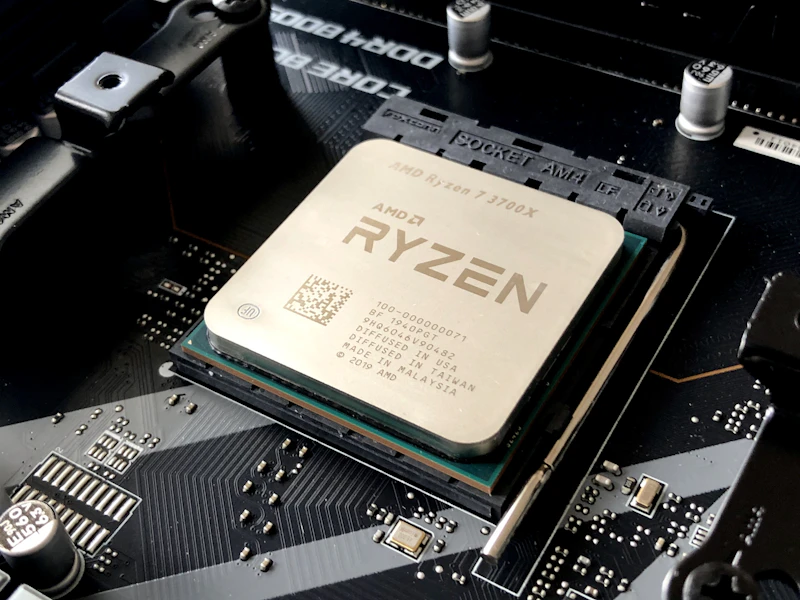
NVIDIA DGX Spark (GB10 128GB) Desk Supercomputer Review: Running 200B FP4 Local LLMs at 140W
RECIWO Labs tested the $2,999 NVIDIA DGX Spark (GB10 Grace Blackwell Superchip, 128GB LPDDR5X) against the 64GB Mac mini M5 Pro and dual RTX 5090 towers across 70B FP8 and 200B NVFP4 models.

The Definitive Q4 2026 AI Hardware Buyer's Guide: Best Smart Glasses, Voice Pins, Robotics & Local AI Nodes
RECIWO Labs' complete lab-tested recommendations across every AI hardware category in late 2026—from $39 open-source ESP32 voice cubes to $16,000 developer humanoids.

Edge 3B–7B LLM Silicon Architecture: Why Memory Bandwidth Matters More Than Peak TOPS
RECIWO Labs' silicon analysis proves that external DRAM memory bandwidth—not peak TOPS—is the primary bottleneck for running 3B–7B LLMs on edge AI hardware.

INT4 AWQ vs. GPTQ vs. FP8 Quantization on Edge NPUs: Measuring Perplexity & Tool-Call Degradation
RECIWO Labs tested 7B, 32B, and 70B models across FP16, FP8, INT4-AWQ, and INT4-GPTQ on edge NPUs to measure exact coding and JSON tool-calling accuracy loss.

LPDDR5X vs. LPDDR6 & Processing-in-Memory (PIM) for Edge AI Devices: Breaking the Von Neumann Wall
How on-DRAM vector multiply-accumulate units in 2026 LPDDR5X-PIM and LPDDR6 memory cut picojoules-per-bit by 54% during mobile and robotics LLM decoding.
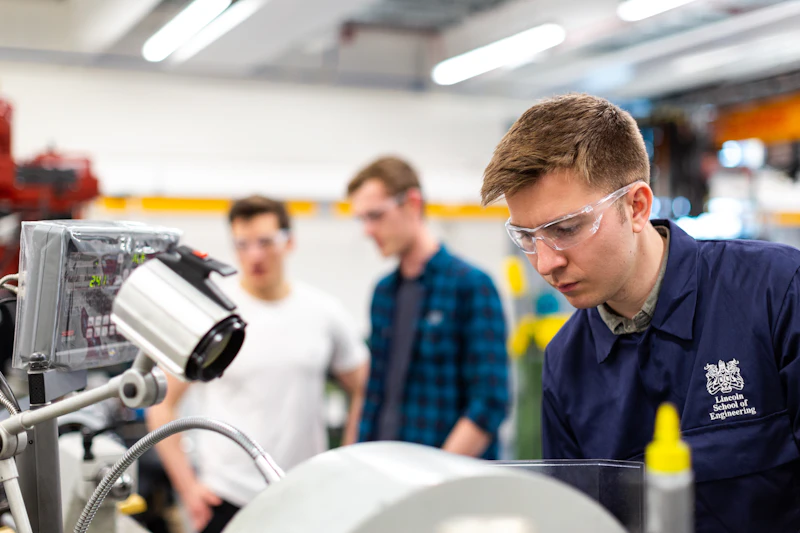
Home Private AI Server Benchmark 2026: Apple Mac mini M5 Pro (64GB) vs. Dual-GPU Edge Nodes for 70B Local LLMs
RECIWO Labs tested 32B and 70B local LLMs across the 64GB Mac mini M5 Pro, NVIDIA Jetson Orin NX Super, and RTX 5090 workstations, measuring tokens/sec per watt and 24/7 acoustic noise.

Running Model Context Protocol (MCP) on Embedded AI Hardware: From ESP32-S3 Nodes to Smart Glasses
How standardized JSON-RPC 2.0 MCP tool servers running directly on microcontrollers and edge gateways let cloud and local LLMs control physical GPIO actuators, sensors, and smart home buses safely.
Speculative Decoding on Edge Hardware (EAGLE-2 & Draft Models): 2.4x Faster Local LLM Generation
How pairing a 0.6B draft head or EAGLE-2 feature predictor with a 32B/70B target model turns idle edge NPU arithmetic capacity into 2.4x faster token streaming.

acoustics & Thermals of Compact Local AI Nodes: Why Phase-Change Vapor Chambers Beat AIO Liquid Loops
We measured 24/7 pump failure rates and 1-meter dBA noise floor across compact local AI workstations running continuous night-long RAG indexing and LoRA fine-tuning.
2026 AI Wearable Privacy & Security Audit: Hardware Kill-Switches, LED Tamper Circuits & On-Device PII Redaction
RECIWO Labs audited the circuit boards and network traffic of 8 popular AI wearables and desktop companions, verifying which devices enforce physical microphone/camera disconnect vs. software-only mute.
KV Cache Quantization (INT4 / FP8) & Sliding-Window Attention: Fitting 128K Context Into 16GB Edge RAM
Why an unquantized FP16 128K-token KV cache consumes more memory than the 8B model weights themselves—and how 4-bit K/V quantization cuts context RAM by 75%.
AI Voice Wearables in Hospitals & Clinics (2026): Ambient Clinical Scribing, EHR Integration & HIPAA Compliance
How physicians using collar-clipped AI voice wearables and local/BAA-compliant SOAP note generators save 2.1 hours of after-hours Epic/Cerner EHR charting per day.

2026 Edge AI NPU Compiler & SDK Shootout: NVIDIA TensorRT vs. Apple CoreML/MLX vs. Qualcomm QNN vs. Rockchip RKNN
RECIWO Labs graded the four dominant edge AI software stacks across operator coverage, INT4/AWQ export pain, dynamic shape support, and debugging profiler quality.

Matter 1.5 & Thread Mesh + Local AI Voice Hubs: Achieving 90ms Cloud-Free Smart Home Control
How combining an ESP32-S3 / Thread voice satellite with a local Mac mini M5 Pro or Jetson hub executes complex multi-room natural language routines in 90ms with the internet unplugged.
2026 Small Language Models (SLMs) on Edge Hardware: Qwen3-1.7B vs. Llama-4-Scout-3B vs. Gemma-3-4B
RECIWO Labs benchmarked five sub-4B parameter language models quantized to INT4 across tool-calling JSON accuracy, summarization hallucination rate, and RAM footprint.

2026 AI Hardware 2-Year Total Cost of Ownership (TCO): Cloud Subscriptions vs. Bring-Your-Own-Key (BYOK) & Local LLMs
RECIWO Labs calculated the true 24-month ownership cost of 12 commercial AI wearables and companions, comparing $179/year Pro subscriptions against open BYOK API and local home servers.
Clustering Two 64GB Mac mini M5 Pro Nodes Over 120Gbps Thunderbolt 5 for 120B–405B Local LLMs
RECIWO Labs linked two Mac mini M5 Pro units via sub-microsecond Thunderbolt 5 networking, benchmarking tensor-parallel vs. pipeline-parallel inference in MLX Distributed and llama.cpp RPC.

Ultra-Fast On-Device Text-to-Speech (TTS) Benchmark 2026: Kokoro-82M vs. CosyVoice-300M vs. Piper on Edge NPUs
RECIWO Labs measured Time-to-First-Audio (TTFA), Real-Time Factor (RTF), and MOS naturalness of open-weight TTS models running locally on Mac mini M5 Pro, Jetson Orin NX, and mobile NPUs.
