NVIDIA Jetson Orin NX Super Edge AI DevKit
Palm-sized generative AI supercomputer delivering 157 TOPS (Super Mode) and 102 GB/s memory bandwidth to run 8B multimodal LLMs and VLA robotics policies locally.
Key Engineering Highlights
- JetPack Super Mode firmware unlocks 1.7× higher generative AI throughput
- 16GB LPDDR5 runs visual SLAM and a 7B voice model simultaneously
- Industry-standard software stack for robotics and edge AI appliances
Full Hardware Specifications
| Processor / Edge SoC | NVIDIA Ampere GPU (1024 CUDA + 32 Tensor Cores) |
|---|---|
| AI Model Stack | Runs Llama-3.2 8B / Qwen2.5-VL 7B / YOLO11 Locally |
| Display & Optics | HDMI 2.1 / DP 1.4 (Up to 8K) |
| Camera & Vision | Dual MIPI CSI-2 Camera Lanes + 4× USB 3.2 |
| Measured Weight | 450g (including active heatsink & carrier board) |
| Battery & Runtime | 19V DC Input (15W–40W configurable TDP) |
| Connectivity & I/O | 2.5GbE + M.2 Wi-Fi 6E + PCIe Gen4 NVMe |
| Sensors & Acoustics | 40-Pin GPIO / I2C / SPI / UART / CAN Bus |
⚖️ Side-by-Side Comparison: NVIDIA Jetson Orin NX Super Edge AI DevKit vs. Edge Compute & DevKits Peers
Direct specification comparison against leading competing devices in the Edge Compute & DevKits category.
| Specification | NVIDIA Jetson Orin NX Super Edge AI DevKit (Current) | Xiaozhi AI Voice Cube Pro (ESP32-S3 Open DevKit) → | Apple Mac mini (M5 Pro 64GB) Private AI Node → | NVIDIA DGX Spark (GB10 Grace Blackwell Superchip) → |
|---|---|---|---|---|
| Brand | NVIDIA | Open Hardware Community | Apple | NVIDIA |
| Retail Price | $499 | $12 | $1,799 | $2,999 |
| Lab Rating | ||||
| Edge SoC | NVIDIA Ampere GPU (1024 CUDA + 32 Tensor Cores) | Espressif ESP32-S3R8 (Dual-Core LX7 @ 240MHz + 8MB PSRAM) | Apple M5 Pro (14c CPU + 20c GPU + 16c Neural Engine) | NVIDIA GB10 (20-Core Arm Grace + Blackwell GPU) |
| AI Model Stack | Runs Llama-3.2 8B / Qwen2.5-VL 7B / YOLO11 Locally | Edge ESP-SR Wake + Realtime Cloud Voice LLMs | MLX Accelerated Qwen3-32B / Llama-3.3-70B | Runs Up to 200B Parameter Models (405B Clustered) |
| Display / Optics | HDMI 2.1 / DP 1.4 (Up to 8K) | 1.28-inch Circular IPS LCD (240×240) / 0.96" OLED | Supports up to three 6K displays | HDMI 2.1a + 4x USB4 Type-C |
| Camera | Dual MIPI CSI-2 Camera Lanes + 4× USB 3.2 | Optional OV2640 / GC2145 Camera Module | External USB-C / Studio Display Camera | Network / USB-C CSI |
| Weight | 450g (including active heatsink & carrier board) | 62g (with 3D-printed enclosure & speaker cavity) | 730g | 1,200g (Book-Sized Chassis) |
| Battery | 19V DC Input (15W–40W configurable TDP) | 800mAh LiPo (5h continuous dialogue) | Internal 155W PSU (4W idle draw) | 170W USB-C GaN Desktop Power Brick |
📚 Related Engineering Teardowns & Reviews
Browse All 83 Articles →Edge 3B–7B LLM Silicon Architecture: Why Memory Bandwidth Matters More Than Peak TOPS
RECIWO Labs' silicon analysis proves that external DRAM memory bandwidth—not peak TOPS—is the primary bottleneck for running 3B–7B LLMs on edge AI hardware.

INT4 AWQ vs. GPTQ vs. FP8 Quantization on Edge NPUs: Measuring Perplexity & Tool-Call Degradation
RECIWO Labs tested 7B, 32B, and 70B models across FP16, FP8, INT4-AWQ, and INT4-GPTQ on edge NPUs to measure exact coding and JSON tool-calling accuracy loss.

LPDDR5X vs. LPDDR6 & Processing-in-Memory (PIM) for Edge AI Devices: Breaking the Von Neumann Wall
How on-DRAM vector multiply-accumulate units in 2026 LPDDR5X-PIM and LPDDR6 memory cut picojoules-per-bit by 54% during mobile and robotics LLM decoding.
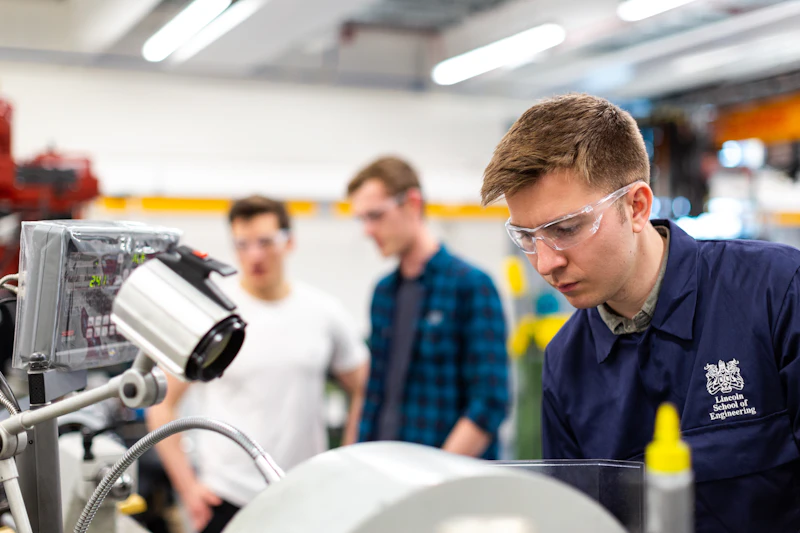
Home Private AI Server Benchmark 2026: Apple Mac mini M5 Pro (64GB) vs. Dual-GPU Edge Nodes for 70B Local LLMs
RECIWO Labs tested 32B and 70B local LLMs across the 64GB Mac mini M5 Pro, NVIDIA Jetson Orin NX Super, and RTX 5090 workstations, measuring tokens/sec per watt and 24/7 acoustic noise.

Running Model Context Protocol (MCP) on Embedded AI Hardware: From ESP32-S3 Nodes to Smart Glasses
How standardized JSON-RPC 2.0 MCP tool servers running directly on microcontrollers and edge gateways let cloud and local LLMs control physical GPIO actuators, sensors, and smart home buses safely.
Sim-to-Real Reinforcement Learning on Unitree G1: Domain Randomization & Actuator Net Calibration in Isaac Lab
RECIWO Labs trained 4,096 parallel Unitree G1 humanoid agents in NVIDIA Isaac Lab 2.2, detailing the exact domain randomization parameters required for zero-shot outdoor stairs and gravel locomotion.

The Indie Hardware Builder's Bible: Top 5 Open-Source AI DevKits & ESP32-P4/S3 Ecosystems in 2026
Software engineers can prototype custom AI hardware in a single weekend using $12 ESP32-S3 WebRTC voice cubes, $499 NVIDIA Jetson Orin NX Super modules, and $260 LeRobot arms.

Quantizing Vision-Language-Action (VLA) Models on NVIDIA Jetson Orin NX Super: FP8 vs. INT4 Control Loop Jitter
RECIWO Labs benchmarked OpenVLA-7B, Pi-0-Fast, and ACT policies on the 157 TOPS Jetson Orin NX Super, measuring action-chunk inference latency and grasp precision across FP16, FP8, and AWQ INT4.

RISC-V Vector (RVV 1.0) & Open-Standard Matrix Extensions in 2026 Edge AI Silicon
How SpacemiT K1/M1, Sophgo SG2380, and Kendryte K230 RISC-V SoCs use RVV 1.0 vector units and custom matrix tiles to run 1.5B–7B quantized models without Arm licensing fees.
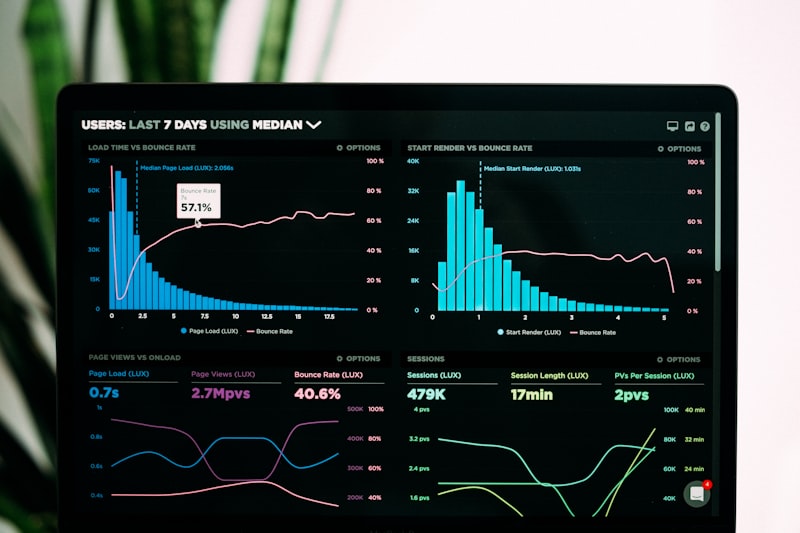
Raspberry Pi 5 (16GB) + Hailo-8 (26 TOPS) AI HAT+ Review: 60FPS Vision & Whisper at 9 Watts
We benchmarked the 16GB Raspberry Pi 5 paired with the 26 TOPS Hailo-8 PCIe Gen 3 AI HAT+ across YOLOv11m, SCRFD face recognition, and CLIP semantic video search.

KV Cache Quantization (INT4 / FP8) & Sliding-Window Attention: Fitting 128K Context Into 16GB Edge RAM
Why an unquantized FP16 128K-token KV cache consumes more memory than the 8B model weights themselves—and how 4-bit K/V quantization cuts context RAM by 75%.
3D LiDAR vs. Global-Shutter Stereo Vision in 2026 Humanoid Robots: Indoor Manipulation & Outdoor SLAM Benchmarks
RECIWO Labs compared hemispherical 3D Mid-360 LiDAR against active-IR global-shutter stereo depth cameras on the Unitree G1 humanoid across glass corridors, direct sunlight, and tabletop grasping.
2026 Edge AI NPU Compiler & SDK Shootout: NVIDIA TensorRT vs. Apple CoreML/MLX vs. Qualcomm QNN vs. Rockchip RKNN
RECIWO Labs graded the four dominant edge AI software stacks across operator coverage, INT4/AWQ export pain, dynamic shape support, and debugging profiler quality.

Radxa Fogwise AirBox Q900 ($289) Review: A 0dBA Fanless 48-TOPS Home AI & Frigate NVR Micro-Server
RECIWO Labs stress-tested the $289 Radxa Fogwise AirBox Q900 under 24/7 simultaneous 8-camera Frigate NVR object detection and Qwen3-7B local LLM inference.

2026 Small Language Models (SLMs) on Edge Hardware: Qwen3-1.7B vs. Llama-4-Scout-3B vs. Gemma-3-4B
RECIWO Labs benchmarked five sub-4B parameter language models quantized to INT4 across tool-calling JSON accuracy, summarization hallucination rate, and RAM footprint.

Generative Physics World Models (NVIDIA Cosmos & Video-VLA) for Synthetic Robot Training in 2026
How video-generative world models synthesize photorealistic failure rollouts from just 20 real teleoperation trajectories on LeRobot SO-101 and Unitree G1.

ROS 2 Middleware Benchmark on 2026 Humanoids: RMW Zenoh vs. CycloneDDS Over Wi-Fi 6E & Shared Memory
RECIWO Labs measured discovery packet storms, Iceoryx zero-copy shared memory latency, and Wi-Fi teleoperation throughput on the Unitree G1 using ROS 2 Jazzy/Kilted.

Ultra-Fast On-Device Text-to-Speech (TTS) Benchmark 2026: Kokoro-82M vs. CosyVoice-300M vs. Piper on Edge NPUs
RECIWO Labs measured Time-to-First-Audio (TTFA), Real-Time Factor (RTF), and MOS naturalness of open-weight TTS models running locally on Mac mini M5 Pro, Jetson Orin NX, and mobile NPUs.
