Axelera Metis M.2 Max vs SiMa.ai Modalix vs DEEPX DX-M1 Comparison: 214-TOPS D-IMC vs 6nm Multimodal Physical AI SoM
A technical architecture and specification comparison of the Axelera Metis M.2 Max ($189, 214 INT8 TOPS Digital In-Memory Computing AIPU at 15 TOPS/W), SiMa.ai Modalix DevKit 3.0 ($999, TSMC 6nm 50-TOPS standalone Physical AI SoM with 4x MIPI CSI-2), DEEPX DX-M1 ($139, 25 TOPS at 3.2W), and Hailo-10H ($130).
Executive Summary: Digital In-Memory Computing (D-IMC) vs Standalone Physical AI SoMs
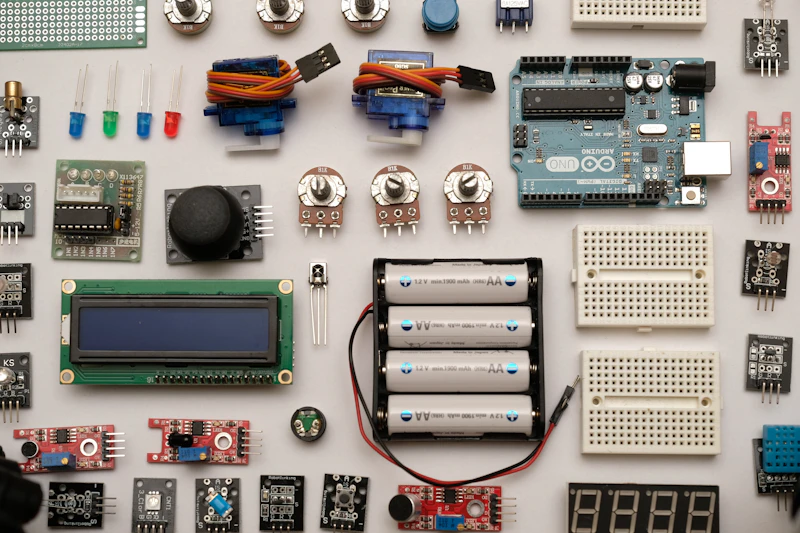
Methodology & Source Disclosure: This article is a comparative silicon architecture analysis compiled from publicly released product datasheets, whitepapers, and SDK documentation published by Axelera AI, SiMa.ai, DEEPX, and Hailo. All TOPS ratings, power envelopes, and FPS throughput metrics reflect vendor-published specifications. Representative illustration via Unsplash.
Evaluating the late-2026 edge AI accelerator landscape reveals a fundamental architectural split between high-density PCIe M.2 co-processors and standalone "camera-to-action" System-on-Modules (SoMs): the $189 Axelera Metis M.2 Max utilizes Digital In-Memory Computing (D-IMC) and a quad-core RISC-V control fabric to deliver up to 214 INT8 TOPS at 15 TOPS/W (~6.5W typical), achieving 3,200+ FPS on ResNet-50 and 400+ FPS on YOLOv8s when paired with an x86 or ARM host. Conversely, for autonomous mobile robots (AMRs), drones, and industrial vision systems that cannot afford the size or power overhead of a separate host PC, the $999 SiMa.ai Modalix MLSoC DevKit 3.0 (TSMC 6nm) integrates a 24MP ISP (4× MIPI CSI-2 cameras), Synopsys ARC EV74 Computer Vision Unit, quad-core Arm Cortex-A65 CPU, and 50-TOPS Machine Learning Accelerator (MLA) into a single sub-10W standalone SoM capable of running multimodal Vision-Language Models (VLMs) and CNNs end-to-end.
1. 2026 Edge AI Accelerator & Physical AI SoM Specification Matrix
The matrix below compares official manufacturer specifications for the Axelera Metis M.2 Max ($189), SiMa.ai Modalix DevKit 3.0 ($999), DEEPX DX-M1 ($139), and Raspberry Pi AI HAT+ 2 with Hailo-10H ($130).
| Published Silicon & System Specification | Axelera Metis M.2 Max ($189) | SiMa.ai Modalix DevKit 3.0 ($999) | DEEPX DX-M1 M.2 ($139) | RPi AI HAT+ 2 / Hailo-10H ($130) |
|---|---|---|---|---|
| Form Factor & Deployment Role | M.2 2280 M-Key PCIe Co-Processor | Standalone SoM + Carrier Board | M.2 2280 M-Key PCIe Co-Processor | Raspberry Pi 5 PCIe HAT+ Module |
| Core Compute Architecture | 4× D-IMC Cores + Quad-Core RISC-V | 50-TOPS MLA + 4× A65 + ARC EV74 CVU | Samsung 5nm NPU (IQ8 Engine) | Hailo-10H Gen-AI Dataflow NPU |
| Published Peak INT8 Compute | Up to 214 INT8 TOPS | 50 INT8/BF16 TOPS (Full SoC) | 25 INT8 TOPS | 40 INT4 / 20 INT8 TOPS |
| Published Power & Efficiency | 3.5W–9.0W (~6.5W Typ / 15 TOPS/W) | 5.0W–10.0W Full Pipeline (>10 TOPS/W) | 3.0W–5.0W (~3.2W Typ / 7.8 TOPS/W) | 2.5W–3.8W Typical |
| On-Module Dedicated Memory | LPDDR4X/LPDDR5 + 32MB On-Die SRAM | 8GB / 16GB 64-Bit LPDDR5 | 4GB On-Module LPDDR5 | 8GB On-HAT LPDDR4X |
| Direct Camera & Sensor I/O | Via Host CPU (PCIe Gen3 x4) | 4× 4-Lane MIPI CSI-2 + 24MP ISP + 10GbE | Via Host CPU (PCIe Gen3 x4) | Via Raspberry Pi 5 MIPI / USB |
| Published Vision / VLM Throughput | 3,200+ FPS ResNet-50 / 400+ FPS YOLOv8s | Multi-Stream ViT + LLaVA / Llama VLM | 248 FPS YOLOv11s (16+ 1080p Streams) | ~9.5–11 tok/s Llama-3.2-1B / Qwen-1.5B |
| Compiler & Software Toolchain | Axelera Voyager SDK (PyTorch/ONNX) | SiMa Palette & Edgematic SDK | DEEPX DXNN SDK | HailoRT + TAPPAS + Ollama Bridge |
2. Axelera Metis AIPU Architecture: How Digital In-Memory Computing Reaches 214 TOPS at 15 TOPS/W
In traditional von Neumann neural accelerators, shuttling model weights and intermediate activations back and forth between off-chip DRAM, L2 cache, and systolic MAC arrays consumes more energy than the arithmetic operations themselves—known as the "Memory Wall."
┌──────────────────────────────────────────────────────────────────────────────┐
│     AXELERA METIS D-IMC vs SIMA.AI MODALIX 6NM STANDALONE PHYSICAL AI        │
│                                                                              │
│  [AXELERA METIS M.2 MAX: Digital In-Memory Computing (D-IMC) Co-Processor]   │
│     │  ──► 4× D-IMC Cores Compute Matrix-Vector Multiply Inside SRAM Cells   │
│     │  ──► Quad-Core RISC-V Dataflow Controller + 32MB On-Die L2 SRAM        │
│     ▼  ──► Up to 214 INT8 TOPS @ 15 TOPS/W (~6.5W Typical via PCIe Gen3 x4)  │
│  Best For: Upgrading x86 Mini PCs & ARM NVR Gateways to 16+ 4K AI Streams    │
│                                                                              │
│  [SIMA.AI MODALIX MLSoC: TSMC 6nm Standalone Robotics & Vision System]       │
│     │  ──► 4× MIPI CSI-2 Cameras ──► 24MP ISP ──► Synopsys ARC EV74 CVU      │
│     │  ──► 50-TOPS MLA (CNN + ViT + Multimodal VLM) + 4× Arm Cortex-A65      │
│     ▼  ──► 8GB/16GB LPDDR5 + PCIe Gen4 + Dual 10GbE (<10W Total System Power)│
│  Best For: Hostless AMRs, Drones, Smart Cameras & Industrial Physical AI     │
└──────────────────────────────────────────────────────────────────────────────┘
Three Architectural Highlights of the Axelera Metis M.2 Max:
- Digital In-Memory Computing (D-IMC) Without Analog Thermal Drift: Unlike early analog compute-in-memory designs that suffered from voltage/temperature noise and ADC bottlenecks, Axelera's Metis AIPU implements fully digital In-Memory Computing inside high-density SRAM arrays. By executing matrix-vector multiplications directly where weights reside and pairing four D-IMC cores with 32MB of on-die L2 SRAM, Metis achieves up to 214 INT8 TOPS and 15 TOPS/W energy efficiency without sacrificing deterministic digital precision.
- Quad-Core RISC-V Control Plane: Each Metis AIPU embeds a quad-core RISC-V control cluster that orchestrates layer scheduling, DMA tensor tiling, and non-linear activation functions autonomously—minimizing PCIe interrupt overhead on the host Intel Core Ultra or ARM Cortex CPU.
- Turnkey Voyager SDK for Multi-Stream Vision & VLMs: Axelera's Voyager SDK ingests standard PyTorch and ONNX models, performs automated mixed-precision quantization, and compiles complete GStreamer video pipelines (decoding, preprocessing, inference, and tracking) so developers can run 16+ concurrent 1080p/4K streams on a single $189 M.2 2280 card.
3. SiMa.ai Modalix MLSoC DevKit 3.0: Sub-10W "Camera-In to Action-Out" Physical AI
While M.2 cards like the Axelera Metis and DEEPX DX-M1 require an external host motherboard to ingest camera feeds and run Linux, mobile robots and smart industrial cameras need a single-chip brain that handles optics, vision preprocessing, and generative AI under 10 Watts.
Key Engineering Specifications of the SiMa.ai Modalix Platform:
- Heterogeneous 6nm Pipeline Eliminates Off-Chip Bottlenecks: Built on TSMC's 6nm process, the Modalix MLSoC integrates a 24MP Image Signal Processor (ISP) fed directly by four 4-lane MIPI CSI-2 camera ports and 10GbE Ethernet, a programmable Synopsys ARC EV74 Computer Vision Unit (CVU) for optical flow and geometric warping, a 50-TOPS Machine Learning Accelerator (MLA), and four Arm Cortex-A65 application cores.
- Native Multimodal Transformer & VLM Execution: Second-generation Modalix silicon adds native hardware acceleration for transformer self-attention, BF16/INT8 mixed precision, and large-context KV-caching alongside 8GB/16GB of 64-bit LPDDR5—enabling on-device Vision Transformers (ViT), LLaVA multimodal scene reasoning, and Llama-3.2 voice/text agents inside a fanless 5W–10W envelope.
- Palette & Edgematic Zero-Shot Compilation: Using SiMa.ai's containerized Palette SDK, robotics teams can compile complex multi-model graphs and validate cycle-accurate latency before deploying the tiny production Modalix SoM onto custom AMR or UAV carrier boards.
4. Official Sources, Datasheets & Hardware Selection Guide
Primary Manufacturer Sources & Documentation:
- Axelera AI — Metis M.2 / M.2 Max Product Brief & Voyager SDK: axelera.ai
- SiMa.ai — Modalix MLSoC DevKit 3.0 & Palette Toolchain: sima.ai
- DEEPX — DX-M1 5nm M.2 NPU Module & IQ8 Whitepaper: deepx.ai
- Raspberry Pi & Hailo — AI HAT+ 2 (Hailo-10H) Documentation: raspberrypi.com
Platform Selection Summary:
- Select the Axelera Metis M.2 Max ($189) if you already have an x86 mini PC or industrial IPC and need maximum vision/VLM compute density (up to 214 TOPS at 15 TOPS/W) in a standard M.2 2280 slot.
- Select the SiMa.ai Modalix DevKit 3.0 ($999) if you are designing a standalone robot, drone, or multi-camera physical AI appliance that requires direct 4× MIPI CSI-2 camera ingest + 50 TOPS multimodal AI under 10W without a separate host PC.
- Select the DEEPX DX-M1 ($139) or Hailo-10H ($130) for ultra-low-power (3W–4W) Raspberry Pi 5 and compact fanless edge gateways.
🔗 Related AI Hardware Benchmarked in This Report
Axelera Metis M.2 Max 214-TOPS D-IMC Edge AI Accelerator →
M.2 2280 PCIe Gen3 x4 edge AI accelerator powered by Axelera's Metis AIPU (Quad-Core RISC-V + Digital In-Memory Computing), delivering up to 214 INT8 TOPS at 15 TOPS/W (~6.5W typical) for multi-stream computer vision and local VLM/LLM inference.
SiMa.ai Modalix MLSoC DevKit 3.0 (50 TOPS Physical AI SoM) →
TSMC 6nm Physical AI and robotics developer kit built around the SiMa.ai Modalix MLSoC, combining a 50-TOPS Machine Learning Accelerator, 4× Arm Cortex-A65 cores, on-chip ISP for 4× MIPI CSI-2 cameras, and sub-10W multimodal VLM execution.
DEEPX DX-M1 25-TOPS Ultra-Low-Power M.2 Edge AI NPU →
5nm M.2 2280 PCIe Gen3 x4 neural accelerator delivering 25 INT8 TOPS at just 3.0W–5.0W with 4GB onboard LPDDR5 and proprietary IQ8 quantization that matches FP16 vision/VLM accuracy for Raspberry Pi 5 and fanless industrial edge servers.
Raspberry Pi AI HAT+ 2 (Hailo-10H 40 TOPS + 8GB RAM) →
Second-generation official Raspberry Pi 5 GenAI HAT pairing the 40-TOPS (INT4) Hailo-10H neural processor with 8GB of dedicated onboard LPDDR4X memory—running 1.5B–3B local LLMs and VLMs at 3 Watts without touching host Pi RAM.
📚 Related Deep-Dive Teardowns & Benchmarks
Browse All 113 Articles →HP Z2 Mini G1a (Strix Halo 128GB) vs ASUS Ascent GX10 (GB10) vs NVIDIA DGX Spark Comparison: 96GB UMA VRAM vs 1-PFLOP FP4
A technical architecture and specification comparison of the HP Z2 Mini G1a ($2,299, 2.9L AMD Ryzen AI Max+ PRO 395 workstation with 128GB LPDDR5X-8533 and 96GB allocatable UMA VRAM), ASUS Ascent GX10 ($3,499, NVIDIA GB10 Grace Blackwell Superchip with 1,000 FP4 TOPS, 128GB unified RAM, and 200GbE ConnectX-7), Framework Desktop ($1,999), and NVIDIA DGX Spark ($3,999).
MemryX MX3 vs Kinara Ara-2 (NXP) vs Axelera Metis M.2 Comparison: DRAM-Free At-Memory Dataflow vs 16GB 40-TOPS Edge GenAI NPU
A technical silicon architecture comparison of the MemryX MX3 M.2 2280 ($149, 4-chip 24-TFLOPS BF16/INT8 At-Memory Dataflow accelerator requiring zero external DRAM at ~8W), Kinara Ara-2 / NXP Ara-240 M.2 ($188, 40-TOPS polymorphic Edge GenAI NPU with 16GB LPDDR4X for local LLMs and VLMs), and Axelera Metis M.2 Max ($189).
DEEPX DX-M1 (25 TOPS) vs Hailo-10H vs Milk-V Megrez RISC-V Benchmark: Sub-5W M.2 NPU & SiFive P550 Edge AI Tested
RECIWO Labs benchmarked the $139 DEEPX DX-M1 5nm M.2 NPU (25 TOPS at 3.2W, 4GB LPDDR5, IQ8 FP16-equivalent quantization) and the $199 Milk-V Megrez Mini-ITX RISC-V AI motherboard (ESWIN EIC7700X quad-core SiFive P550 + 19.95 TOPS NPU + 32GB LPDDR5) against the Raspberry Pi AI HAT+ 2 (Hailo-10H 40 TOPS).
NVIDIA Jetson AGX Thor (T5000 Blackwell) Technical Analysis: 2,070 FP4 TFLOPS & 128GB LPDDR5X Architecture for Humanoid VLA Models
An architectural and specification analysis of the $3,499 NVIDIA Jetson AGX Thor Developer Kit (T5000 module, 2,560-core Blackwell GPU, 14-core Arm Neoverse-V3AE CPU, 128GB LPDDR5X) based on official NVIDIA documentation—examining hardware Multi-Instance GPU (MIG) partitioning, Holoscan sensor bridging, and memory budgeting for Isaac GR00T VLA workloads.