Milk-V Jupiter (SpacemiT K1/M1 8-Core RVA22 RISC-V + RVV 1.0 Open-Source Mini-ITX AI Board)
170×170mm open-source RISC-V Mini-ITX desktop motherboard powered by the octa-core 64-bit SpacemiT K1/M1 X60 SoC (compliant with the RVA22 profile and 256-bit RVV 1.0 vector standard plus 2.0 INT8 TOPS fused AI), featuring up to 16GB LPDDR4X, a PCIe x8 slot, M.2 NVMe, and dual Gigabit LAN.
Editorial Rating Methodology (★ 4.7 / 5.0): This score is an internal editorial evaluation compiled by the RECIWO Labs editorial team—not a user poll or crowd-voted rating. It assesses published silicon compute efficiency (25%), optical/sensor/actuator engineering (25%), battery & thermal envelope (20%), SDK/software openness (15%), and price-to-specification value (15%) based on official manufacturer datasheets and public technical documentation. Learn more about our evaluation rubric →
Key Engineering Highlights
- Delivers the first sub-$100 ($89) standard 170×170mm Mini-ITX RISC-V motherboard supporting both the ratifed RVA22 profile and 256-bit RVV 1.0 vector extensions across 8 X60 cores
- Embeds 2.0 INT8 TOPS of tightly coupled CPU-fused AI acceleration (no slow PCIe NPU copy overhead), making it ideal for compiling and benchmarking native RISC-V RVV 1.0 ONNX and llama.cpp kernels
- Fits directly into standard Mini-ITX PC cases with 24-pin ATX (or 12V DC / USB-C PD) power, a physical PCIe x8 slot for NIC/GPU/SATA cards, M.2 NVMe storage, dual GbE LAN, and Ubuntu/Fedora/CasaOS support
Full Hardware Specifications
| Processor / Edge SoC | SpacemiT K1 / M1 (8× 64-Bit X60 RISC-V Cores @ 1.6GHz–1.8GHz w/ RVA22 Profile & 256-Bit RVV 1.0 Vector) |
|---|---|
| AI Model Stack | 2.0 INT8 TOPS CPU-Fused AI Matrix/Vector Engine (Runs ONNX Runtime, llama.cpp RVV 1.0 & CasaOS Edge Services) |
| Display & Optics | HDMI 1.4 Output (Up to 1920×1440 @ 60Hz) Driven by Imagination BXE-2-32 GPU (Vulkan 1.3 / OpenCL 3.0) |
| Camera & Vision | MIPI-CSI Camera Header + 4K60 H.265/H.264/VP9 Hardware Video Decoder |
| Measured Weight | 315.0g (170 × 170mm Standard Mini-ITX Desktop Footprint Compatible w/ PC Cases & Coolers) |
| Battery & Runtime | Standard 24-Pin ATX Power Connector OR 12V DC Barrel Input OR USB Type-C PD Power Input |
| Connectivity & I/O | 2× Gigabit RJ45 Ethernet (Optional PoE) + Onboard Wi-Fi 6 / BT 5.2 + Physical PCIe Gen2 x8 Slot (x2 Lanes) |
| Sensors & Acoustics | 4GB / 8GB / 16GB LPDDR4X-2666 RAM + M.2 Key-M NVMe Slot (PCIe 2.0 x2) + 2× SATA Power + eMMC & MicroSD |
⚖️ Side-by-Side Comparison: Milk-V Jupiter (SpacemiT K1/M1 8-Core RVA22 RISC-V + RVV 1.0 Open-Source Mini-ITX AI Board) vs. Edge Compute & DevKits Peers
Direct specification comparison against leading competing devices in the Edge Compute & DevKits category.
| Specification | Milk-V Jupiter (SpacemiT K1/M1 8-Core RVA22 RISC-V + RVV 1.0 Open-Source Mini-ITX AI Board) (Current) | NVIDIA Jetson Orin NX Super Edge AI DevKit → | Xiaozhi AI Voice Cube Pro (ESP32-S3 Open DevKit) → | Apple Mac mini (M5 Pro 64GB) Private AI Node → |
|---|---|---|---|---|
| Brand | Milk-V × SpacemiT | NVIDIA | Open Hardware Community | Apple |
| Retail Price | $89 | $499 | $12 | $1,799 |
| Editorial Rating | ||||
| Edge SoC | SpacemiT K1 / M1 (8× 64-Bit X60 RISC-V Cores @ 1.6GHz–1.8GHz w/ RVA22 Profile & 256-Bit RVV 1.0 Vector) | NVIDIA Ampere GPU (1024 CUDA + 32 Tensor Cores) | Espressif ESP32-S3R8 (Dual-Core LX7 @ 240MHz + 8MB PSRAM) | Apple M5 Pro (14c CPU + 20c GPU + 16c Neural Engine) |
| AI Model Stack | 2.0 INT8 TOPS CPU-Fused AI Matrix/Vector Engine (Runs ONNX Runtime, llama.cpp RVV 1.0 & CasaOS Edge Services) | Runs Llama-3.2 8B / Qwen2.5-VL 7B / YOLO11 Locally | Edge ESP-SR Wake + Realtime Cloud Voice LLMs | MLX Accelerated Qwen3-32B / Llama-3.3-70B |
| Display / Optics | HDMI 1.4 Output (Up to 1920×1440 @ 60Hz) Driven by Imagination BXE-2-32 GPU (Vulkan 1.3 / OpenCL 3.0) | HDMI 2.1 / DP 1.4 (Up to 8K) | 1.28-inch Circular IPS LCD (240×240) / 0.96" OLED | Supports up to three 6K displays |
| Camera | MIPI-CSI Camera Header + 4K60 H.265/H.264/VP9 Hardware Video Decoder | Dual MIPI CSI-2 Camera Lanes + 4× USB 3.2 | Optional OV2640 / GC2145 Camera Module | External USB-C / Studio Display Camera |
| Weight | 315.0g (170 × 170mm Standard Mini-ITX Desktop Footprint Compatible w/ PC Cases & Coolers) | 450g (including active heatsink & carrier board) | 62g (with 3D-printed enclosure & speaker cavity) | 730g |
| Battery | Standard 24-Pin ATX Power Connector OR 12V DC Barrel Input OR USB Type-C PD Power Input | 19V DC Input (15W–40W configurable TDP) | 800mAh LiPo (5h continuous dialogue) | Internal 155W PSU (4W idle draw) |
📚 Related Engineering Teardowns & Reviews
Browse All 133 Articles →ASUS NUC 14 Pro AI+ (Core Ultra 9 288V 120 TOPS + Color E-Ink) vs Milk-V Jupiter ($89 SpacemiT K1/M1 8-Core RISC-V Mini-ITX) vs Minisforum AI X1 Pro Comparison: Lunar Lake vs RVA22 RISC-V
A technical silicon, vector-ISA, and power-efficiency comparison of the ASUS NUC 14 Pro AI+ ($949, 580g <0.6L Copilot+ mini workstation powered by Intel Core Ultra 9 288V Lunar Lake with 48-TOPS NPU 4.0 + 67-TOPS Arc 140V GPU = 120 total TOPS, 32GB on-package LPDDR5X-8533, persistent multi-color E-Ink top display, and dual Thunderbolt 4), Milk-V Jupiter ($89, 170×170mm Mini-ITX RISC-V motherboard with 8-core SpacemiT K1/M1 X60 SoC supporting RVA22 + 256-bit RVV 1.0 + 2.0 TOPS fused AI, up to 16GB RAM, and PCIe x8), and Minisforum AI X1 Pro ($899).
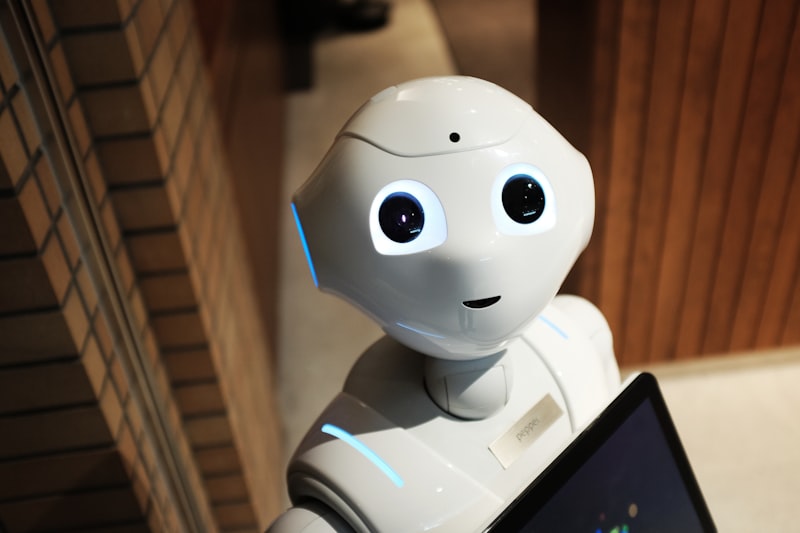
Sanctuary AI Phoenix (21-DoF Hydraulic Hands & 5mN Tactile) vs XPENG IRON (60-DoF Bionic Spine & 3,000-TOPS Turing AI) vs Electric Atlas Comparison: Micro-Hydraulics vs In-House Silicon
A technical hand-actuation, onboard-compute, and battery-safety comparison of the Sanctuary AI Phoenix (~$75,000, 170cm / 70kg industrial humanoid featuring 21-DoF miniaturized hydraulic servo-valve hands, 5-millinewton haptic fingertips, 25kg payload, and Carbon AI <24h skill synthesis), XPENG IRON (~$68,000, 178cm / 70kg automotive humanoid with 60–82 DoF, 22-DoF 1:1 hands, 3× XPENG Turing AI chips delivering 3,000 TOPS, VLM+VLT+VLA models, and an all-solid-state battery), and Boston Dynamics Electric Atlas (~$95,000).
XREAL Air 2 Ultra (83g 6DoF Dual-3D-Sensor Titanium) vs ENGO 2 (36g 12-Hour ActiveLook MicroOLED HUD) vs Rokid Glasses Comparison: Spatial SLAM vs Endurance Telemetry
A technical optical, SLAM-tracking, and mass-budget comparison of the XREAL Air 2 Ultra ($699, 83g aerospace titanium 6DoF spatial computing AR glasses with dual 3D environment tracking cameras, 26-point hand tracking, 52° FOV 120Hz Sony Micro-OLED displays, and 3-stage electrochromic dimming), ENGO 2 ($299, 36g endurance sports sunglasses with a 3.5g >1,000-nit ActiveLook 2.0 MicroOLED HUD, 12-hour battery, and touchless wave-gesture control), and Rokid Glasses ($499).

Ultrahuman Ring AIR (2.4g Circadian & Metabolic Bio-AI) vs Pocketalk S2 (75g Global-eSIM 92-Language Interpreter) vs RingConn Gen 2 Comparison: PowerPlugs vs Standalone eSIM
A technical biometric-AI, cellular-translation, and subscription-cost comparison of the Ultrahuman Ring AIR ($349, 2.4g fighter-jet titanium smart ring with Tungsten Carbide coating, Ultrahuman Jade real-time bio-AI, modular PowerPlugs for Circadian Alignment & Caffeine Window, M1 CGM glucose sync, and $0/mo core subscription), Pocketalk S2 ($249, 75g standalone interpreter with built-in 170+ country global eSIM, 92+ voice languages, 56+ camera OCR languages, and HIPAA/GDPR compliance), and RingConn Gen 2 ($299).
