Sanctuary AI Phoenix (21-DoF Hydraulic Hands & 5mN Tactile) vs XPENG IRON (60-DoF Bionic Spine & 3,000-TOPS Turing AI) vs Electric Atlas Comparison: Micro-Hydraulics vs In-House Silicon
A technical hand-actuation, onboard-compute, and battery-safety comparison of the Sanctuary AI Phoenix (~$75,000, 170cm / 70kg industrial humanoid featuring 21-DoF miniaturized hydraulic servo-valve hands, 5-millinewton haptic fingertips, 25kg payload, and Carbon AI <24h skill synthesis), XPENG IRON (~$68,000, 178cm / 70kg automotive humanoid with 60–82 DoF, 22-DoF 1:1 hands, 3× XPENG Turing AI chips delivering 3,000 TOPS, VLM+VLT+VLA models, and an all-solid-state battery), and Boston Dynamics Electric Atlas (~$95,000).
Executive Summary: 21-DoF 5mN Micro-Hydraulic Haptic Hands vs 3,000-TOPS In-House Turing AI & Solid-State Batteries
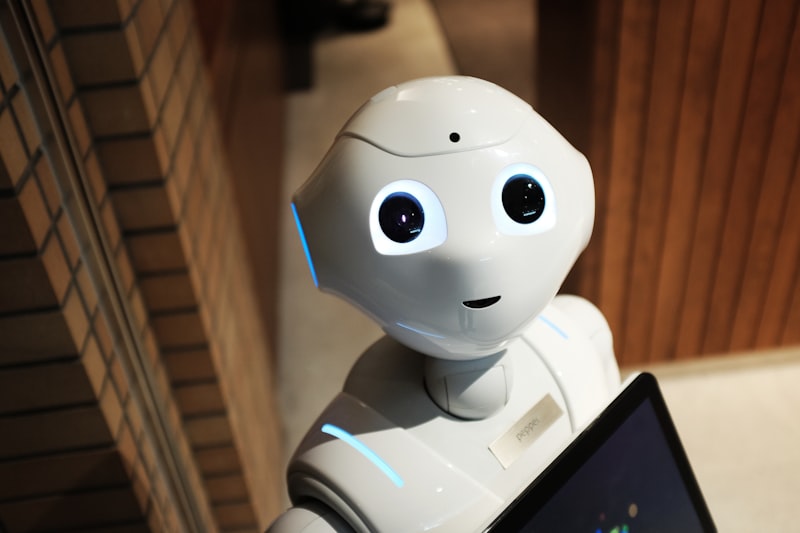
Methodology & Source Disclosure: This article is a comparative mechanical actuation, onboard silicon, and Embodied AI specification analysis compiled from publicly released manufacturer disclosures and technical briefings published by Sanctuary AI, XPENG Robotics, Boston Dynamics, and NEURA Robotics. All height, mass, degree-of-freedom, TOPS, tactile sensitivity, and payload figures reflect vendor-published specifications. Representative illustration via Unsplash.
As general-purpose humanoid robots transition from locomotion demos to fine-pitch automotive and electronics assembly in late 2026, two fundamental bottlenecks dominate engineering roadmaps—finger-level force bandwidth and multi-thousand-TOPS onboard inference: Sanctuary AI's Phoenix (170cm, 70kg, ~$75,000) solves the manipulation bottleneck by eschewing bulky electric finger gearboxes in favor of proprietary 21-DoF miniaturized hydraulic servo-valve hands equipped with 5-millinewton (5 mN) haptic fingertip arrays, enabling its Carbon™ AI control system to learn new tactile assembly tasks in under 24 hours. Conversely, XPENG Robotics' IRON (178cm, 70kg, ~$68,000) leverages XPENG's smart EV supply chain to pack three in-house 40-core Turing AI processors (2,250 to 3,000 TOPS of onboard compute), 60 to 82 total Degrees of Freedom (including a multi-link bionic spine and 2× 22-DoF 1:1 hands), and an all-solid-state torso battery directly onto EV assembly lines.
1. Industrial Dexterous Humanoid & Onboard Compute Specification Matrix
The matrix below compares published hardware specifications for the Sanctuary AI Phoenix (~$75,000), XPENG IRON (~$68,000), Boston Dynamics Electric Atlas (~$95,000), and NEURA Robotics 4NE-1 (~$65,000).
| Published Hardware Specification | Sanctuary AI Phoenix (~$75,000) | XPENG IRON (~$68,000) | Boston Dynamics Electric Atlas (~$95,000) | NEURA Robotics 4NE-1 (~$65,000) |
|---|---|---|---|---|
| Standing Height & Mass | 170 cm (5'7") / 70.0 kg | 178 cm (5'10") / 70.0 kg | 190 cm (6'2") / 90.0 kg (230cm Reach) | 180 cm (5'11") / 80.0 kg |
| Total Body & Hand DoF | 2× 21-DoF Hands + 2× 7-DoF Arms | 60–82 Total DoF (Inc. 2× 22-DoF Hands) | 56 Actuated DoF (360° Swivel Joints) | 55 Total DoF (Inc. 2× 12-DoF Hands) |
| Hand Actuation & Tactile Tech | Mini-Hydraulic Valves + 5 mN Tactile | 1:1 Harmonic/Planetary + Full e-Skin | Adaptive 3/4-Finger Optical-Tactile | Quick-Swap 12-DoF + Touchless Skin |
| Onboard AI Compute Stack | Edge Valve/Vision Node + Carbon Cloud | 3× XPENG Turing Chips (2,250–3,000 TOPS) | Multi-GPU/NPU Whole-Body MPC Cluster | NVIDIA Jetson Thor / Orin Compute |
| Embodied AI Foundation Model | Sanctuary Carbon™ (Symbolic + RL + LLM) | VLM + VLT (Task) + VLA Model Trio | RL + TRI Large Behavior Models (LBMs) | NEURA Cognitive AI + Neuraverse |
| Published Payload Capacity | 25.0 kg (55 lb) Bimanual Payload | ~15.0 kg – 20.0 kg Factory Assembly | 30.0 kg Sustained / 50.0 kg Peak | 15.0 kg – 20.0 kg Continuous Lift |
| Battery & Base Architecture | Bipedal or Wheeled (Gen 8) Shift Power | All-Solid-State Torso Battery Pack | ~4.0h Shift + Autonomous Self-Swap | Dual Redundant Hot-Swap Batteries |
2. Sanctuary AI Phoenix Architecture: Why 21-DoF Micro-Hydraulic Hands & 5mN Tactile Sensors Matter
Over 80% of industrial factory tasks—such as threading flexible wire harnesses, snapping plastic fasteners, or sorting small O-rings from a bin—fail not because a robot cannot walk across the floor, but because electric cable-driven or linkage-driven hands lack the power density, thermal resilience, and sub-gram tactile feedback of human fingers.
┌──────────────────────────────────────────────────────────────────────────────┐
│     SANCTUARY AI PHOENIX (21-DOF HYDRAULIC) vs XPENG IRON (3,000-TOPS AI)    │
│                                                                              │
│  [SANCTUARY AI PHOENIX: 170cm / 70kg / 21-DoF Mini-Hydraulic Haptic Hands]   │
│     │  ──► Miniature Hydraulic Servo-Valves Deliver Unmatched Finger Power   │
│     │  ──► 5-Millinewton (5 mN) Fingertip Tactile Arrays Enable Blind Grasp  │
│     ▼  ──► Carbon™ Cognitive AI Synthesizes New Policies in Under 24 Hours   │
│  Design Focus: High-Dexterity Fine Assembly & Rapid Teleop-to-Auto Transfer  │
│                                                                              │
│  [XPENG IRON: 178cm / 70kg / 60–82 DoF + 3× In-House Turing AI Processors]   │
│     │  ──► 2,250–3,000 TOPS Local Compute Runs VLM + VLT + VLA End-to-End    │
│     │  ──► Flexible Bionic Spine + 22-DoF 1:1 Hands + Full-Body Tactile Skin │
│     ▼  ──► All-Solid-State Battery Cuts Torso Mass by ~30% w/ Zero Fire Risk │
│  Design Focus: Smart EV Factory Assembly & Zero-Latency On-Device Autonomy   │
└──────────────────────────────────────────────────────────────────────────────┘
Three Engineering Breakthroughs in the Sanctuary AI Phoenix (~$75,000):
- 21-DoF Miniaturized Hydraulic Servo-Valve Hands: While whole-body hydraulic humanoids were noisy and heavy, Sanctuary AI engineered miniaturized hydraulic micro-cylinders and precision servo-valves exclusively for Phoenix's 21-DoF hands. This hybrid approach delivers human-equivalent finger force density, sub-5ms compliance bandwidth, and zero motor burnout during continuous pinching—and in Generation 8, pairs the upper torso with a high-stability wheeled industrial base to maximize flat-floor ROI.
- 5-Millinewton (5 mN) Haptic Fingertip Arrays: Each fingertip integrates high-density capacitive and pressure sensors capable of detecting contact forces as light as 5 millinewtons (~0.5 grams-force)—allowing Phoenix to roll a tiny M2 screw between its thumb and index finger or open a ziplock bag purely by touch when visual cameras are occluded.
- Sanctuary Carbon™ AI & Sub-24-Hour Task Automation: By capturing synchronized stereo vision, joint proprioception, and 5 mN haptic feedback through an ergonomic human teleoperation rig, Carbon™ AI trains and deploys autonomous deep-RL manipulation policies for brand-new customer workflows in under 24 hours.
3. XPENG IRON Architecture: 3,000-TOPS In-House Turing Silicon, Bionic Spine & All-Solid-State Power
Most humanoid startups must purchase off-the-shelf 100-TOPS to 800-TOPS embedded GPU modules and conventional lithium-ion pouches—limiting local foundation model sizes and introducing fire-safety constraints on crowded automotive assembly lines.
Key Engineering Advantages of the XPENG IRON (~$68,000):
- 3× In-House XPENG Turing AI Chips (2,250–3,000 TOPS): Drawing directly from XPENG's autonomous driving silicon division, IRON integrates three custom 40-core Turing AI processors in its torso. Delivering up to 3,000 TOPS of local compute, IRON executes a three-tier Physical World Large Model stack entirely on-device: VLM (720° Eagle-Eye visual perception), VLT (Vision-Language-Task chain-of-thought reasoning), and VLA (high-frequency whole-body joint control).
- Bionic Multi-Link Spine, 22-DoF Hands & All-Solid-State Battery: Across 60 to 82 total Degrees of Freedom, IRON combines a human-like flexible spine (for natural bending and waist compliance), 1:1 human-proportioned 22-DoF hands, full-body soft tactile e-skin, and an automotive all-solid-state battery pack that eliminates thermal-runaway risks while cutting battery weight by ~30%.
4. Official Sources, References & Humanoid Deployment Selection Guide
Primary Manufacturer Sources & Documentation:
- Sanctuary AI — Phoenix General-Purpose Humanoid & Carbon AI: sanctuary.ai
- XPENG Robotics — XPENG IRON Humanoid & Turing AI Architecture: xpeng.com
- Boston Dynamics — All-Electric Atlas Specifications: bostondynamics.com/atlas
- NEURA Robotics — 4NE-1 Cognitive Humanoid: neura-robotics.com/products/4ne-1
Platform Selection Summary:
- Select the Sanctuary AI Phoenix (~$75,000) when your workflow depends on ultra-fine 21-DoF micro-hydraulic finger dexterity, 5 mN blind tactile sensing, a 25kg payload, and <24-hour new task training via Carbon™ AI.
- Select the XPENG IRON (~$68,000) for automotive and electronics assembly requiring 3,000 TOPS of local Turing AI compute, 22-DoF 1:1 hands, a bionic spine, and intrinsic all-solid-state battery safety.
- Select the Boston Dynamics Electric Atlas (~$95,000) for heavy 30kg–50kg part transfers leveraging 360° continuous-swivel waist and hip joints inside an IP67-sealed frame.
🔗 Related AI Hardware Benchmarked in This Report
Sanctuary AI Phoenix 21-DoF Haptic-Hand & Carbon AI General-Purpose Humanoid Robot →
170cm, 70kg industrial general-purpose humanoid robot featuring proprietary 21-DoF miniaturized hydraulic-valve dexterous hands with 5-millinewton (5 mN) haptic fingertip sensitivity, a 25kg payload, and the Sanctuary Carbon™ AI control system capable of automating new manual tasks in under 24 hours.
XPENG IRON 60-DoF Bionic-Spine & 3,000-TOPS Turing AI Industrial Humanoid Robot →
178cm, 70kg automotive-factory bipedal humanoid robot powered by three in-house XPENG Turing AI chips (up to 3,000 TOPS onboard compute), combining 60+ body Degrees of Freedom, 1:1 human-scale 22-DoF dexterous hands, a flexible bionic spine, full-body tactile electronic skin, and an all-solid-state battery.
Boston Dynamics Electric Atlas 56-DoF 360°-Swivel All-Electric Industrial Humanoid Robot →
190cm, 90kg commercial all-electric bipedal humanoid robot engineered with 56 Degrees of Freedom, superhuman 360° continuous-rotation waist/hip/neck joints, custom Hyundai Mobis high-torque electric actuators, 30kg sustained (50kg peak) payload, IP67 sealing, and autonomous battery self-swapping.
NEURA Robotics 4NE-1 (Gen 3.5) 55-DoF Touch-Skin Cognitive Bipedal Humanoid Robot →
180cm, 80kg German-engineered cognitive humanoid robot co-styled with Porsche Design, featuring 55 Degrees of Freedom (including 2× 12-DoF hands), omnidirectional touchless human-proximity safety skin, exchangeable modular forearms, dual hot-swappable batteries, and NVIDIA Isaac GR00T / Neuraverse AI.
📚 Related Deep-Dive Teardowns & Benchmarks
Browse All 133 Articles →Elephant Robotics marsCat (16-DoF Raspberry Pi Quadruped) vs Moorebot Scout (4WD Mecanum ROS Rover) vs Enabot EBO X Comparison: Open-Source Bionic Pet vs Omni-Patrol
A technical locomotion, ROS-programmability, and sensor comparison of the Elephant Robotics marsCat ($1,199, 2.9kg 16-DoF autonomous quadruped bionic cat powered by a quad-core Raspberry Pi Linux processor, 5MP nose camera, ToF depth laser, 6 capacitive touch zones, dual OLED eyes, and open-source Python/ROS SDK), Pilot Labs Moorebot Scout ($199, 450g 4WD omnidirectional Mecanum-wheel Linux + ROS 1.0 patrol rover with 1080p IR night vision, monocular SLAM, TensorFlow human/pet CV, and Scratch/C++ APIs), and Enabot EBO X ($999).
Boston Dynamics Electric Atlas (56-DoF 360° Swivel) vs NEURA Robotics 4NE-1 (55-DoF Safe Skin) vs Figure 02 Comparison: Superhuman Kinematics vs Cage-Free Collaboration
A technical actuator, safety-skin, and Embodied AI architecture comparison of the Boston Dynamics Electric Atlas (~$95,000, 190cm / 90kg IP67 industrial humanoid with 56 DoF, 360° continuous-rotation waist/hip/neck joints, custom Hyundai Mobis actuators, 30kg–50kg payload, and TRI Large Behavior Models), NEURA Robotics 4NE-1 Gen 3.5 (~$65,000, 180cm / 80kg 55-DoF Porsche Design cognitive humanoid with Touchless Safe Human Detection skin and dual hot-swap batteries), and Figure 02 (~$58,000).
Enabot EBO X (V-SLAM 4K Gimbal & Harman AudioEFX) vs Elephant Robotics metaCat (3-DoF Offline Bionic Pet) vs LG AI Agent Q9 Comparison: Roaming Sentry vs Tactile Plush
A technical navigation, acoustic, and privacy architecture comparison of the Enabot EBO X ($999, 1.7kg self-balancing two-wheeled home companion with a 5-TOPS X3M edge AI processor, V-SLAM + dToF mapping, pop-up 4K Starlight gimbal camera, Harman AudioEFX speaker, elderly fall alert, and Alexa/GPT-4o mini), Elephant Robotics metaCat ($159, 930g 3-DoF offline voice-interactive bionic purring cat with 10–12h battery), and LG Smart Home AI Agent Q9 ($899).
Figure 02 (16-DoF Hands & Helix VLA) vs Agility Robotics Digit (Backward-Knee Tote Biped) vs Apptronik Apollo Comparison: Factory Dexterity vs Warehouse Logistics
A technical mechanical and Embodied AI architecture comparison of the Figure 02 (~$58,000, 168cm / 70kg industrial humanoid deployed at BMW Spartanburg with 4th-gen 16-DoF hands, load-bearing exoskeleton, 2.25 kWh 5h battery, and Helix VLA speech-to-speech intelligence), Agility Robotics Digit (~$55,000, 175cm / 64kg 30-DoF avian backward-knee warehouse tote handler at GXO and Amazon), and Apptronik Apollo (~$52,000).