ASUS NUC 14 Pro AI+ (Core Ultra 9 288V 120 TOPS + Color E-Ink) vs Milk-V Jupiter ($89 SpacemiT K1/M1 8-Core RISC-V Mini-ITX) vs Minisforum AI X1 Pro Comparison: Lunar Lake vs RVA22 RISC-V
A technical silicon, vector-ISA, and power-efficiency comparison of the ASUS NUC 14 Pro AI+ ($949, 580g <0.6L Copilot+ mini workstation powered by Intel Core Ultra 9 288V Lunar Lake with 48-TOPS NPU 4.0 + 67-TOPS Arc 140V GPU = 120 total TOPS, 32GB on-package LPDDR5X-8533, persistent multi-color E-Ink top display, and dual Thunderbolt 4), Milk-V Jupiter ($89, 170×170mm Mini-ITX RISC-V motherboard with 8-core SpacemiT K1/M1 X60 SoC supporting RVA22 + 256-bit RVV 1.0 + 2.0 TOPS fused AI, up to 16GB RAM, and PCIe x8), and Minisforum AI X1 Pro ($899).
Executive Summary: 120-TOPS Lunar Lake On-Package Memory Nodes vs $89 8-Core RVA22 + RVV 1.0 RISC-V Mini-ITX Boards
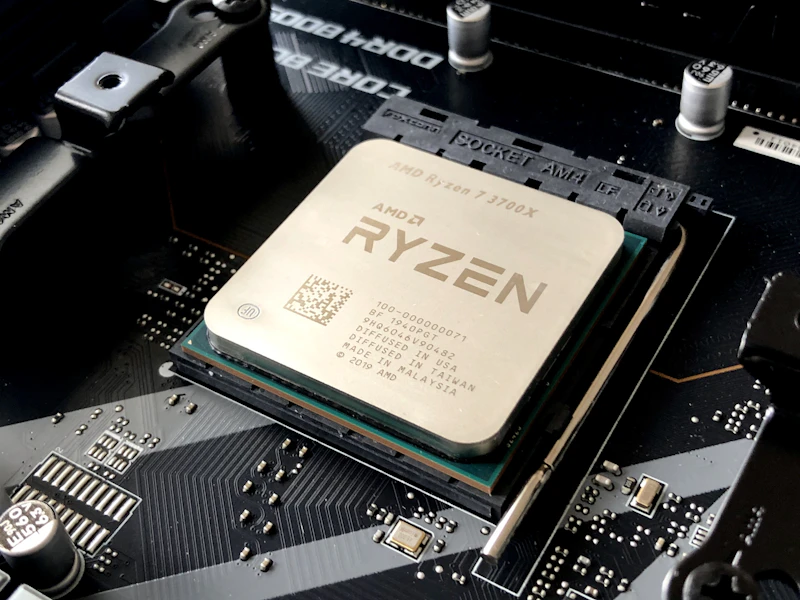
Methodology & Source Disclosure: This article is a comparative processor microarchitecture, memory subsystem, and developer hardware analysis compiled from publicly released manufacturer specifications and technical documentation published by ASUS, Intel, Milk-V, and Minisforum. All TOPS metrics, memory bandwidths, ISA extensions, and form-factor dimensions reflect vendor-published datasheets. Representative illustration via Unsplash.
Edge AI hardware architects in late 2026 are optimizing simultaneously for the ultra-dense 30W workstation tier and the sub-$100 open-ISA compiler tier: at the high-efficiency x86 pinnacle, the $949 ASUS NUC 14 Pro AI+ (580g, 130×130×34mm, <0.6L) deploys Intel's flagship Core Ultra 9 288V Lunar Lake processor—combining a 48-TOPS NPU 4.0, a 67-TOPS Arc 140V Xe2 GPU, and 5-TOPS CPU (120 total platform TOPS) with 32GB of on-package LPDDR5X-8533 memory (~136.5 GB/s) and a persistent multi-color E-Ink top-cover canvas. Meanwhile, for systems programmers porting AI runtimes to open silicon, the $89 Milk-V Jupiter (170×170mm Mini-ITX) brings the octa-core 64-bit SpacemiT K1/M1 X60 RISC-V SoC—complete with ratified RVA22 profile compliance, 256-bit RVV 1.0 vector extensions, and 2.0 INT8 TOPS of CPU-fused AI acceleration—to a standard ATX-powered Mini-ITX desktop board with up to 16GB LPDDR4X, M.2 NVMe, dual GbE, and a PCIe x8 slot.
1. Lunar Lake 120-TOPS NUC, RVA22 RISC-V ITX & Strix Point Specification Matrix
The matrix below compares published hardware specifications for the ASUS NUC 14 Pro AI+ ($949), Milk-V Jupiter RISC-V ITX ($89), Minisforum AI X1 Pro ($899), and Radxa Orion O6 ARMv9 ITX ($299).
| Published Silicon & System Specification | ASUS NUC 14 Pro AI+ ($949) | Milk-V Jupiter RISC-V ITX ($89) | Minisforum AI X1 Pro ($899) | Radxa Orion O6 ARMv9 ITX ($299) |
|---|---|---|---|---|
| Form Factor & Dimensions | 130×130×34 mm / 580 g (<0.6L NUC) | 170×170 mm / 315 g Mini-ITX Board | 195×195×47.5 mm / 1.5 kg Mini PC | 170×170 mm / 420 g Mini-ITX Board |
| Processor & ISA Architecture | Intel Core Ultra 9 288V (8C Lunar Lake) | SpacemiT K1/M1 8-Core RISC-V (RVA22) | AMD Ryzen AI 9 HX 370 (12C Zen 5/5c) | CIX P1 12-Core ARMv9.2 (SVE2) |
| GPU & Vector / NPU Accelerators | 67T Arc 140V Xe2 GPU + 48T NPU 4.0 | 256-Bit RVV 1.0 + 2.0T Fused AI + BXE GPU | Radeon 890M (16 CU) + 50T XDNA 2 NPU | Immortalis-G720 MC10 + ~30T NPU |
| Total Platform AI Compute | 120 Total Platform TOPS (@ 30W cTDP) | 2.0 INT8 TOPS CPU-Fused Matrix Engine | Up to 80 Total Platform TOPS | 45 Total Platform TOPS |
| Memory Capacity & Bandwidth | 32GB On-Package LPDDR5X-8533 (136.5 GB/s) | 4GB / 8GB / 16GB Soldered LPDDR4X | Up to 96GB DDR5-5600 (Dual SO-DIMM) | 8GB–64GB 128-Bit LPDDR5-5500 (~88 GB/s) |
| Expansion & Storage Interfaces | 2× Thunderbolt 4 (DP 2.1) + M.2 Gen4 | PCIe Gen2 x8 Slot (x2) + M.2 NVMe + SATA | Native OCuLink (4.0 x4) + 3× M.2 NVMe | PCIe Gen4 x16 Slot (x8) + M.2 Gen4 x4 |
| Display / Chassis Signature | Persistent Multi-Color E-Ink Top Cover | 24-Pin ATX / 12V DC / USB-C PD + 2× GbE | Internal 135W GaN PSU + Dual 2.5GbE | Dual 5GbE RJ45 + EDK2 SystemReady UEFI |
2. ASUS NUC 14 Pro AI+ Architecture: 120 TOPS at 30W, 136.5 GB/s On-Package RAM & Zero-Power Color E-Ink
Running 8B- to 14B-parameter local LLMs and real-time voice/vision agents on a standard DDR5-5600 mini PC is typically memory-bandwidth starved (~89 GB/s) while drawing 65W to 100W under sustained load.
┌──────────────────────────────────────────────────────────────────────────────┐
│     ASUS NUC 14 PRO AI+ ($949 120 TOPS) vs MILK-V JUPITER ($89 RISC-V ITX)   │
│                                                                              │
│  [ASUS NUC 14 PRO AI+: Core Ultra 9 288V (120 TOPS) + Color E-Ink Top Cover] │
│     │  ──► 48-TOPS Intel NPU 4.0 + 67-TOPS Arc 140V Xe2 GPU + 5-TOPS CPU     │
│     │  ──► 32GB On-Package LPDDR5X-8533 (~136.5 GB/s) @ 30W Sustained TDP   │
│     ▼  ──► Persistent Multi-Color E-Ink Top Canvas + 2× TB4 + Mic/Speaker    │
│  Design Focus: Ultra-Quiet 24/7 OpenVINO / Copilot+ Desktop AI Appliance     │
│                                                                              │
│  [MILK-V JUPITER: SpacemiT K1/M1 8-Core 64-Bit RISC-V Mini-ITX ($89)]        │
│     │  ──► Ratified RVA22 Profile + 256-Bit RVV 1.0 Vector + 2.0T Fused AI  │
│     │  ──► Tightly Coupled CPU Matrix Instructions Eliminate PCIe NPU Latency│
│     ▼  ──► Standard 170×170mm Mini-ITX w/ ATX/USB-C Power, PCIe x8 & 2× GbE │
│  Design Focus: Native RISC-V RVV 1.0 LLM/ONNX Compiler Target & Home NAS     │
└──────────────────────────────────────────────────────────────────────────────┘
Three Engineering Breakthroughs in the ASUS NUC 14 Pro AI+ ($949):
- 120 Total Platform TOPS & 136.5 GB/s On-Package Memory at 30W: By stepping up to the top-bin Intel Core Ultra 9 288V (30W cTDP vs. 17W on the 258V), the NUC 14 Pro AI+ unlocks 48 INT8 TOPS on Intel NPU 4.0 and 67 TOPS on the 8-core Intel Arc 140V Xe2 GPU (with XMX systolic arrays), fed by 32GB of on-package LPDDR5X-8533 memory delivering ~136.5 GB/s of bandwidth—accelerating
OpenVINOandllama.cppSYCL token generation by ~50% over standard SO-DIMM DDR5. - Persistent Multi-Color E-Ink Electronic Paper Top Display: The AI+ edition embeds a full-color E-Ink display across its top lid. Developers can program the NPU/GPU to generate custom AI status dashboards, node IP/QR codes, or artwork that remains permanently visible at 0.0W standby power even if the NUC is shut down and unplugged.
- 0.58-Liter Voice-Ready Appliance I/O: Measuring just 130×130×34mm (580g) with tool-less chassis access, it integrates a far-field microphone array, internal speaker, Windows Hello fingerprint reader, dedicated Copilot button, dual Thunderbolt 4 (DisplayPort 2.1), Intel 2.5GbE LAN, and Wi-Fi 7.
3. Milk-V Jupiter Architecture: Why RVA22 + 256-Bit RVV 1.0 Makes $89 RISC-V Ready for Mainline AI
Early RISC-V development boards relied on pre-ratification draft vector extensions (RVV 0.7.1), forcing developers to maintain forked toolchains and preventing mainline Ubuntu, Fedora, or llama.cpp from running out of the box.
Why Open-Source & Compiler Engineers Choose Milk-V Jupiter ($89):
- SpacemiT K1/M1 (8× X60 Cores) with RVA22 & 256-Bit RVV 1.0: Milk-V Jupiter's octa-core SpacemiT K1 (1.6GHz) / M1 (1.8GHz) SoC implements the ratified RVA22 application processor profile alongside 256-bit RISC-V Vector 1.0 (RVV 1.0) and 2.0 INT8 TOPS of CPU-fused AI matrix instructions. Because the AI tensor extensions execute directly inside the CPU instruction stream rather than across an external PCIe bus, small quantizations (
Qwen2.5-1.5B,Whisper-tiny,YOLOv8) run with zero driver marshaling overhead. - Standard $89 Mini-ITX with ATX/USB-C Power, PCIe x8 & Dual GbE: Built on a standard 170×170mm Mini-ITX PCB, Jupiter accepts 24-pin ATX, 12V DC barrel, or USB-C PD power, up to 16GB LPDDR4X, an M.2 NVMe SSD, dual Gigabit Ethernet ports, Wi-Fi 6, and a physical PCIe x8 slot (PCIe 2.1 x2) for SATA HBA cards, 10GbE NICs, or entry-level Radeon GPUs.
4. Official Sources, Datasheets & Edge Platform Selection Guide
Primary Manufacturer Sources & Documentation:
- ASUS — NUC 14 Pro AI / AI+ (Core Ultra 9 288V + E-Ink) Official Page: asus.com/displays-desktops/nucs/nuc-mini-pcs/asus-nuc-14-pro-ai
- Milk-V — Jupiter (SpacemiT K1/M1 RISC-V Mini-ITX) Documentation: milkv.io/jupiter
- Minisforum — AI X1 Pro (Ryzen AI 9 HX 370 + OCuLink): store.minisforum.com/products/minisforum-ai-x1-pro
- Radxa — Orion O6 (CIX P1 12-Core ARMv9 Mini-ITX): radxa.com/products/orion/o6
Platform Selection Summary:
- Select the ASUS NUC 14 Pro AI+ ($949) if you want a whisper-quiet 580g, 30W desktop AI node delivering 120 total TOPS, 136.5 GB/s on-package LPDDR5X-8533 memory, dual Thunderbolt 4, and a zero-power color E-Ink top display.
- Select the Milk-V Jupiter ($89) if you want an affordable 170×170mm Mini-ITX RISC-V platform with ratified RVA22 + 256-bit RVV 1.0 vector extensions, 2.0 TOPS fused AI, PCIe x8, and dual GbE.
- Select the Minisforum AI X1 Pro ($899) when your workload requires up to 96GB upgradeable DDR5, three M.2 NVMe SSDs, and a 64Gbps OCuLink port for external RTX GPU docking.
🔗 Related AI Hardware Benchmarked in This Report
ASUS NUC 14 Pro AI+ (Core Ultra 9 288V 120-TOPS Lunar Lake Copilot+ Mini PC w/ E-Ink Display) →
0.58-kilogram (<0.6L) Copilot+ mini AI workstation powered by the Intel Core Ultra 9 288V Lunar Lake processor (48-TOPS NPU 4.0 + 67-TOPS Arc 140V GPU = 120 total TOPS) with 32GB on-package LPDDR5X-8533 memory, a persistent multi-color E-Ink top display, dual Thunderbolt 4, and Wi-Fi 7.
Milk-V Jupiter (SpacemiT K1/M1 8-Core RVA22 RISC-V + RVV 1.0 Open-Source Mini-ITX AI Board) →
170×170mm open-source RISC-V Mini-ITX desktop motherboard powered by the octa-core 64-bit SpacemiT K1/M1 X60 SoC (compliant with the RVA22 profile and 256-bit RVV 1.0 vector standard plus 2.0 INT8 TOPS fused AI), featuring up to 16GB LPDDR4X, a PCIe x8 slot, M.2 NVMe, and dual Gigabit LAN.
Minisforum AI X1 Pro (Ryzen AI 9 HX 370 80-TOPS Copilot+ Mini Workstation w/ OCuLink & Triple M.2) →
1.5kg aluminum Copilot+ mini AI workstation powered by the 12-core AMD Ryzen AI 9 HX 370 (50-TOPS XDNA 2 NPU + Radeon 890M 16-CU RDNA 3.5 GPU = 80 total TOPS), integrating a built-in 135W GaN power supply, native PCIe 4.0 x4 OCuLink eGPU port, three M.2 NVMe slots, and up to 96GB DDR5 memory.
Radxa Orion O6 (CIX P1 12-Core ARMv9 + 45-TOPS NPU Open-Source Mini-ITX AI Motherboard) →
170×170mm open-source ARMv9.2 Mini-ITX developer motherboard powered by the 6nm CIX P1 (CD8180) 12-core SoC, delivering 45 total AI TOPS (~30-TOPS NPU + hardware ray-tracing Immortalis-G720 MC10 GPU), 128-bit LPDDR5-5500 memory (up to 64GB), PCIe Gen4 x16 slot, and dual 5GbE networking.
📚 Related Deep-Dive Teardowns & Benchmarks
Browse All 133 Articles →Minisforum AI X1 Pro (Ryzen AI 9 HX 370 80 TOPS + OCuLink) vs Radxa Orion O6 (CIX P1 45-TOPS ARMv9 Mini-ITX) vs Khadas Mind 2 Comparison: x86 eGPU Node vs Open ARMv9 ITX
A technical silicon, memory-bus, and PCIe expansion comparison of the Minisforum AI X1 Pro ($899, 1.5kg Copilot+ mini workstation with AMD Ryzen AI 9 HX 370, 50-TOPS XDNA 2 NPU / 80 total TOPS, up to 96GB DDR5, 3× M.2 PCIe 4.0 slots, native 64Gbps OCuLink eGPU port, and built-in 135W GaN PSU), Radxa Orion O6 ($299, 170×170mm Mini-ITX open-source ARMv9.2 motherboard with 12-core CIX P1 SoC, 45 TOPS, 128-bit LPDDR5-5500 up to 64GB, and PCIe Gen4 x16), and Khadas Mind 2 AI Maker Kit ($1,099).
Khadas Mind 2 AI Maker Kit (Lunar Lake 115 TOPS) vs Thundercomm RUBIK Pi 3 (QCS6490 8GB/128GB) vs Particle Tachyon Comparison: Modular eGPU PC vs $119 Edge SBC
A technical silicon and edge developer hardware comparison of the Khadas Mind 2 AI Maker Kit ($1,099, 435g modular mini workstation with Intel Core Ultra 7 258V Lunar Lake, 32GB on-package LPDDR5X-8533, 115 total AI TOPS, built-in 5.55Wh hot-swap standby battery, and PCIe 5.0 Mind Link eGPU expansion), Thundercomm RUBIK Pi 3 ($119, 100×75mm Qualcomm Dragonwing QCS6490 12-TOPS NPU board with 8GB RAM and 128GB UFS 2.2), and Particle Tachyon ($149).
GMKtec EVO-X2 (Strix Halo 128GB) vs Particle Tachyon (5G 12-TOPS SBC) vs HP Z2 Mini G1a Comparison: $1,799 96GB VRAM Mini Workstation vs $149 5G Field AI Node
A technical silicon and edge deployment comparison of the GMKtec EVO-X2 ($1,799, 16-core AMD Ryzen AI Max+ 395 mini workstation with 128GB LPDDR5X-8000 unified memory, up to 96GB UMA VRAM allocation, and 140W dual-fan vapor-chamber cooling), Particle Tachyon ($149, Raspberry Pi-sized credit-card Ubuntu SBC with Qualcomm QCM6490, 12-TOPS Hexagon 770 NPU, and integrated global 5G Sub-6GHz EtherSIM+), and HP Z2 Mini G1a ($2,299).
HP Z2 Mini G1a (Strix Halo 128GB) vs ASUS Ascent GX10 (GB10) vs NVIDIA DGX Spark Comparison: 96GB UMA VRAM vs 1-PFLOP FP4
A technical architecture and specification comparison of the HP Z2 Mini G1a ($2,299, 2.9L AMD Ryzen AI Max+ PRO 395 workstation with 128GB LPDDR5X-8533 and 96GB allocatable UMA VRAM), ASUS Ascent GX10 ($3,499, NVIDIA GB10 Grace Blackwell Superchip with 1,000 FP4 TOPS, 128GB unified RAM, and 200GbE ConnectX-7), Framework Desktop ($1,999), and NVIDIA DGX Spark ($3,999).