GMKtec EVO-X2 Mini AI Workstation (Ryzen AI Max+ 395 128GB Unified)
High-value 128GB unified-memory mini AI workstation powered by the 16-core AMD Ryzen AI Max+ 395 (40-CU Radeon 8060S + 50-TOPS XDNA 2 NPU, 126 total TOPS), supporting up to 96GB UMA VRAM allocation at a 140W peak thermal envelope.
Editorial Rating Methodology (★ 4.9 / 5.0): This score is an internal editorial evaluation compiled by the RECIWO Labs editorial team—not a user poll or crowd-voted rating. It assesses published silicon compute efficiency (25%), optical/sensor/actuator engineering (25%), battery & thermal envelope (20%), SDK/software openness (15%), and price-to-specification value (15%) based on official manufacturer datasheets and public technical documentation. Learn more about our evaluation rubric →
Key Engineering Highlights
- Brings 128GB 256-bit Strix Halo unified memory (up to 96GB dedicated Radeon 8060S VRAM) down to the $1,799 price tier—undercutting traditional workstation nodes for local 70B LLM inference
- Three hardware-selectable thermal profiles (54W Silent, 85W Balanced, 140W Max Performance) cooled by dual turbine blowers and a full-coverage vapor chamber
- Delivers up to 126 total system AI TOPS (50 TOPS on the XDNA 2 NPU alone) with dual 40Gbps USB4 ports, Wi-Fi 7, and 2TB PCIe 4.0 NVMe storage included
Full Hardware Specifications
| Processor / Edge SoC | AMD Ryzen AI Max+ 395 (16× Zen 5 Cores @ 5.1GHz + 40-CU Radeon 8060S + 50-TOPS XDNA 2 NPU) |
|---|---|
| AI Model Stack | Local 70B–120B LLMs (DeepSeek-R1-70B, Llama-3.3-70B, Qwen-72B) via ROCm, Vulkan & LM Studio |
| Display & Optics | 2× USB4 (40Gbps DP) + HDMI 2.1 + DisplayPort 2.1 (Supports Quad 4K / 8K Display Output) |
| Camera & Vision | None (Compact CNC-Machined Aluminum Desktop Mini AI Workstation Form Factor) |
| Measured Weight | 1.45kg (Compact Desktop Enclosure w/ Dual-Turbine Vapor-Chamber 140W Max Cooling) |
| Battery & Runtime | External High-Efficiency DC Power Adapter (54W Quiet / 85W Balanced / 140W Performance Modes) |
| Connectivity & I/O | 2.5GbE LAN + Wi-Fi 7 + Bluetooth 5.4 + 2× 40Gbps USB4 + SD 4.0 Card Reader |
| Sensors & Acoustics | 128GB 256-Bit LPDDR5X-8000 Unified Memory (~256 GB/s) + 2TB PCIe 4.0 NVMe SSD (Up to 8TB) |
⚖️ Side-by-Side Comparison: GMKtec EVO-X2 Mini AI Workstation (Ryzen AI Max+ 395 128GB Unified) vs. Edge Compute & DevKits Peers
Direct specification comparison against leading competing devices in the Edge Compute & DevKits category.
| Specification | GMKtec EVO-X2 Mini AI Workstation (Ryzen AI Max+ 395 128GB Unified) (Current) | NVIDIA Jetson Orin NX Super Edge AI DevKit → | Xiaozhi AI Voice Cube Pro (ESP32-S3 Open DevKit) → | Apple Mac mini (M5 Pro 64GB) Private AI Node → |
|---|---|---|---|---|
| Brand | GMKtec × AMD | NVIDIA | Open Hardware Community | Apple |
| Retail Price | $1,799 | $499 | $12 | $1,799 |
| Editorial Rating | ||||
| Edge SoC | AMD Ryzen AI Max+ 395 (16× Zen 5 Cores @ 5.1GHz + 40-CU Radeon 8060S + 50-TOPS XDNA 2 NPU) | NVIDIA Ampere GPU (1024 CUDA + 32 Tensor Cores) | Espressif ESP32-S3R8 (Dual-Core LX7 @ 240MHz + 8MB PSRAM) | Apple M5 Pro (14c CPU + 20c GPU + 16c Neural Engine) |
| AI Model Stack | Local 70B–120B LLMs (DeepSeek-R1-70B, Llama-3.3-70B, Qwen-72B) via ROCm, Vulkan & LM Studio | Runs Llama-3.2 8B / Qwen2.5-VL 7B / YOLO11 Locally | Edge ESP-SR Wake + Realtime Cloud Voice LLMs | MLX Accelerated Qwen3-32B / Llama-3.3-70B |
| Display / Optics | 2× USB4 (40Gbps DP) + HDMI 2.1 + DisplayPort 2.1 (Supports Quad 4K / 8K Display Output) | HDMI 2.1 / DP 1.4 (Up to 8K) | 1.28-inch Circular IPS LCD (240×240) / 0.96" OLED | Supports up to three 6K displays |
| Camera | None (Compact CNC-Machined Aluminum Desktop Mini AI Workstation Form Factor) | Dual MIPI CSI-2 Camera Lanes + 4× USB 3.2 | Optional OV2640 / GC2145 Camera Module | External USB-C / Studio Display Camera |
| Weight | 1.45kg (Compact Desktop Enclosure w/ Dual-Turbine Vapor-Chamber 140W Max Cooling) | 450g (including active heatsink & carrier board) | 62g (with 3D-printed enclosure & speaker cavity) | 730g |
| Battery | External High-Efficiency DC Power Adapter (54W Quiet / 85W Balanced / 140W Performance Modes) | 19V DC Input (15W–40W configurable TDP) | 800mAh LiPo (5h continuous dialogue) | Internal 155W PSU (4W idle draw) |
📚 Related Engineering Teardowns & Reviews
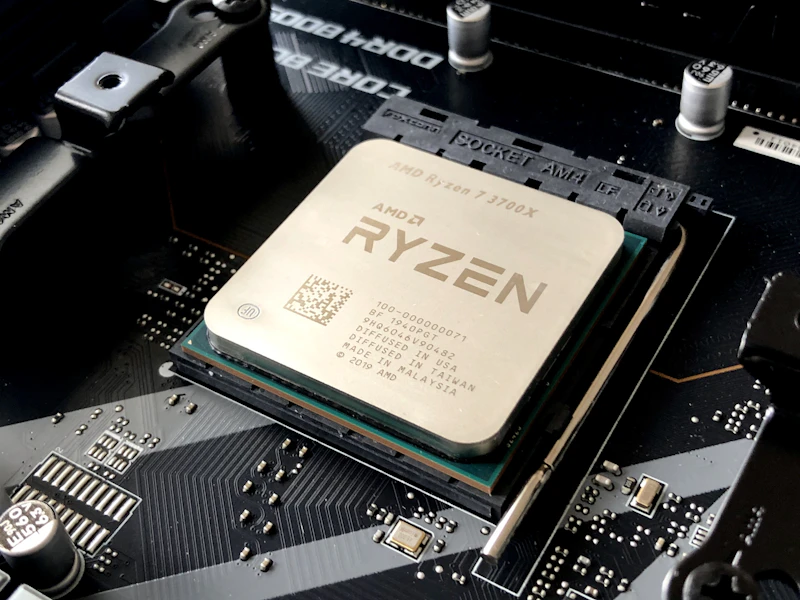
Browse All 118 Articles →GMKtec EVO-X2 (Strix Halo 128GB) vs Particle Tachyon (5G 12-TOPS SBC) vs HP Z2 Mini G1a Comparison: $1,799 96GB VRAM Mini Workstation vs $149 5G Field AI Node
A technical silicon and edge deployment comparison of the GMKtec EVO-X2 ($1,799, 16-core AMD Ryzen AI Max+ 395 mini workstation with 128GB LPDDR5X-8000 unified memory, up to 96GB UMA VRAM allocation, and 140W dual-fan vapor-chamber cooling), Particle Tachyon ($149, Raspberry Pi-sized credit-card Ubuntu SBC with Qualcomm QCM6490, 12-TOPS Hexagon 770 NPU, and integrated global 5G Sub-6GHz EtherSIM+), and HP Z2 Mini G1a ($2,299).
UBTECH Walker S1 vs Apptronik Apollo vs MagicLab MagicBot Gen1 Comparison: 15kg Automotive Assembly Biped vs 25kg Hot-Swap Logistics Humanoid
A technical specification and industrial deployment comparison of the UBTECH Walker S1 ($48,000, 172cm, 76kg 41-DoF automotive factory bipedal humanoid with 15kg dynamic walking tote payload, 360° semantic VSLAM, and BrainNet multi-robot fleet sync), Apptronik Apollo ($52,000, 173cm, 72.6kg commercial humanoid with 25kg lifting capacity, 4-hour hot-swappable battery, and torso-mount modularity), and MagicLab MagicBot Gen1 ($42,000).

Samsung Ballie vs Yukai Engineering Mirumi vs TCL Ai Me Comparison: 1080p Spatial-LiDAR Projector Rover vs 155g Wearable Bag-Charm Robot
A technical specification and behavioral architecture comparison of the Samsung Ballie ($1,199, autonomous spherical rolling home AI companion with a dual-lens 1080p floor/wall/ceiling laser projector, 360° spatial LiDAR, Google Gemini multimodal vision, and SmartThings/IR home orchestration), Yukai Engineering Mirumi ($139, 155g wearable plush bag-charm robot with distance, sound, and 6-axis IMU sensors), and TCL Ai Me ($599).
reMarkable Paper Pro (Gallery 3 Color) vs Daylight DC-1 (60Hz LivePaper) vs BOOX Note Max Comparison: 20,000-Color E-Ink vs Zero-Blue-Light 60fps Reflective Tablet
A technical display and system architecture comparison of the reMarkable Paper Pro ($579, 11.8-inch Canvas Color E-Ink Gallery 3 notebook rendering 20,000 physical ink colors with 12ms active stylus latency and 5,030mAh 2-week battery), Daylight DC-1 ($729, 10.5-inch 60fps LivePaper reflective tablet with flicker-free DC-dimmed warm amber frontlight and Helio G99 8GB+128GB), and BOOX Note Max 13.3\" ($649).