Khadas Mind 2 AI Maker Kit (Lunar Lake 115 TOPS) vs Thundercomm RUBIK Pi 3 (QCS6490 8GB/128GB) vs Particle Tachyon Comparison: Modular eGPU PC vs $119 Edge SBC
A technical silicon and edge developer hardware comparison of the Khadas Mind 2 AI Maker Kit ($1,099, 435g modular mini workstation with Intel Core Ultra 7 258V Lunar Lake, 32GB on-package LPDDR5X-8533, 115 total AI TOPS, built-in 5.55Wh hot-swap standby battery, and PCIe 5.0 Mind Link eGPU expansion), Thundercomm RUBIK Pi 3 ($119, 100×75mm Qualcomm Dragonwing QCS6490 12-TOPS NPU board with 8GB RAM and 128GB UFS 2.2), and Particle Tachyon ($149).
Executive Summary: 435g 115-TOPS Lunar Lake Hot-Swap Compute Modules vs $119 8GB/128GB Qualcomm Dragonwing Vision Boards
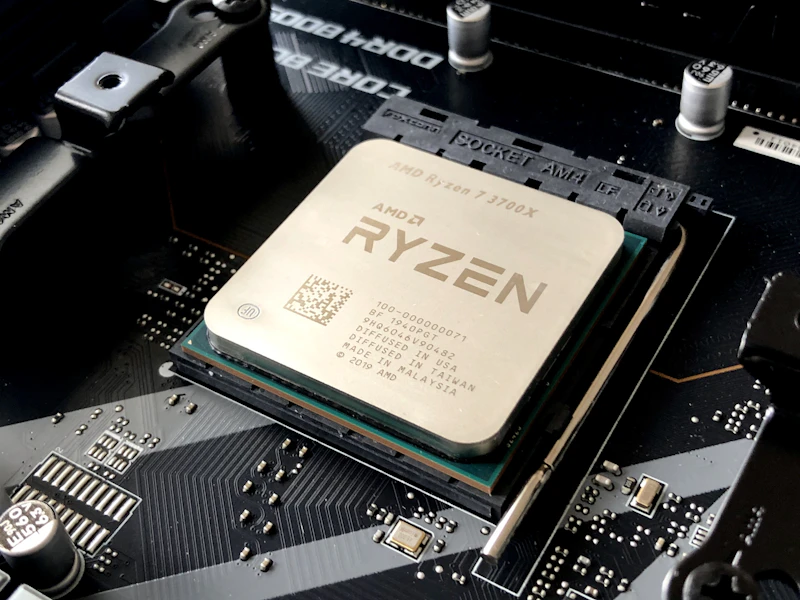
Methodology & Source Disclosure: This article is a comparative silicon and developer board specification analysis compiled from publicly released manufacturer datasheets and hardware documentation published by Khadas, Intel, Thundercomm, Qualcomm, and Particle. All TOPS ratings, memory configurations, I/O lanes, and dimensions reflect vendor-published specifications. Representative illustration via Unsplash.
Prototyping and deploying physical AI systems in late 2026 spans two highly specialized developer form factors below the full-size workstation tier: for AI application makers who commute between home labs, robotics benches, and client demos, the $1,099 Khadas Mind 2 AI Maker Kit (435.0g, 146×105×20mm) packs Intel's Core Ultra 7 258V ("Lunar Lake") with 32GB of on-package LPDDR5X-8533 memory, 115 total INT8 TOPS (47-TOPS NPU 4.0 + 64-TOPS Arc 140V GPU), an internal 5.55Wh standby battery for live unplug-and-move hot-swapping, and a proprietary PCIe 5.0 Mind Link bus for desktop RTX eGPU docking. At the $119 embedded robotics and smart-camera tier, the Thundercomm RUBIK Pi 3 (100×75mm, 68g) pairs the 6nm Qualcomm Dragonwing QCS6490 SoC and 12-TOPS Hexagon 770 NPU with 8GB LPDDR4X RAM and 128GB UFS 2.2 flash—doubling the RAM and storage of competing sub-$150 Qualcomm SBCs while exposing dual 4-lane MIPI-CSI camera ports, M.2 PCIe 3.0 x2, and Gigabit Ethernet.
1. Lunar Lake Modular AI PC & Qualcomm QCS6490/QCM6490 SBC Specification Matrix
The matrix below compares published hardware specifications for the Khadas Mind 2 AI Maker Kit ($1,099), Thundercomm RUBIK Pi 3 ($119), Particle Tachyon 5G SBC ($149), and GMKtec EVO-X2 128GB ($1,799).
| Published Silicon & Board Specification | Khadas Mind 2 AI Maker Kit ($1,099) | Thundercomm RUBIK Pi 3 ($119) | Particle Tachyon 5G SBC ($149) | GMKtec EVO-X2 128GB ($1,799) |
|---|---|---|---|---|
| Dimensions & Weight | 146×105×20 mm / 435.0 g Aluminum | 100×75 mm / 68.0 g Open SBC | 85×56 mm / 52.0 g Credit-Card SBC | Compact 1.45 kg Desktop Mini PC |
| Core Compute Processor | Intel Core Ultra 7 258V (8C Lunar Lake) | Qualcomm QCS6490 (8C Kryo 670, 6nm) | Qualcomm QCM6490 (8C Kryo 670, 6nm) | AMD Ryzen AI Max+ 395 (16C Zen 5) |
| GPU & NPU Accelerator Stack | 64-TOPS Arc 140V + 47-TOPS NPU 4.0 | Adreno 643L + 12-TOPS Hexagon 770 | Adreno 643 + 12-TOPS Hexagon 770 | 40-CU Radeon 8060S + 50-TOPS XDNA 2 |
| Published Total AI Compute | Up to 115 Total Platform TOPS | 12 INT8 TOPS (Fused Hexagon DSP) | 12 INT8 TOPS (Fused Hexagon DSP) | Up to 126 Total System TOPS |
| Memory & Onboard Storage | 32GB LPDDR5X-8533 + 1TB PCIe 4.0 SSD | 8GB LPDDR4X RAM + 128GB UFS 2.2 | 4GB LPDDR4X RAM + 64GB UFS Flash | 128GB LPDDR5X-8000 + 2TB NVMe SSD |
| High-Speed Expansion & Camera I/O | PCIe 5.0 Mind Link + TB4 + USB4 | 2× 4-Lane MIPI-CSI + M.2 PCIe 3.0 x2 | 2× 4-Lane MIPI-CSI + PCIe 3.0 x2 | 2× 40Gbps USB4 + 2× PCIe 4.0 M.2 |
| Power, Battery & Networking | 65W USB-C + 5.55Wh Hot-Swap Battery | 12V/3A USB-C PD + 1GbE RJ45 + Wi-Fi 5 | 5V USB-C / Li-Ion PMIC + Global 5G | 54W–140W DC + 2.5GbE + Wi-Fi 7 |
2. Khadas Mind 2 AI Maker Kit Architecture: 115-TOPS On-Package Lunar Lake & PCIe 5.0 Mind Link
Conventional mini PCs suffer from two developer pain points: first, unplugging power to move the unit from a desk to a robotics testbed forces a full OS shutdown; second, external GPUs connected over standard 40Gbps USB4/Thunderbolt 4 lose 25%–35% of their bandwidth to protocol overhead.
┌──────────────────────────────────────────────────────────────────────────────┐
│     KHADAS MIND 2 AI KIT ($1,099 LUNAR LAKE) vs RUBIK PI 3 ($119 QCS6490)    │
│                                                                              │
│  [KHADAS MIND 2 AI MAKER KIT: Core Ultra 7 258V + 32GB MoP + 115 TOPS]       │
│     │  ──► 47-TOPS Intel NPU 4.0 + 64-TOPS Arc 140V GPU in 435g CNC Body     │
│     │  ──► Built-In 5.55Wh Standby Battery Enables Live Unplugged Hot-Swap   │
│     ▼  ──► Proprietary PCIe 5.0 Mind Link Docks Directly to RTX Mind Graphics│
│  Design Focus: Pocketable Modular AI Workstation & OpenVINO/ONNX DevKit      │
│                                                                              │
│  [THUNDERCOMM RUBIK PI 3: $119 Qualcomm QCS6490 (12 TOPS + 8GB + 128GB UFS)] │
│     │  ──► Doubles Memory/Storage vs 4GB/64GB SBCs (8GB RAM + 128GB UFS 2.2) │
│     │  ──► Triple 14-Bit Spectra ISP + Dual 4-Lane MIPI-CSI + M.2 PCIe 3.0   │
│     ▼  ──► Runs Canonical Ubuntu 24.04, Qualcomm Linux, Debian 13 & Android  │
│  Design Focus: Multi-Camera Robotics, Industrial Edge Vision & Local SLMs    │
└──────────────────────────────────────────────────────────────────────────────┘
Three Engineering Innovations in the Khadas Mind 2 AI Maker Kit ($1,099):
- 115 Total TOPS with 32GB On-Package LPDDR5X-8533 Memory: Intel's Core Ultra 7 258V ("Lunar Lake") integrates 32GB of LPDDR5X-8533 memory directly onto the processor package (MoP), slashing memory access power by up to 40% while feeding both the 47-TOPS Intel AI Boost NPU 4.0 and the 64-TOPS Intel Arc 140V Xe2 GPU. Developers can run concurrent vision-language models, Whisper speech pipelines, and 7B–14B LLMs via OpenVINO and ONNX Runtime inside a 20mm-thin, 435g enclosure.
- Built-In 5.55Wh Standby Battery for Zero-Downtime Mobility: When you unplug the USB-C power cable from the Mind 2, its internal 5.55Wh rechargeable standby battery automatically suspends or maintains system state for up to 25 hours—letting you carry the 435g compute core in your jacket pocket and snap it onto a lab monitor dock with all Docker containers and IDE sessions intact.
- PCIe 5.0 Mind Link Ecosystem: In addition to Thunderbolt 4 (40Gbps) and USB4 (40Gbps), the underside of the chassis exposes Khadas's magnetic Mind Link (PCIe 5.0) bus—locking directly onto the Mind Dock or the Mind Graphics desktop RTX eGPU module with native PCIe bandwidth.
3. Thundercomm RUBIK Pi 3 Architecture: Why 8GB RAM + 128GB UFS 2.2 Matters on a $119 Qualcomm SBC
While both the Thundercomm RUBIK Pi 3 ($119) and Particle Tachyon ($149) share Qualcomm's 6nm Dragonwing 6490 silicon architecture (8-core Kryo 670 CPU + 12-TOPS Hexagon 770 NPU), they are engineered for fundamentally different edge deployments.
Why Vision & Robotics Developers Choose RUBIK Pi 3 ($119):
- 8GB LPDDR4X RAM + 128GB UFS 2.2 Flash at $119: Running multi-stream YOLOv11 object detection, ROS 2 navigation stacks, and quantized 1.5B–3B small language models (SLMs) simultaneously can quickly exhaust a 4GB RAM budget. RUBIK Pi 3 ($119) provides 8GB of LPDDR4X RAM and 128GB of UFS 2.2 flash out of the box—twice the memory and storage of the 4GB/64GB Particle Tachyon—while costing $30 less for wired/Wi-Fi deployments that do not require an onboard 5G cellular modem.
- Triple 14-Bit Spectra ISP, M.2 NVMe & Multi-OS Flexibility: Measuring 100×75mm (68g), RUBIK Pi 3 exposes two 4-lane MIPI-CSI camera connectors backed by Qualcomm's triple 14-bit Spectra ISP (up to 64MP), full-size HDMI 1.4, 4K60 USB-C DisplayPort, 1GbE RJ45 Ethernet, an M.2 Key-M (PCIe 3.0 x2) slot, and a 40-pin Raspberry Pi GPIO header—supporting Canonical Ubuntu, Qualcomm Linux, Debian 13, and Android 13.
4. Official Sources, Datasheets & Edge Platform Selection Guide
Primary Manufacturer Sources & Documentation:
- Khadas — Mind 2 AI Maker Kit (Intel Core Ultra 7 258V) Specifications: khadas.com/mind
- Thundercomm — RUBIK Pi 3 (Qualcomm Dragonwing QCS6490) Official Page: thundercomm.com/product/rubik-pi
- Particle — Tachyon 5G + 12-TOPS Qualcomm QCM6490 SBC: particle.io/tachyon
- GMKtec — EVO-X2 (Ryzen AI Max+ 395 128GB) Mini Workstation: gmktec.com
Platform Selection Summary:
- Select the Khadas Mind 2 AI Maker Kit ($1,099) if you want a 435g pocketable modular x86 workstation with 115 total Lunar Lake TOPS, 32GB on-package memory, a built-in hot-swap standby battery, and PCIe 5.0 eGPU expansion.
- Select the Thundercomm RUBIK Pi 3 ($119) if you need a 6nm Qualcomm QCS6490 12-TOPS SBC with 8GB RAM, 128GB UFS 2.2 flash, dual MIPI-CSI cameras, 1GbE LAN, and M.2 PCIe 3.0 for robotics and smart-vision labs.
- Select the Particle Tachyon ($149) when your outdoor field deployment specifically requires integrated global 5G Sub-6GHz cellular connectivity (EtherSIM+) and an onboard Li-Ion battery PMIC.
🔗 Related AI Hardware Benchmarked in This Report
Khadas Mind 2 AI Maker Kit (Intel Core Ultra 7 258V Lunar Lake 115-TOPS Modular Mini PC) →
435-gram pocket-sized modular AI workstation powered by the Intel Core Ultra 7 258V ('Lunar Lake', 47-TOPS NPU 4.0 + 64-TOPS Arc 140V GPU = 115 total TOPS) with 32GB on-package LPDDR5X-8533 memory, a built-in 5.55Wh hot-swap standby battery, and a PCIe 5.0 Mind Link eGPU interface.
Thundercomm RUBIK Pi 3 (Qualcomm Dragonwing QCS6490 12-TOPS NPU + 8GB/128GB Edge AI SBC) →
100×75mm developer single-board computer built on the 6nm Qualcomm Dragonwing QCS6490 SoC (8-core Kryo 670 CPU, Adreno 643L GPU, and 12-TOPS Hexagon 770 NPU) with 8GB LPDDR4X RAM, 128GB UFS 2.2 flash, dual 4-lane MIPI-CSI camera inputs, M.2 PCIe 3.0 x2, and multi-OS support.
Particle Tachyon 5G + 12-TOPS Qualcomm QCM6490 Edge AI SBC →
Raspberry Pi-sized credit-card Linux single-board computer combining an octa-core Qualcomm Dragonwing QCM6490 SoC and 12-TOPS Hexagon 770 NPU with built-in global 5G Sub-6GHz cellular connectivity (EtherSIM+), Wi-Fi 6E, 4GB RAM, and 64GB UFS flash.
GMKtec EVO-X2 Mini AI Workstation (Ryzen AI Max+ 395 128GB Unified) →
High-value 128GB unified-memory mini AI workstation powered by the 16-core AMD Ryzen AI Max+ 395 (40-CU Radeon 8060S + 50-TOPS XDNA 2 NPU, 126 total TOPS), supporting up to 96GB UMA VRAM allocation at a 140W peak thermal envelope.
📚 Related Deep-Dive Teardowns & Benchmarks
Browse All 123 Articles →GMKtec EVO-X2 (Strix Halo 128GB) vs Particle Tachyon (5G 12-TOPS SBC) vs HP Z2 Mini G1a Comparison: $1,799 96GB VRAM Mini Workstation vs $149 5G Field AI Node
A technical silicon and edge deployment comparison of the GMKtec EVO-X2 ($1,799, 16-core AMD Ryzen AI Max+ 395 mini workstation with 128GB LPDDR5X-8000 unified memory, up to 96GB UMA VRAM allocation, and 140W dual-fan vapor-chamber cooling), Particle Tachyon ($149, Raspberry Pi-sized credit-card Ubuntu SBC with Qualcomm QCM6490, 12-TOPS Hexagon 770 NPU, and integrated global 5G Sub-6GHz EtherSIM+), and HP Z2 Mini G1a ($2,299).
HP Z2 Mini G1a (Strix Halo 128GB) vs ASUS Ascent GX10 (GB10) vs NVIDIA DGX Spark Comparison: 96GB UMA VRAM vs 1-PFLOP FP4
A technical architecture and specification comparison of the HP Z2 Mini G1a ($2,299, 2.9L AMD Ryzen AI Max+ PRO 395 workstation with 128GB LPDDR5X-8533 and 96GB allocatable UMA VRAM), ASUS Ascent GX10 ($3,499, NVIDIA GB10 Grace Blackwell Superchip with 1,000 FP4 TOPS, 128GB unified RAM, and 200GbE ConnectX-7), Framework Desktop ($1,999), and NVIDIA DGX Spark ($3,999).
MemryX MX3 vs Kinara Ara-2 (NXP) vs Axelera Metis M.2 Comparison: DRAM-Free At-Memory Dataflow vs 16GB 40-TOPS Edge GenAI NPU
A technical silicon architecture comparison of the MemryX MX3 M.2 2280 ($149, 4-chip 24-TFLOPS BF16/INT8 At-Memory Dataflow accelerator requiring zero external DRAM at ~8W), Kinara Ara-2 / NXP Ara-240 M.2 ($188, 40-TOPS polymorphic Edge GenAI NPU with 16GB LPDDR4X for local LLMs and VLMs), and Axelera Metis M.2 Max ($189).
Axelera Metis M.2 Max vs SiMa.ai Modalix vs DEEPX DX-M1 Comparison: 214-TOPS D-IMC vs 6nm Multimodal Physical AI SoM
A technical architecture and specification comparison of the Axelera Metis M.2 Max ($189, 214 INT8 TOPS Digital In-Memory Computing AIPU at 15 TOPS/W), SiMa.ai Modalix DevKit 3.0 ($999, TSMC 6nm 50-TOPS standalone Physical AI SoM with 4x MIPI CSI-2), DEEPX DX-M1 ($139, 25 TOPS at 3.2W), and Hailo-10H ($130).