Minisforum AI X1 Pro (Ryzen AI 9 HX 370 80 TOPS + OCuLink) vs Radxa Orion O6 (CIX P1 45-TOPS ARMv9 Mini-ITX) vs Khadas Mind 2 Comparison: x86 eGPU Node vs Open ARMv9 ITX
A technical silicon, memory-bus, and PCIe expansion comparison of the Minisforum AI X1 Pro ($899, 1.5kg Copilot+ mini workstation with AMD Ryzen AI 9 HX 370, 50-TOPS XDNA 2 NPU / 80 total TOPS, up to 96GB DDR5, 3× M.2 PCIe 4.0 slots, native 64Gbps OCuLink eGPU port, and built-in 135W GaN PSU), Radxa Orion O6 ($299, 170×170mm Mini-ITX open-source ARMv9.2 motherboard with 12-core CIX P1 SoC, 45 TOPS, 128-bit LPDDR5-5500 up to 64GB, and PCIe Gen4 x16), and Khadas Mind 2 AI Maker Kit ($1,099).
Executive Summary: 80-TOPS Ryzen AI 9 HX 370 OCuLink Nodes vs 45-TOPS 12-Core ARMv9.2 Mini-ITX Motherboards
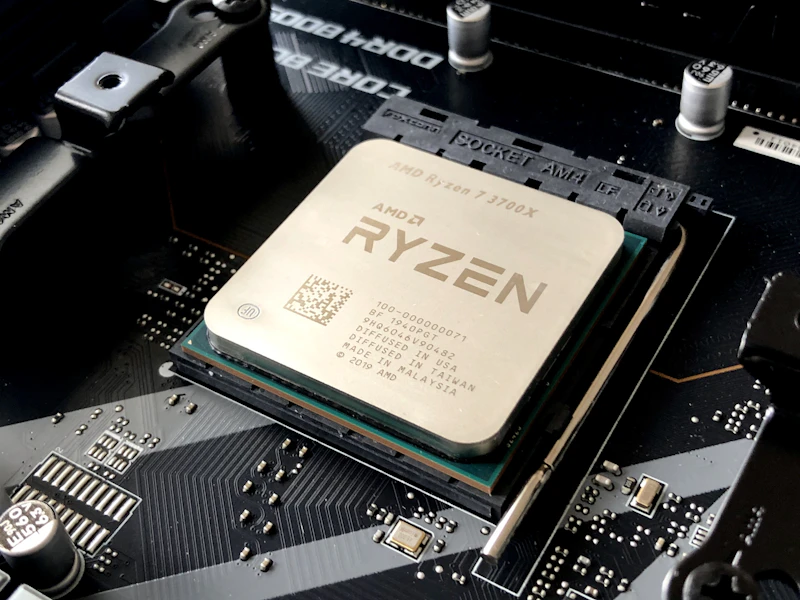
Methodology & Source Disclosure: This article is a comparative silicon architecture and developer hardware specification analysis compiled from publicly released manufacturer datasheets and technical documentation published by Minisforum, AMD, Radxa, and Khadas. All TOPS figures, memory bandwidths, PCIe lane topologies, and power ratings reflect vendor-published specifications. Representative illustration via Unsplash.
Building a sub-$1,000 local AI workstation in late 2026 offers developers two compelling alternatives to soldered-memory mini PCs: in the turnkey x86 ecosystem, the $899 Minisforum AI X1 Pro (1.5kg, 195×195×47.5mm) pairs AMD's 12-core Ryzen AI 9 HX 370 (50-TOPS XDNA 2 NPU + 16-CU Radeon 890M GPU = 80 total TOPS) with dual upgradeable SO-DIMM slots (up to 96GB DDR5), three M.2 PCIe 4.0 SSD slots, an internal 135W GaN power supply, and an independent 64Gbps OCuLink (PCIe 4.0 x4) port for near-zero-loss desktop RTX eGPU expansion. Meanwhile, for Linux kernel, robotics, and cloud-native ARM developers, the $299 Radxa Orion O6 (170×170mm Mini-ITX) debuts the 6nm 12-core CIX P1 (CD8180) ARMv9.2 SoC—combining 8× Cortex-A720 + 4× Cortex-A520 cores, an Arm Immortalis-G720 MC10 ray-tracing GPU, a ~30-TOPS NPU (45 total TOPS), 128-bit LPDDR5-5500 (~88 GB/s, up to 64GB), dual 5GbE LAN, and a full-length PCIe Gen4 x16 slot with standard SystemReady UEFI (EDK2) boot.
1. x86 Strix Point OCuLink Mini PC & ARMv9.2 Mini-ITX Specification Matrix
The matrix below compares published hardware specifications for the Minisforum AI X1 Pro ($899), Radxa Orion O6 ($299), Khadas Mind 2 AI Maker Kit ($1,099), and Milk-V Megrez RISC-V ITX ($199).
| Published Silicon & System Specification | Minisforum AI X1 Pro ($899) | Radxa Orion O6 ARMv9 ITX ($299) | Khadas Mind 2 AI Kit ($1,099) | Milk-V Megrez RISC-V ITX ($199) |
|---|---|---|---|---|
| Form Factor & Dimensions | 195×195×47.5 mm / 1.5 kg Aluminum PC | 170×170 mm / 420 g Mini-ITX Board | 146×105×20 mm / 435 g Modular PC | 170×170 mm / 310 g Mini-ITX Board |
| Processor Architecture | AMD Ryzen AI 9 HX 370 (12C Zen 5/5c) | CIX P1 12-Core ARMv9.2 (8×A720+4×A520) | Intel Core Ultra 7 258V (8C Lunar Lake) | ESWIN EIC7700X (4C 64-Bit RISC-V) |
| Integrated GPU & NPU Stack | Radeon 890M (16 CU) + 50T XDNA 2 NPU | Immortalis-G720 MC10 + ~30T NPU | 64T Arc 140V GPU + 47T NPU 4.0 | Imagination GPU + 19.95T INT8 NPU |
| Total Platform AI Compute | Up to 80 Total Platform TOPS | 45 Total TOPS (INT4/8/FP16/BF16/TF32) | Up to 115 Total Platform TOPS | 19.95 INT8 TOPS On-Die NPU |
| Memory Capacity & Bus Width | Up to 96GB DDR5-5600 (Dual SO-DIMM) | 8GB–64GB 128-Bit LPDDR5-5500 (~88 GB/s) | 32GB On-Package LPDDR5X-8533 | Up to 32GB 128-Bit LPDDR5-6400 |
| PCIe eGPU & Storage Expansion | Native OCuLink (4.0 x4) + 3× M.2 NVMe | PCIe Gen4 x16 Slot (x8) + M.2 Gen4 x4 | PCIe 5.0 Mind Link + 2× M.2 NVMe | PCIe Gen3 x8 Slot + M.2 NVMe + SATA |
| Networking & Power Architecture | Dual 2.5GbE + Wi-Fi 7 + Built-In 135W PSU | Dual 5GbE RJ45 + 24-Pin ATX / 65W USB-C | Wi-Fi 7 + 65W USB-C + 5.55Wh Battery | 1GbE RJ45 + ATX / 12V DC Barrel |
2. Minisforum AI X1 Pro Architecture: Why Independent OCuLink + Triple M.2 + 96GB RAM Wins for Hybrid AI
Many compact mini PCs force an ugly trade-off when connecting an external desktop GPU: either you bottleneck an RTX 4090/5090 over a 40Gbps USB4 tunnel, or you sacrifice your primary M.2 NVMe SSD slot to wire an OCuLink adapter.
┌──────────────────────────────────────────────────────────────────────────────┐
│     MINISFORUM AI X1 PRO ($899 HX 370) vs RADXA ORION O6 ($299 ARMV9 ITX)    │
│                                                                              │
│  [MINISFORUM AI X1 PRO: Ryzen AI 9 HX 370 (80 TOPS) + Built-In 135W GaN PSU] │
│     │  ──► 50-TOPS XDNA 2 NPU (Block FP16) + 16-CU Radeon 890M + Up to 96GB  │
│     │  ──► Dedicated 64Gbps OCuLink Port Leaves All 3× M.2 SSD Slots Intact  │
│     ▼  ──► Internal 135W GaN PSU + Dual 2.5GbE + Wi-Fi 7 + Dual USB4         │
│  Design Focus: Hybrid Local NPU + External RTX eGPU Workstation              │
│                                                                              │
│  [RADXA ORION O6: 6nm CIX P1 12-Core ARMv9.2 + 45 TOPS Open-Source Mini-ITX] │
│     │  ──► 8× Cortex-A720 + 4× A520 + 128-Bit LPDDR5-5500 (~88 GB/s, ≤64GB)  │
│     │  ──► ~30-TOPS Multi-Precision NPU + Immortalis-G720 Hardware Ray Trace │
│     ▼  ──► SystemReady UEFI (EDK2) + PCIe Gen4 x16 Slot + Dual 5GbE LAN      │
│  Design Focus: Native ARMv9 Linux Desktop, ROS 2 Robotics & LLM Server Node  │
└──────────────────────────────────────────────────────────────────────────────┘
Three Engineering Highlights of the Minisforum AI X1 Pro ($899):
- Non-Shared 64Gbps OCuLink + Three M.2 PCIe 4.0 Slots: Minisforum routed a dedicated PCIe 4.0 x4 (64Gbps) OCuLink port to the rear panel while preserving three internal M.2 2280 PCIe 4.0 NVMe SSD slots (up to 12TB total). Developers can keep multi-terabyte LLM weight repositories on fast local NVMe storage while driving an external Minisforum DEG1 + desktop RTX GPU at ~90% of native desktop PCIe performance.
- 50-TOPS AMD XDNA 2 NPU (Block FP16) + Up to 96GB Upgradeable DDR5: The 12-core / 24-thread Ryzen AI 9 HX 370 delivers 50 INT8/Block-FP16 TOPS on its XDNA 2 NPU (80 total platform TOPS alongside the 16-CU Radeon 890M iGPU), while two SO-DIMM slots support up to 96GB of DDR5-5600 RAM.
- Internal 135W GaN Power Supply & Acoustic Integration: Despite measuring just 195×195×47.5mm (1.5kg), the chassis houses an internal 135W GaN PSU (requiring only a thin figure-8 AC cord), dual speakers, dual array microphones, a Windows Hello fingerprint sensor, and dual 2.5GbE + Wi-Fi 7.
3. Radxa Orion O6 Architecture: Bringing 12-Core ARMv9.2, 128-Bit LPDDR5 & UEFI to Standard Mini-ITX
Historically, ARM single-board computers (RK3588, Raspberry Pi 5) suffered from narrow 64-bit memory buses, dated ARMv8 cores without SVE2 vector instructions, and custom DeviceTree bootloaders that broke standard Linux ISO installers.
Why ARM & Robotics Architects Choose the Radxa Orion O6 ($299):
- 6nm CIX P1 (12-Core ARMv9.2 + SVE2) & 128-Bit LPDDR5-5500 Bus: Powered by the CIX P1 (CD8180) SoC (4× Cortex-A720 @ 2.8GHz + 4× Cortex-A720 @ 2.4GHz + 4× Cortex-A520 @ 1.8GHz with 12MB shared L3 cache), Orion O6 supports ARMv9.2 Scalable Vector Extension 2 (SVE2) and a 128-bit LPDDR5-5500 memory interface (~88 GB/s bandwidth, available up to 64GB)—accelerating
llama.cppARM KleidiAI kernels and feeding its ~30-TOPS NPU (45 total TOPS). - Standard Mini-ITX (170×170mm), SystemReady UEFI & PCIe Gen4 x16: Conforming to the 170×170mm Mini-ITX footprint with both 24-pin ATX and 65W USB-C PD power inputs, Orion O6 boots standard EDK2 UEFI and exposes a full-length PCIe Gen4 x16 slot (x8 electrical), dual 5GbE RJ45 ports, quad 4K display outputs, and two 4-lane MIPI-CSI camera connectors.
4. Official Sources, Datasheets & Edge Platform Selection Guide
Primary Manufacturer Sources & Documentation:
- Minisforum — AI X1 Pro (Ryzen AI 9 HX 370 + OCuLink) Official Store: store.minisforum.com/products/minisforum-ai-x1-pro
- Radxa — Orion O6 (CIX P1 ARMv9 Mini-ITX) Documentation: radxa.com/products/orion/o6
- Khadas — Mind 2 AI Maker Kit (Core Ultra 7 258V): khadas.com/mind
- Milk-V — Megrez Mini-ITX RISC-V AI Board: milkv.io/megrez
Platform Selection Summary:
- Select the Minisforum AI X1 Pro ($899) if you want a turnkey 80-TOPS x86 Copilot+ mini workstation with up to 96GB upgradeable DDR5, three M.2 NVMe slots, an internal 135W PSU, and a dedicated 64Gbps OCuLink port for desktop GPU docking.
- Select the Radxa Orion O6 ($299) if you are building an open-source ARMv9.2 Linux workstation, ROS 2 robotics brain, or home server requiring 12 Cortex-A720/A520 cores, 45 TOPS, 128-bit LPDDR5 (up to 64GB), dual 5GbE, and a PCIe Gen4 x16 slot.
- Select the Khadas Mind 2 AI Maker Kit ($1,099) when you need a 435g pocketable Lunar Lake module (115 TOPS) with a built-in hot-swap standby battery.
🔗 Related AI Hardware Benchmarked in This Report
Minisforum AI X1 Pro (Ryzen AI 9 HX 370 80-TOPS Copilot+ Mini Workstation w/ OCuLink & Triple M.2) →
1.5kg aluminum Copilot+ mini AI workstation powered by the 12-core AMD Ryzen AI 9 HX 370 (50-TOPS XDNA 2 NPU + Radeon 890M 16-CU RDNA 3.5 GPU = 80 total TOPS), integrating a built-in 135W GaN power supply, native PCIe 4.0 x4 OCuLink eGPU port, three M.2 NVMe slots, and up to 96GB DDR5 memory.
Radxa Orion O6 (CIX P1 12-Core ARMv9 + 45-TOPS NPU Open-Source Mini-ITX AI Motherboard) →
170×170mm open-source ARMv9.2 Mini-ITX developer motherboard powered by the 6nm CIX P1 (CD8180) 12-core SoC, delivering 45 total AI TOPS (~30-TOPS NPU + hardware ray-tracing Immortalis-G720 MC10 GPU), 128-bit LPDDR5-5500 memory (up to 64GB), PCIe Gen4 x16 slot, and dual 5GbE networking.
Khadas Mind 2 AI Maker Kit (Intel Core Ultra 7 258V Lunar Lake 115-TOPS Modular Mini PC) →
435-gram pocket-sized modular AI workstation powered by the Intel Core Ultra 7 258V ('Lunar Lake', 47-TOPS NPU 4.0 + 64-TOPS Arc 140V GPU = 115 total TOPS) with 32GB on-package LPDDR5X-8533 memory, a built-in 5.55Wh hot-swap standby battery, and a PCIe 5.0 Mind Link eGPU interface.
Milk-V Megrez Mini-ITX RISC-V AI PC Board (ESWIN EIC7700X) →
Standard Mini-ITX open-architecture RISC-V AI workstation board powered by the ESWIN EIC7700X SoC (quad-core SiFive P550 out-of-order CPU + 19.95 TOPS INT8/FP16 NPU), supporting up to 32GB LPDDR5 and discrete PCIe x8 GPUs/accelerators.
📚 Related Deep-Dive Teardowns & Benchmarks
Browse All 128 Articles →Khadas Mind 2 AI Maker Kit (Lunar Lake 115 TOPS) vs Thundercomm RUBIK Pi 3 (QCS6490 8GB/128GB) vs Particle Tachyon Comparison: Modular eGPU PC vs $119 Edge SBC
A technical silicon and edge developer hardware comparison of the Khadas Mind 2 AI Maker Kit ($1,099, 435g modular mini workstation with Intel Core Ultra 7 258V Lunar Lake, 32GB on-package LPDDR5X-8533, 115 total AI TOPS, built-in 5.55Wh hot-swap standby battery, and PCIe 5.0 Mind Link eGPU expansion), Thundercomm RUBIK Pi 3 ($119, 100×75mm Qualcomm Dragonwing QCS6490 12-TOPS NPU board with 8GB RAM and 128GB UFS 2.2), and Particle Tachyon ($149).
GMKtec EVO-X2 (Strix Halo 128GB) vs Particle Tachyon (5G 12-TOPS SBC) vs HP Z2 Mini G1a Comparison: $1,799 96GB VRAM Mini Workstation vs $149 5G Field AI Node
A technical silicon and edge deployment comparison of the GMKtec EVO-X2 ($1,799, 16-core AMD Ryzen AI Max+ 395 mini workstation with 128GB LPDDR5X-8000 unified memory, up to 96GB UMA VRAM allocation, and 140W dual-fan vapor-chamber cooling), Particle Tachyon ($149, Raspberry Pi-sized credit-card Ubuntu SBC with Qualcomm QCM6490, 12-TOPS Hexagon 770 NPU, and integrated global 5G Sub-6GHz EtherSIM+), and HP Z2 Mini G1a ($2,299).
HP Z2 Mini G1a (Strix Halo 128GB) vs ASUS Ascent GX10 (GB10) vs NVIDIA DGX Spark Comparison: 96GB UMA VRAM vs 1-PFLOP FP4
A technical architecture and specification comparison of the HP Z2 Mini G1a ($2,299, 2.9L AMD Ryzen AI Max+ PRO 395 workstation with 128GB LPDDR5X-8533 and 96GB allocatable UMA VRAM), ASUS Ascent GX10 ($3,499, NVIDIA GB10 Grace Blackwell Superchip with 1,000 FP4 TOPS, 128GB unified RAM, and 200GbE ConnectX-7), Framework Desktop ($1,999), and NVIDIA DGX Spark ($3,999).
MemryX MX3 vs Kinara Ara-2 (NXP) vs Axelera Metis M.2 Comparison: DRAM-Free At-Memory Dataflow vs 16GB 40-TOPS Edge GenAI NPU
A technical silicon architecture comparison of the MemryX MX3 M.2 2280 ($149, 4-chip 24-TFLOPS BF16/INT8 At-Memory Dataflow accelerator requiring zero external DRAM at ~8W), Kinara Ara-2 / NXP Ara-240 M.2 ($188, 40-TOPS polymorphic Edge GenAI NPU with 16GB LPDDR4X for local LLMs and VLMs), and Axelera Metis M.2 Max ($189).