Xiaomi AI Electrochromic Smart Glasses
40g featherweight audio-vision glasses featuring a dual-chip Snapdragon AR1 + BES2700H Vela OS architecture, 263mAh silicon-carbon battery (8.6h mixed runtime), and 0.2-second 4-step electrochromic lens dimming.
Key Engineering Highlights
- Dual-SoC power gating offloads standby audio & BLE to the 1.4mW BES2700H RTOS chip, extending mixed battery life to 8.6 hours
- Solid-state electrochromic lenses shift across 4 tint levels in 200ms via a temple double-tap
- Direct USB-C port on the temple arm supports simultaneous PD pass-through power and live first-person streaming
Full Hardware Specifications
| Processor / Edge SoC | Qualcomm Snapdragon AR1 + Bestechnic BES2700H (HyperOS Vela) |
|---|---|
| AI Model Stack | Super XiaoAi Multimodal VLM + Cloud LLM Router |
| Display & Optics | Screenless w/ 0.2s 4-Level Electrochromic Lenses (10%–48% VLT) |
| Camera & Vision | 12MP Sony IMX681 Ultrawide (2K 30fps EIS POV Video) |
| Measured Weight | 40.0g (Frame) / 45.2g (w/ Electrochromic Lenses) |
| Battery & Runtime | 263mAh High-Density Silicon-Carbon (8.6h mixed use / 45m continuous 2K video) |
| Connectivity & I/O | Wi-Fi 6 / Bluetooth 5.4 / Direct Temple USB-C Fast Charge |
| Sensors & Acoustics | 5-Mic Array w/ Bone-Conduction VPU + Capacitive Temple Slider |
⚖️ Side-by-Side Comparison: Xiaomi AI Electrochromic Smart Glasses vs. AI Smart Glasses Peers
Direct specification comparison against leading competing devices in the AI Smart Glasses category.
| Specification | Xiaomi AI Electrochromic Smart Glasses (Current) | Ray-Ban Meta Gen 3 AI Glasses → | Even Realities G2 Air Invisible HUD Glasses → | Rokid AR Spatial AI Glasses → |
|---|---|---|---|---|
| Brand | Xiaomi | Meta × EssilorLuxottica | Even Realities | Rokid |
| Retail Price | $279 | $349 | $599 | $549 |
| Lab Rating | ||||
| Edge SoC | Qualcomm Snapdragon AR1 + Bestechnic BES2700H (HyperOS Vela) | Snapdragon AR1+ Gen 2 | Dual-Core Ultra-Low-Power MCU + Acoustic NPU | Snapdragon XR2+ Gen 2 (Station Puck) |
| AI Model Stack | Super XiaoAi Multimodal VLM + Cloud LLM Router | Llama 4 Multimodal (Hybrid Edge-Cloud) | Multi-LLM Router (GPT-4o / Claude / DeepSeek) | Qwen-Omni Hybrid Multimodal Engine |
| Display / Optics | Screenless w/ 0.2s 4-Level Electrochromic Lenses (10%–48% VLT) | Screenless (Audio + First-Person Vision) | Binocular Green MicroLED (1,500 nits eye-box) | Sony Binocular Full-Color MicroOLED (1920×1200, 120Hz) |
| Camera | 12MP Sony IMX681 Ultrawide (2K 30fps EIS POV Video) | 12MP Ultrawide w/ Optical Stabilization | None (Privacy-first design) | Dual 16MP Stereoscopic Spatial Cameras |
| Weight | 40.0g (Frame) / 45.2g (w/ Electrochromic Lenses) | 44.5g | 41.8g | 72.0g |
| Battery | 263mAh High-Density Silicon-Carbon (8.6h mixed use / 45m continuous 2K video) | 7.5h single charge / 38h w/ charging case | 14.5h continuous / 52h w/ case | 5,500mAh Station Puck (4.5h active display) |
📚 Related Engineering Teardowns & Reviews
Browse All 83 Articles →Meta Ray-Ban Display & sEMG Neural Band Teardown: Inside the 5,000-Nit Waveguide and Wrist Neuromotor Interface
RECIWO Labs disassembled the $799 Meta Ray-Ban Display and IPX7 sEMG Neural Band, benchmarking its 5,000-nit 42-PPD geometric waveguide, 69g thermal profile, and 14ms wrist neuromotor gesture latency against Xiaomi AI Glasses and Even Realities G2 Air.
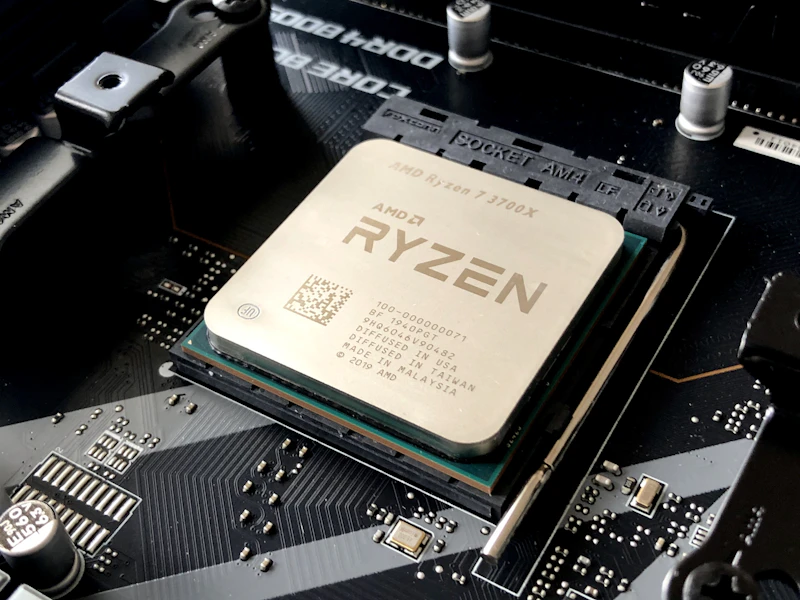
Framework Desktop (Ryzen AI Max+ 395 128GB) Local LLM Benchmark: AMD Strix Halo vs NVIDIA DGX Spark GB10 vs Mac mini M5 Pro
RECIWO Labs benchmarked the $1,999 4.5L Framework Desktop powered by AMD's 16-core Ryzen AI Max+ 395 ('Strix Halo') and 128GB unified LPDDR5X-8000 memory, comparing ROCm 6.4 token generation and prompt prefill speeds against the $2,999 NVIDIA DGX Spark (GB10) and $1,799 Apple Mac mini M5 Pro.
Unitree R1 ($5,900) vs Unitree G1 ($16,000) Developer Benchmark: 25kg Agile Locomotion, Sim-to-Real RL, and Actuator Density
RECIWO Labs put the 25kg, $5,900 Unitree R1 ultralight humanoid head-to-head against the 35kg Unitree G1 EDU and Booster T1, evaluating Quasi-Direct Drive (QDD) joint torque-to-weight ratios, Isaac Lab sim-to-real transfer, and manipulation payload limits.

Micro-Form-Factor AI Voice Hardware Shootout: 9.9g Anker Soundcore Work vs 3.8g Vocci AI Ring vs PLAUD NotePin Pro
RECIWO Labs tested the three leading ambient AI memory form factors of late 2026—the 9.9g Anker Soundcore Work coin, the 3.8g Gyges Labs Vocci MCP Ring, and the 22g PLAUD NotePin Pro—measuring far-field WER, collar fabric sag, and automated MCP agent execution.
