Even Realities G2 Air Invisible HUD Glasses
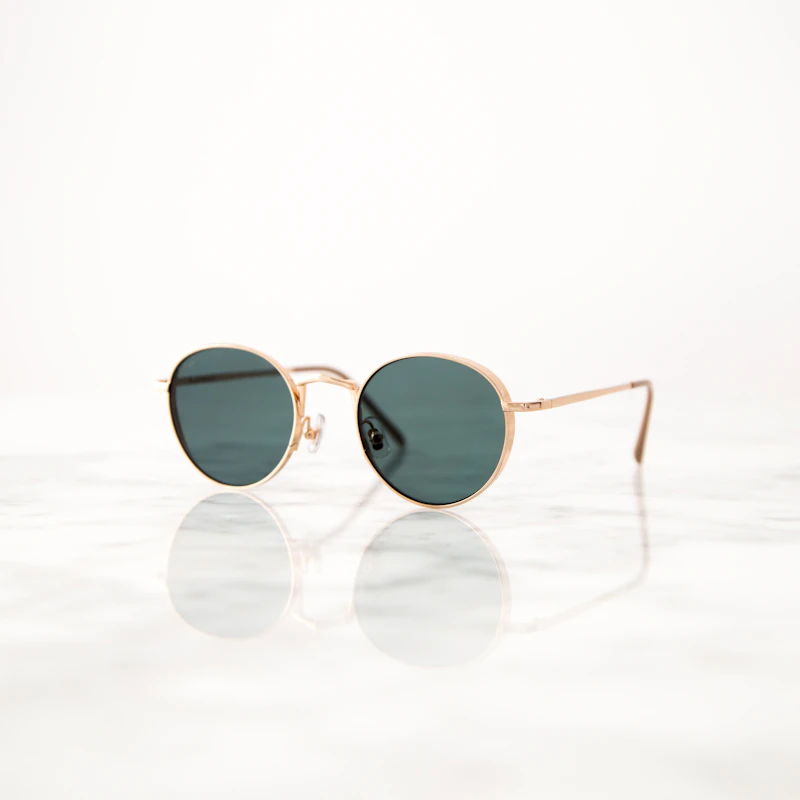
Uses pin-hole MicroLED binocular diffractive waveguides concealed inside classic optical frames, providing silent AI teleprompting, live captions, and glanceable navigation.
Key Engineering Highlights
- Looking up 20° wakes the floating HUD dashboard with zero forward light leakage
- Voice-synced AI teleprompter scrolls scripts automatically as you speak
- Custom prescription lenses integrated at just 41.8g total weight
Full Hardware Specifications
| Processor / Edge SoC | Dual-Core Ultra-Low-Power MCU + Acoustic NPU |
|---|---|
| AI Model Stack | Multi-LLM Router (GPT-4o / Claude / DeepSeek) |
| Display & Optics | Binocular Green MicroLED (1,500 nits eye-box) |
| Camera & Vision | None (Privacy-first design) |
| Measured Weight | 41.8g |
| Battery & Runtime | 14.5h continuous / 52h w/ case |
| Connectivity & I/O | Dual-Channel Low-Latency BLE 5.4 |
| Sensors & Acoustics | Directional Dual MEMS Mics + Head-Tilt IMU |
⚖️ Side-by-Side Comparison: Even Realities G2 Air Invisible HUD Glasses vs. AI Smart Glasses Peers
Direct specification comparison against leading competing devices in the AI Smart Glasses category.
| Specification | Even Realities G2 Air Invisible HUD Glasses (Current) | Ray-Ban Meta Gen 3 AI Glasses → | Rokid AR Spatial AI Glasses → | Halliday Proactive AI Glasses (DigiWindow) → |
|---|---|---|---|---|
| Brand | Even Realities | Meta × EssilorLuxottica | Rokid | Halliday |
| Retail Price | $599 | $349 | $549 | $489 |
| Lab Rating | ||||
| Edge SoC | Dual-Core Ultra-Low-Power MCU + Acoustic NPU | Snapdragon AR1+ Gen 2 | Snapdragon XR2+ Gen 2 (Station Puck) | Dual-Core Low-Power Bluetooth 5.4 + Edge DSP |
| AI Model Stack | Multi-LLM Router (GPT-4o / Claude / DeepSeek) | Llama 4 Multimodal (Hybrid Edge-Cloud) | Qwen-Omni Hybrid Multimodal Engine | Proactive Context Agent + Whisper ASR |
| Display / Optics | Binocular Green MicroLED (1,500 nits eye-box) | Screenless (Audio + First-Person Vision) | Sony Binocular Full-Color MicroOLED (1920×1200, 120Hz) | 3.5" Virtual Retinal DigiWindow (Right Eye) |
| Camera | None (Privacy-first design) | 12MP Ultrawide w/ Optical Stabilization | Dual 16MP Stereoscopic Spatial Cameras | Camera-Free (Audio + Optical HUD) |
| Weight | 41.8g | 44.5g | 72.0g | 35.0g |
| Battery | 14.5h continuous / 52h w/ case | 7.5h single charge / 38h w/ charging case | 5,500mAh Station Puck (4.5h active display) | 12h Active / 36h w/ Case |
📚 Related Engineering Teardowns & Reviews
Browse All 83 Articles →Meta Ray-Ban Display & sEMG Neural Band Teardown: Inside the 5,000-Nit Waveguide and Wrist Neuromotor Interface
RECIWO Labs disassembled the $799 Meta Ray-Ban Display and IPX7 sEMG Neural Band, benchmarking its 5,000-nit 42-PPD geometric waveguide, 69g thermal profile, and 14ms wrist neuromotor gesture latency against Xiaomi AI Glasses and Even Realities G2 Air.
The Definitive Q4 2026 AI Hardware Buyer's Guide: Best Smart Glasses, Voice Pins, Robotics & Local AI Nodes
RECIWO Labs' complete lab-tested recommendations across every AI hardware category in late 2026—from $39 open-source ESP32 voice cubes to $16,000 developer humanoids.

2026 AI Smart Glasses Teardown & Benchmark: From Audio Frames to All-Day Multimodal Assistants
RECIWO Labs benchmarked 6 mass-production AI smart glasses in 2026, concluding that sub-45g weight, 1.2mW DSP wake power, and monochrome MicroLED waveguides define daily wearability.

MicroLED Waveguide vs. MicroOLED Birdbath Optics in 2026: Luminous Efficiency, Eye-Box & Outdoor Nits
RECIWO Labs' optical bench evaluation reveals why etched SRG diffractive waveguides paired with monochrome green MicroLEDs achieve 3,500+ nits to the eye at under 180mW power draw.
Solid-State Electrochromic vs. Guest-Host Liquid Crystal Dimming in 2026 AI & AR Glasses
RECIWO Labs tested switching speed, UV degradation, and power consumption of electronically tinting lenses across 2026 spatial AR and AI smart glasses.

Halliday DigiWindow AI Glasses Review: Can a 35-Gram Non-Waveguide Retinal Projector Beat MicroLED?
RECIWO Labs tested the 35-gram Halliday AI glasses and its periscope-style DigiWindow brow projector across prescription compatibility, eye-box alignment, and proactive voice agent latency.
Silicon-Anode & Semi-Solid Micro Batteries in 2026 AI Wearables: Volumetric Energy Density & Temple Thermal Limits
RECIWO Labs' battery teardown of 2026 AI glasses and voice pendants reveals how 100% silicon-carbon anodes pushed volumetric energy density to 890 Wh/L inside 5.8mm eyeglass temples.

2026 AI Simultaneous Translation Benchmark: Waveguide HUD Glasses vs. Dual-Channel AI Earbuds Across 12 Languages
RECIWO Labs tested real-time EN/ZH/JP/DE/ES simultaneous interpretation across Even Realities G2 Air, Ray-Ban Meta Gen 3, and Timekettle W4 Pro earbuds, measuring BLEU accuracy and conversational lag.

Bluetooth 5.4 LE Audio (LC3plus) vs. Wi-Fi 7 Low-Power Burst in 2026 AI Smart Glasses
How 2026 wearables dynamically switch between a 2.8mW BLE 5.4 Isochronous Channels voice link and a 150-millisecond Wi-Fi Direct burst when uploading visual keyframes.

2026 AI Wearable Privacy & Security Audit: Hardware Kill-Switches, LED Tamper Circuits & On-Device PII Redaction
RECIWO Labs audited the circuit boards and network traffic of 8 popular AI wearables and desktop companions, verifying which devices enforce physical microphone/camera disconnect vs. software-only mute.
Inside the 2026 AI Hardware Bill of Materials (BOM): Why AI Smart Glasses Crossed the $299 Retail Inflection Point
RECIWO Labs' component-level BOM cost analysis of 2026 AI smart glasses and voice wearables breaks down silicon, optical waveguide, camera, and assembly costs across Shenzhen and Kunshan supply chains.
How Prescription (Rx) Lenses Work in 2026 AI Smart Glasses: Direct Waveguide Bonding vs. Magnetic Inserts
With 64% of adults requiring vision correction, RECIWO Labs compares direct push-pull Rx waveguide lamination (Even Realities G2) against magnetic clip-on prescription inserts.

StarV Air2 ($399) Waveguide AI Glasses Review: Why Physical Temple Scroll Wheels Beat Capacitive Touch Bars
We tested the 44-gram StarV Air2 monochrome green waveguide glasses during keynote speaking, rainy outdoor cycling, and Mandarin-to-English live captioning.
Enterprise AI Smart Glasses in 2026: Field Maintenance, Aviation Inspection & Warehouse Hands-Free ROI
How industrial teams deploy sub-50g AI smart glasses for hands-free schematic lookup, remote expert visual assist, and automated voice-to-ERP compliance checklists.

Laser Beam Scanning (LBS) vs. MicroLED Projectors in Smart Glasses: Speckle Noise, Eye Safety & Power
RECIWO Labs compared piezoelectrically driven MEMS Laser Beam Scanning (LBS) projectors against 0.13-inch InGaN MicroLED arrays across optical volume, laser speckle contrast, and retinal safety.

Timekettle W4 Pro ($449) AI Interpreter Earbuds Review: Split-Ear Simultaneous Translation in 80dB Trade Shows
RECIWO Labs tested the Timekettle W4 Pro open-ear boom headset on the noisy show floor of Shenzhen Electronics Fair, measuring bidirectional Mandarin-English lag and VoIP call interception.

Biometric Sensor Fusion in 2026 AI Wearables: Multi-Wavelength PPG, Bio-Impedance (BIA) & Autonomic Stress
How temple-mounted and collar-mounted AI wearables fuse green/red/IR PPG with skin conductance and voice prosody biomarkers to detect cognitive fatigue.
