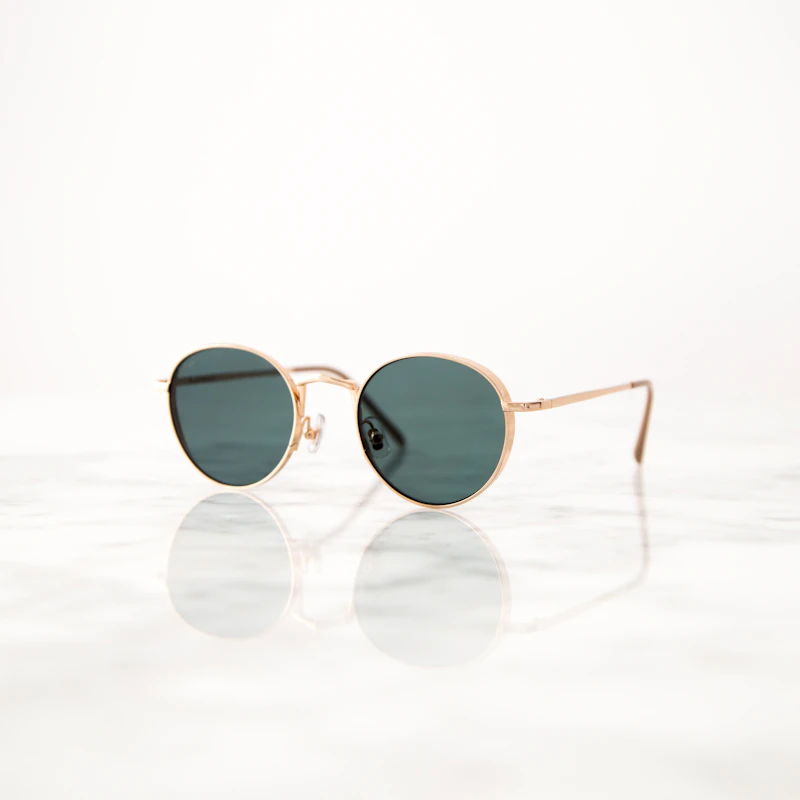
Sapiens VIORA Standalone Smartphone-Free 0.5s Hazard-Sensing & SOS On-Device AI Glasses
Named a dual CES 2027 Innovation Awards Honoree in November 2026 (Artificial Intelligence & Human Security for All), Sapiens' VIORA executes all vision AI locally on the frame without a smartphone or cloud connection—detecting head-height obstacles and step drops within ~0.5 seconds alongside automatic fall SOS.
Editorial Rating Methodology (★ 4.8 / 5.0): This score is an internal editorial evaluation compiled by the RECIWO Labs editorial team—not a user poll or crowd-voted rating. It assesses published silicon compute efficiency (25%), optical/sensor/actuator engineering (25%), battery & thermal envelope (20%), SDK/software openness (15%), and price-to-specification value (15%) based on official manufacturer datasheets and public technical documentation. Learn more about our evaluation rubric →
Key Engineering Highlights
- Operates completely independently of smartphones, Wi-Fi, or cellular networks for deterministic <0.5s safety warnings
- Protects blind, low-vision, and senior wearers from head-level overhangs and sudden drops that white canes miss
- Includes cancelable automatic fall detection that triggers a local siren and dispatches location alerts to a guardian
Full Hardware Specifications
| Processor / Edge SoC | Dedicated Standalone On-Frame Edge Vision AI Processor |
|---|---|
| AI Model Stack | 100% Offline Real-Time 3D Obstacle, Overhang & Stair-Drop Detection (~0.5s Latency) |
| Display & Optics | Screenless Low-Latency Spatial Audio & Siren Warning Interface |
| Camera & Vision | Forward Spatial Hazard-Sensing Vision Camera |
| Measured Weight | All-Day Assistive Eyewear Form Factor |
| Battery & Runtime | Full-Day Continuous Single-Charge Daytime Endurance |
| Connectivity & I/O | Zero Smartphone Required for Vision AI; Guardian Emergency Location Alert |
| Sensors & Acoustics | Vision Depth Pipeline + Fall-Detection Accelerometer/IMU + Emergency Siren |
⚖️ Side-by-Side Comparison: Sapiens VIORA Standalone Smartphone-Free 0.5s Hazard-Sensing & SOS On-Device AI Glasses vs. AI Smart Glasses Peers
Direct specification comparison against leading competing devices in the AI Smart Glasses category.
| Specification | Sapiens VIORA Standalone Smartphone-Free 0.5s Hazard-Sensing & SOS On-Device AI Glasses (Current) | Ray-Ban Meta Gen 3 AI Glasses → | Even Realities G2 Air Invisible HUD Glasses → | Rokid AR Spatial AI Glasses → |
|---|---|---|---|---|
| Brand | Sapiens (Fast.B) | Meta × EssilorLuxottica | Even Realities | Rokid |
| Retail Price | Assistive / Consumer | $349 | $599 | $549 |
| Editorial Rating | ||||
| Edge SoC | Dedicated Standalone On-Frame Edge Vision AI Processor | Snapdragon AR1+ Gen 2 | Dual-Core Ultra-Low-Power MCU + Acoustic NPU | Snapdragon XR2+ Gen 2 (Station Puck) |
| AI Model Stack | 100% Offline Real-Time 3D Obstacle, Overhang & Stair-Drop Detection (~0.5s Latency) | Llama 4 Multimodal (Hybrid Edge-Cloud) | Multi-LLM Router (GPT-4o / Claude / DeepSeek) | Qwen-Omni Hybrid Multimodal Engine |
| Display / Optics | Screenless Low-Latency Spatial Audio & Siren Warning Interface | Screenless (Audio + First-Person Vision) | Binocular Green MicroLED (1,500 nits eye-box) | Sony Binocular Full-Color MicroOLED (1920×1200, 120Hz) |
| Camera | Forward Spatial Hazard-Sensing Vision Camera | 12MP Ultrawide w/ Optical Stabilization | None (Privacy-first design) | Dual 16MP Stereoscopic Spatial Cameras |
| Weight | All-Day Assistive Eyewear Form Factor | 44.5g | 41.8g | 72.0g |
| Battery | Full-Day Continuous Single-Charge Daytime Endurance | 7.5h single charge / 38h w/ charging case | 14.5h continuous / 52h w/ case | 5,500mAh Station Puck (4.5h active display) |
📚 Related Engineering Teardowns & Reviews
Browse All 201 Articles →Vuzix Ultralite Pro (<80g AR1 Full-Color 3D Waveguide) vs Sapiens VIORA (Standalone 0.5s Hazard AI) vs Samsung & Google Intelligent Eyewear Comparison
An optical waveguide, on-device NPU autonomy, and safety/enterprise architecture comparison of the Vuzix Ultralite Pro (<80g Snapdragon AR1 magnesium frame with Quanta/Avegant dual full-color 3D LCoS waveguides and Incognito zero eye-glow), CES 2027 Dual Honoree Sapiens VIORA (100% smartphone-free local AI glasses with <0.5s obstacle/drop warnings and fall SOS, alongside VIRNECT's SCBA VisionX Marine), and Samsung & Google's $395 Warby Parker Intelligent Eyewear.

ASUS Ascent QN10 (Snapdragon X2 Elite 80-TOPS NPU) vs ASUS NUC 16 Pro (Intel Core Ultra X9 388H Panther Lake 180-TOPS & 96GB LPDDR5X): 0.7L AI Mini-PC Teardown
A silicon and memory-subsystem teardown of ASUS's two sub-1-liter enterprise AI mini-PCs in late November 2026: the 0.7L ASUS Ascent QN10 (world's first desktop powered by Qualcomm's 18-core Snapdragon X2 Elite X2E-88-100 with an 80-TOPS INT8 Hexagon NPU, Adreno X2-90 GPU, up to 32GB LPDDR5X-9600, and triple 40Gbps USB4 Gen 2) versus the 0.71L ASUS NUC 16 Pro (Intel Core Ultra X9 388H 'Panther Lake' delivering 180 total platform TOPS across a 50-TOPS NPU 5 and 12-Xe Arc B390 iGPU with up to 96GB soldered LPDDR5X-9600 or 128GB DDR5).

Genesis AI Eno ($500M Series A / $3.5B Glove-Trained Humanoid) & OYMotion ROHand ROH-AP002 (540g 11-Joint 0.1N Tactile Hand) vs ROBOTERA XHAND 1 Pro-U
An industry and mechatronic teardown of late-November 2026's Physical AI dexterity wave: Genesis AI's $500M Series A ($3.5B valuation led by Khosla Ventures, Premji Invest, and Eclipse with NVIDIA) and its Eno humanoid trained via lightweight sensor-embedded gloves worn by human workers, alongside OYMotion's Series D-backed ROHand ROH-AP002 (a 540g human-scale 11-joint / 6-active-DoF aerospace-aluminum dexterous hand delivering 0.1N hybrid tactile resolution and 30kg static load over CAN/RS485/ROS 2) vs ROBOTERA XHAND 1 Pro-U.
Ray-Ban Meta Audio ($349 43g 12h Camera-Free AI Glasses) & xMEMS XMC-1200 µCooling (46mm² 70mW Solid-State Temple Fan-on-a-Chip) vs Vonder AI & Ray-Ban Meta Gen 3
An engineering teardown of two complementary answers to smart-glasses adoption barriers in late November 2026: Meta and EssilorLuxottica's $349 Ray-Ban Meta Audio (removing cameras and recording LEDs to achieve a 43g weight, 12-hour continuous single-charge runtime + 48h case reserve across 23 Clubmaster and Burbank styles for privacy-restricted workplaces) and xMEMS Labs' mass-production XMC-1200 µCooling chip (a 46mm² × 1.0mm IP68 ultrasonic piezoMEMS temple blower drawing 70mW to drop 1W SoC temperatures by 10°C).