Gyges Labs Vocci AI Voice & MCP Smart Ring
3.8-gram aerospace titanium smart ring featuring a physical double-press voice capture button, 8-hour continuous recording, and native Model Context Protocol (MCP) routing to 500+ enterprise apps.
Key Engineering Highlights
- Physical double-click button starts instant voice capture in 120ms without waking your phone or saying a wake word
- Native Model Context Protocol (MCP) bridge turns 10-second voice memos into executed Linear tickets, Calendar events, or GitHub issues
- 2.85mm ultra-thin PVD titanium chassis with IP67 waterproofing and 80% fast recharge in 30 minutes
Full Hardware Specifications
| Processor / Edge SoC | Ultra-Low-Power BLE 5.4 SoC + On-Ring Acoustic AGC DSP |
|---|---|
| AI Model Stack | Multi-LLM Agent Engine (Claude / GPT / Gemini + 500+ MCP Connectors) |
| Display & Optics | Micro Haptic Actuator (Screenless Titanium Band, 6.8mm × 2.85mm) |
| Camera & Vision | None |
| Measured Weight | 3.8g (Varies 3.0g–5.0g across US Ring Sizes 6–15) |
| Battery & Runtime | 8h continuous recording / 48h regular use (+3 full charges in case) |
| Connectivity & I/O | Bluetooth 5.4 LE + Local Offline Flash Buffer |
| Sensors & Acoustics | High-Dynamic-Range MEMS Mic (5m Pickup) + Tactile Action Button |
⚖️ Side-by-Side Comparison: Gyges Labs Vocci AI Voice & MCP Smart Ring vs. AI Wearables & Audio Peers
Direct specification comparison against leading competing devices in the AI Wearables & Audio category.
| Specification | Gyges Labs Vocci AI Voice & MCP Smart Ring (Current) | PLAUD NotePin Pro Magnetic AI Memory Capsule → | Limitless Pendant 2 All-Day AI Clasp → | Omi DevKit 2 (Open-Source nRF5340 AI Necklace) → |
|---|---|---|---|---|
| Brand | Gyges Labs | PLAUD.AI | Limitless | Based Hardware |
| Retail Price | $249 | $179 | $129 | $89 |
| Lab Rating | ||||
| Edge SoC | Ultra-Low-Power BLE 5.4 SoC + On-Ring Acoustic AGC DSP | Custom Dual-Core Noise-Canceling DSP + BLE 6.0 SoC | ARM Cortex-M55 + Ethos-U55 microNPU | Nordic nRF5340 Dual Arm Cortex-M33 |
| AI Model Stack | Multi-LLM Agent Engine (Claude / GPT / Gemini + 500+ MCP Connectors) | Whisper-Large-v3 + Claude 4 / GPT-4o | Limitless Cloud Memory Engine | Custom Webhook / Local Whisper + Llama |
| Display / Optics | Micro Haptic Actuator (Screenless Titanium Band, 6.8mm × 2.85mm) | Micro-perforated status LED + Linear haptic motor | Privacy Recording Status LED | Screenless + Programmable RGB Ring |
| Camera | None | None | None | Optional OpenMV Camera Hat |
| Weight | 3.8g (Varies 3.0g–5.0g across US Ring Sizes 6–15) | 22.0g | 17.5g | 14.5g |
| Battery | 8h continuous recording / 48h regular use (+3 full charges in case) | 24h continuous recording / 45-day standby | 100 hours active recording | 32h Continuous Opus Streaming |
📚 Related Engineering Teardowns & Reviews
Browse All 83 Articles →Micro-Form-Factor AI Voice Hardware Shootout: 9.9g Anker Soundcore Work vs 3.8g Vocci AI Ring vs PLAUD NotePin Pro
RECIWO Labs tested the three leading ambient AI memory form factors of late 2026—the 9.9g Anker Soundcore Work coin, the 3.8g Gyges Labs Vocci MCP Ring, and the 22g PLAUD NotePin Pro—measuring far-field WER, collar fabric sag, and automated MCP agent execution.

Meta Ray-Ban Display & sEMG Neural Band Teardown: Inside the 5,000-Nit Waveguide and Wrist Neuromotor Interface
RECIWO Labs disassembled the $799 Meta Ray-Ban Display and IPX7 sEMG Neural Band, benchmarking its 5,000-nit 42-PPD geometric waveguide, 69g thermal profile, and 14ms wrist neuromotor gesture latency against Xiaomi AI Glasses and Even Realities G2 Air.
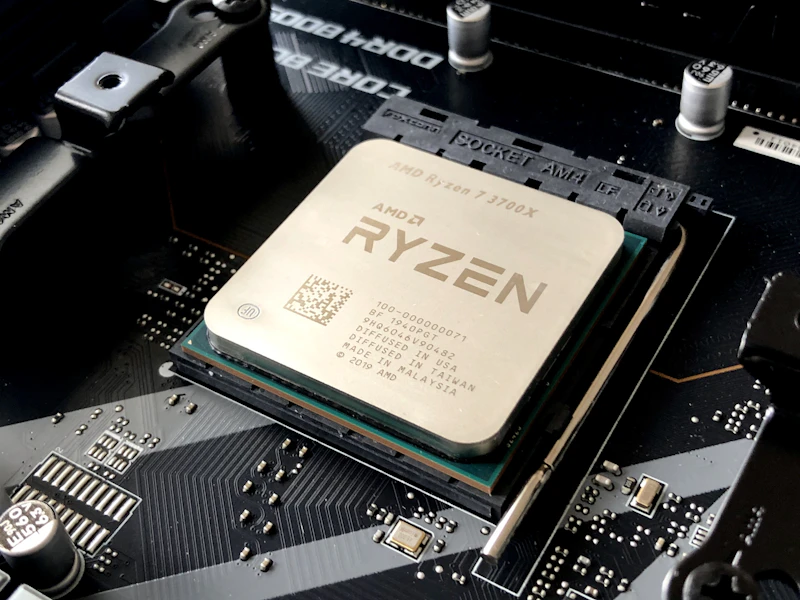
Framework Desktop (Ryzen AI Max+ 395 128GB) Local LLM Benchmark: AMD Strix Halo vs NVIDIA DGX Spark GB10 vs Mac mini M5 Pro
RECIWO Labs benchmarked the $1,999 4.5L Framework Desktop powered by AMD's 16-core Ryzen AI Max+ 395 ('Strix Halo') and 128GB unified LPDDR5X-8000 memory, comparing ROCm 6.4 token generation and prompt prefill speeds against the $2,999 NVIDIA DGX Spark (GB10) and $1,799 Apple Mac mini M5 Pro.
Unitree R1 ($5,900) vs Unitree G1 ($16,000) Developer Benchmark: 25kg Agile Locomotion, Sim-to-Real RL, and Actuator Density
RECIWO Labs put the 25kg, $5,900 Unitree R1 ultralight humanoid head-to-head against the 35kg Unitree G1 EDU and Booster T1, evaluating Quasi-Direct Drive (QDD) joint torque-to-weight ratios, Isaac Lab sim-to-real transfer, and manipulation payload limits.