Orange Pi 5 Ultra ($119 89×56mm RK3588 LPDDR5, 4K60 HDMI-In & Wi-Fi 6E) vs M5Stack LLM630 ($99 23.6g AX630C 12.8-TOPS INT4 Offline LLM Kit) vs Radxa ROCK 5B+ Comparison: Compact SBC vs 3W NPU
A technical memory-bandwidth, video-capture, and sub-3W Transformer-NPU comparison of the Orange Pi 5 Ultra ($119, 60.5g 89×56mm RK3588 SBC packing a 6-TOPS NPU, 16GB LPDDR5, PCIe 3.0 x4 NVMe, 4K60 HDMI-In + 8K60 HDMI-Out, Wi-Fi 6E, and 2.5GbE), M5Stack LLM630 Compute Kit ($99.90, 23.6g AXERA AX630C devkit delivering 3.2 INT8 / 12.8 INT4 TOPS with 4GB LPDDR4, 32GB eMMC, ESP32-C6 Wi-Fi 6, and StackFlow offline Qwen2.5/Whisper/YOLO11), and Radxa ROCK 5B+ ($149).
Executive Summary: $119 89×56mm LPDDR5 + 4K60 HDMI-In RK3588 SBCs vs $99 23.6g Sub-3W AXERA AX630C Offline LLM Modules
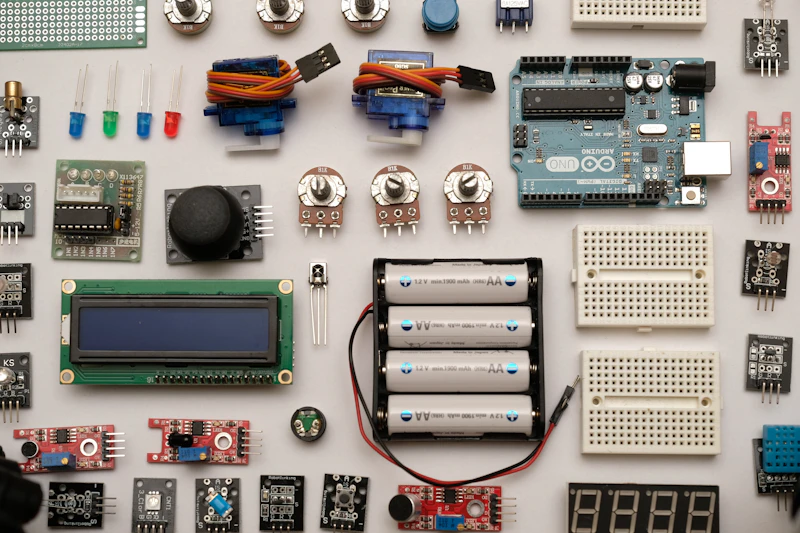
Methodology & Source Disclosure: This article is a comparative NPU quantization, PCIe/HDMI I/O routing, and embedded power-envelope analysis compiled from publicly released manufacturer specifications and hardware schematics published by Orange Pi (Shenzhen Xunlong), M5Stack, Radxa, and Seeed Studio. All millimeter dimensions, gram weights, TOPS precision ratings, and RAM configurations reflect vendor-published datasheets. Representative illustration via Unsplash.
Sub-$150 edge AI hardware in late 2026 splits between credit-card desktop/vision powerhouses and thumb-sized 3-watt offline voice-LLM coprocessors: for drone payloads, AI KVM capture appliances, and compact ROS 2 nodes that cannot fit a 100×75mm Pico-ITX board, the $119 Orange Pi 5 Ultra (60.5g, 89×56mm) packs the full 8-core Rockchip RK3588 (6-TOPS NPU), 16GB LPDDR5, a full-speed PCIe 3.0 x4 M.2 NVMe slot, Wi-Fi 6E, 2.5GbE, and both 4K60 HDMI-In and 8K60 HDMI-Out. Conversely, for battery-powered IoT voice hubs, smart-home gateways, and microcontroller makers who want turn-key offline speech-to-LLM-to-TTS without heatsink fans or complex model compilation, the $99.90 M5Stack LLM630 Compute Kit (23.6g, 90.3×31.6×12.0mm) pairs an AXERA AX630C Transformer NPU (3.2 TOPS INT8 / 12.8 TOPS INT4), 4GB LPDDR4, 32GB eMMC, and an ESP32-C6 Wi-Fi 6 bridge running Qwen2.5, Llama-3.2-1B, Whisper, and YOLO11 out of the box via StackFlow.
1. Credit-Card RK3588 LPDDR5 vs 23.6g AXERA AX630C Edge-LLM Matrix
The matrix below compares published hardware specifications for the Orange Pi 5 Ultra ($119), M5Stack LLM630 Compute Kit ($99.90), Radxa ROCK 5B+ ($149), and Seeed SenseCAP Watcher Pro ($69).
| Published Hardware Specification | Orange Pi 5 Ultra ($119) | M5Stack LLM630 Kit ($99.90) | Radxa ROCK 5B+ ($149) | Seeed SenseCAP Watcher ($69) |
|---|---|---|---|---|
| Dimensions & Board Weight | 89 × 56 mm / 60.5 g (Credit-Card SBC) | 90.3 × 31.6 × 12.0 mm / 23.6 g Stick | 100 × 75 mm / 72.0 g Pico-ITX | Complete Enclosure w/ Display |
| Host SoC & CPU Cores | Rockchip RK3588 (4×A76 + 4×A55 @ 2.4G) | AXERA AX630C (2× Cortex-A53 @ 1.2GHz) | Rockchip RK3588 (8-Core 8nm) | ESP32-P4 / S3 + Himax WiseEye2 |
| NPU Compute & Quantization | 6.0 TOPS 3-Core NPU (INT4/INT8/FP16) | 3.2 TOPS INT8 / 12.8 TOPS INT4 NPU | 6.0 TOPS 3-Core NPU (RKNN-LLM) | TinyML Vision Micro-NPU |
| Memory & Flash Storage | 4GB/8GB/16GB LPDDR5 + eMMC + M.2 x4 | 4GB LPDDR4 (2G OS + 2G NPU) + 32G eMMC | Up to 24GB/32GB LPDDR5 + 2× M.2 | 8MB PSRAM + 32MB Flash + SD |
| Video Input / Camera Lanes | 4K60 HDMI-In + 8K60 Out + 3× 4-Lane CSI | MIPI DSI Display + MIPI CSI Camera FPC | 4K60 Micro-HDMI-In + 2× 8K Out | Built-In 120° OV5647 Vision Cam |
| Networking & IoT Bus | 2.5GbE + Onboard Wi-Fi 6E / BT 5.3 + 40P | 1GbE + ESP32-C6 Wi-Fi 6 + 2× Grove HY2.0 | 2.5GbE + Wi-Fi 6 + 5G M.2 B-Key | Wi-Fi / BLE + Grove Expansion |
| Thermal & Software Stack | 5V/5A USB-C (~4W–12W) / Ubuntu & RKNN | ~2.5W–3.5W Passive / M5 StackFlow JSON | 9V–20V USB-C PD / Debian & RKNN | USB-C + Internal LiPo / SenseCraft |
2. Orange Pi 5 Ultra Architecture: Fitting Full RK3588, LPDDR5, PCIe 3.0 x4 & 4K60 HDMI-In onto 89×56mm
Historically, compact 85×56mm Raspberry Pi-sized boards had to step down to the pin-reduced RK3588S chip—losing PCIe 3.0 x4 bandwidth and native HDMI video input in the process.
┌──────────────────────────────────────────────────────────────────────────────┐
│     ORANGE PI 5 ULTRA ($119 RK3588) vs M5STACK LLM630 ($99 AX630C STICK)     │
│                                                                              │
│  [ORANGE PI 5 ULTRA: 60.5g / 89×56mm PCB + Full 8nm Rockchip RK3588 + LPDDR5]│
│     │  ──► Full PCIe 3.0 x4 M.2 2280 NVMe (~3,500 MB/s) + eMMC + QSPI Flash  │
│     │  ──► Native Full-Size HDMI 2.0 Input (4K60) + HDMI 2.1 Output (8K60)   │
│     ▼  ──► AP6611 Wi-Fi 6E / BT 5.3 + RTL8125BG 2.5GbE + 3× 4-Lane MIPI Cam  │
│  Design Focus: Drone Vision Payloads, 4K60 AI Video Overlay & Compact Linux  │
│                                                                              │
│  [M5STACK LLM630 COMPUTE KIT: 23.6g / 90.3×31.6mm + AXERA AX630C NPU]        │
│     │  ──► 12.8 INT4 TOPS / 3.2 INT8 TOPS Mixed-Precision Transformer Engine │
│     │  ──► 4GB LPDDR4 (Dedicated 2GB NPU Pool) + 32GB Pre-Loaded eMMC 5.1    │
│     ▼  ──► ESP32-C6 Wi-Fi 6 + 1GbE + NS4150B Duplex Audio + BMI270 6D IMU    │
│  Design Focus: ~3W Fanless Offline Whisper -> Qwen2.5 -> MeloTTS Voice Nodes │
└──────────────────────────────────────────────────────────────────────────────┘
Three Engineering Highlights of the Orange Pi 5 Ultra ($119):
- Uncompromised Full
RK3588+LPDDR5in60.5g(89×56mm): UnlikeRK3588Svariants, Orange Pi routes the flagship RK3588 with 496-pin LPDDR5 (up to 16GB) and an unsplit PCIe 3.0 x4 M.2 2280 slot—delivering desktop-grade 3.5 GB/s NVMe throughput alongside 6 TOPS of RKNN-LLM compute. - Full-Size
4K60 HDMI-In+ Triple 4-Lane Camera Ports: Exposes a standard HDMI 2.0 4K60 input port (zero fragile micro-HDMI adapters required) plus 2× MIPI CSI and 1× MIPI D-PHY RX (4-lane each) for multi-sensor autonomous UAVs. - Onboard
Wi-Fi 6E(AP6611) +2.5GbE(RTL8125BG): Integrates tri-band 6GHz wireless, Bluetooth 5.3, an ES8388 audio codec with onboard mic, and CAN-capable 40-pin GPIO.
3. M5Stack LLM630 Architecture: Why AXERA's 12.8-TOPS INT4 NPU & StackFlow Make Offline Voice AI Trivial
Deploying an offline voice assistant (KWS -> ASR -> LLM -> TTS) on a standard Linux SBC usually takes days of cross-compiling ONNX/RKNN toolchains and managing ALSA microphone buffers.
Why Embedded & Home-Automation Builders Pick M5Stack LLM630 ($99.90):
AXERA AX630CMixed-Precision12.8 TOPS INT4Efficiency at ~3W: Weighing just 23.6g, the AX630C's nativew4a16/INT4NPU dedicates 2GB of its 4GB LPDDR4 exclusively to neural weights—running Qwen2.5-0.5B/1.5B, Llama-3.2-1B, InternVL2.5, Whisper ASR, MeloTTS, and YOLO11 inside 32GB eMMC without active cooling.StackFlowJSON-RPC Pipeline + OnboardESP32-C6,1GbE, Audio &BMI270IMU: Developers chain wake-word, speech recognition, LLM generation, and NS4150B Class-D speaker output via simple UART / TCP JSON messages over 2× HY2.0-4P Grove ports, Gigabit Ethernet, or the onboard ESP32-C6 Wi-Fi 6 coprocessor.
4. Official Sources, Datasheets & Edge DevKit Selection Guide
Primary Manufacturer Sources & Documentation:
- Orange Pi — Orange Pi 5 Ultra (RK3588 LPDDR5, 4K60 HDMI-In & Wi-Fi 6E SBC): orangepi.org/.../Orange-Pi-5-Ultra.html
- M5Stack — LLM630 Compute Kit (AXERA AX630C SKU: K143) Documentation: docs.m5stack.com/en/core/LLM630 Compute Kit
- Radxa — ROCK 5B+ Dual M.2 & Up to 32GB LPDDR5 RK3588 SBC: radxa.com/products/rock5/5bp
- Seeed Studio — SenseCAP Watcher Physical AI Agent: seeedstudio.com
Platform Selection Summary:
- Choose the Orange Pi 5 Ultra ($119) when you need full RK3588 8-core CPU performance, 16GB LPDDR5, full-speed PCIe 3.0 x4 NVMe, Wi-Fi 6E, and 4K60 HDMI-In inside an 89×56mm footprint.
- Choose the M5Stack LLM630 Compute Kit ($99.90) when you want a 23.6g, ~3W fanless offline Whisper + Qwen2.5/Llama-3.2 + TTS + YOLO11 module with plug-and-play Grove/JSON APIs.
- Choose the Radxa ROCK 5B+ ($149) when you need 24GB/32GB LPDDR5 or dual M.2 PCIe slots for an add-on Hailo/Axelera NPU.
🔗 Related AI Hardware Benchmarked in This Report
Orange Pi 5 Ultra (89×56mm RK3588 6-TOPS NPU, 16GB LPDDR5, 4K60 HDMI-In, Wi-Fi 6E & PCIe 3.0 x4 SBC) →
60.5-gram (89×56mm) credit-card-class single-board computer packing the full 8nm Rockchip RK3588 SoC (8-core Cortex-A76/A55 + 6-TOPS NPU), up to 16GB LPDDR5 RAM, unsplit M.2 2280 PCIe 3.0 x4 NVMe storage, full-size HDMI 2.0 4K60 video input + HDMI 2.1 8K60 output, onboard Wi-Fi 6E / BT 5.3, and 2.5GbE.
M5Stack LLM630 Compute Kit (23.6g AXERA AX630C 12.8-TOPS INT4 Offline Edge-LLM & ESP32-C6 DevKit) →
23.6-gram (90.3×31.6×12.0mm) ~3W fanless offline LLM and vision compute kit powered by the AXERA AX630C SoC (3.2 TOPS INT8 / 12.8 TOPS INT4 Transformer NPU), 4GB LPDDR4 (2GB dedicated to NPU), 32GB eMMC 5.1, onboard ESP32-C6 Wi-Fi 6 coprocessor, Gigabit Ethernet, BMI270 IMU, duplex audio, and M5 StackFlow plug-and-play AI.
Radxa ROCK 5B+ (RK3588 8-Core ARM + 6-TOPS NPU + 24GB/32GB LPDDR5 & Dual M.2 NVMe SBC) →
100×75mm Pico-ITX single-board computer upgrading the Rockchip RK3588 platform with high-bandwidth 64-bit LPDDR5 memory (up to 24GB/32GB), a 6-TOPS triple-core NPU, dual M.2 M-Key PCIe 3.0 x2 NVMe/AI accelerator slots, onboard Wi-Fi 6 / BT 5.2, an M.2 B-Key 4G/5G cellular slot, and a native 4K60 HDMI-In capture port.
Seeed SenseCAP Watcher Pro (ESP32-P4 + Himax WiseEye2) →
Open-source physical AI sentry agent combining a 2mW Himax WiseEye2 Arm Ethos-U55 vision trigger chip with an ESP32-P4/S3 host and rotary RGB touch dial.
📚 Related Deep-Dive Teardowns & Benchmarks
Browse All 158 Articles →Qualcomm RB3 Gen 2 Vision Kit ($399 QCS6490 12-TOPS Hexagon NPU & IMX577/OV9282 Dual-Cam) vs Khadas Edge2 Pro ($239 25g 5.7mm RK3588S2 6-TOPS 16GB SBC) vs RUBIK Pi 3 Comparison: Calibrated VIO vs Ultra-Thin SBC
A technical 6nm Hexagon 770 Tensor NPU vs 8nm RK3588S2 NPU, factory-calibrated VIO/SLAM camera mezzanine vs 5.7mm FPC density, and Linux toolchain comparison of the Qualcomm Dragonwing RB3 Gen 2 Vision Development Kit ($399, ~200g QCS6490 8-core Kryo 670 + 12-TOPS NPU + Triple ISP kit bundling a 12MP IMX577 + global-shutter OV9282 Vision Mezzanine, Wi-Fi 6E, and Qualcomm Linux / ROS 2 / AI Hub), Khadas Edge2 Pro ($239, 25g 82×57.5×5.7mm credit-card SBC with RK3588S2 6-TOPS NPU, 16GB LPDDR4X, 64GB eMMC, 3× CSI, 4× displays, and OOWOW), and Thundercomm RUBIK Pi 3 ($119).
NVIDIA Jetson Orin Nano Super ($249 67-TOPS Ampere & 102GB/s LPDDR5) vs BeagleY-AI ($70 50g Open-Hardware TI AM67A 4-TOPS DSP + 800MHz R5F) vs Orange Pi 5 Ultra Comparison: CUDA VLM vs Real-Time PLC
A technical memory-bandwidth, TensorRT-LLM vs C7x-DSP, and deterministic real-time I/O comparison of the NVIDIA Jetson Orin Nano Super Developer Kit ($249, 176g carrier+SoM delivering 67 Sparse INT8 TOPS via 1,024 Ampere CUDA + 32 Tensor Cores, 8GB 128-bit LPDDR5 at 102 GB/s, dual M.2 NVMe, and 7W–25W JetPack 6), BeagleBoard.org BeagleY-AI ($70, 50g 85×56mm open-hardware TI AM67A SBC with 4-TOPS dual C7x MMA DSPs, 800MHz Cortex-R5F real-time MCU, 4GB LPDDR4, and 3× display buses), and Orange Pi 5 Ultra ($119).
Seeed reComputer J4012 ($1,199 Jetson Orin NX 16GB 100-TOPS Box) vs Radxa ROCK 5B+ ($149 RK3588 24GB/32GB LPDDR5 & Dual M.2 SBC) vs LattePanda Mu Ultra Comparison: CUDA vs Dual-M.2 ARM
A technical TensorRT-CUDA, memory-bus, and PCIe-expansion comparison of the Seeed Studio reComputer J4012 ($1,199, 700g industrial aluminum edge AI box powered by NVIDIA Jetson Orin NX 16GB delivering 100 INT8 TOPS with 1,024 Ampere CUDA cores, 32 Tensor Cores, 16GB LPDDR5 at 102.4 GB/s, pre-flashed 128GB NVMe SSD, and CAN bus), Radxa ROCK 5B+ ($149, 100×75mm RK3588 SBC upgraded with up to 24GB/32GB LPDDR5, 6-TOPS NPU, dual M.2 PCIe 3.0 x2 slots, Wi-Fi 6, and 4K60 HDMI-In), and LattePanda Mu Ultra ($499).
LattePanda Mu Ultra (69.6×60mm Core Ultra 7 256V 115-TOPS SOM) vs Beelink SER9 Pro AI (Ryzen AI 9 HX 370 LPDDR5X-7500 + 4-Mic) vs ASUS NUC 14 Pro AI+ Comparison: Credit-Card SOM vs Voice Node
A technical form-factor, memory-bandwidth, and embedded-carrier comparison of the LattePanda Mu Ultra ($499, 69.6×60mm 26g credit-card x86 compute module powered by Intel Core Ultra 7 256V Lunar Lake delivering 115 total TOPS with 16GB on-package LPDDR5X-8533, 64GB eMMC, and open-source KiCad PCIe/Lite carrier boards), Beelink SER9 Pro AI ($849, 780g unibody mini workstation with AMD Ryzen AI 9 HX 370 80 TOPS, 32GB/64GB soldered LPDDR5X-7500 at ~120 GB/s, B1 AI 4-mic voice array + dual speakers, and 32dB MSC 2.0 vapor-chamber cooling), and ASUS NUC 14 Pro AI+ ($949).