NVIDIA Jetson Orin Nano Super ($249 67-TOPS Ampere & 102GB/s LPDDR5) vs BeagleY-AI ($70 50g Open-Hardware TI AM67A 4-TOPS DSP + 800MHz R5F) vs Orange Pi 5 Ultra Comparison: CUDA VLM vs Real-Time PLC
A technical memory-bandwidth, TensorRT-LLM vs C7x-DSP, and deterministic real-time I/O comparison of the NVIDIA Jetson Orin Nano Super Developer Kit ($249, 176g carrier+SoM delivering 67 Sparse INT8 TOPS via 1,024 Ampere CUDA + 32 Tensor Cores, 8GB 128-bit LPDDR5 at 102 GB/s, dual M.2 NVMe, and 7W–25W JetPack 6), BeagleBoard.org BeagleY-AI ($70, 50g 85×56mm open-hardware TI AM67A SBC with 4-TOPS dual C7x MMA DSPs, 800MHz Cortex-R5F real-time MCU, 4GB LPDDR4, and 3× display buses), and Orange Pi 5 Ultra ($119).
Executive Summary: $249 67-TOPS 102 GB/s CUDA/TensorRT-LLM DevKits vs $70 50g Open-Hardware TI AM67A Real-Time Vision SBCs
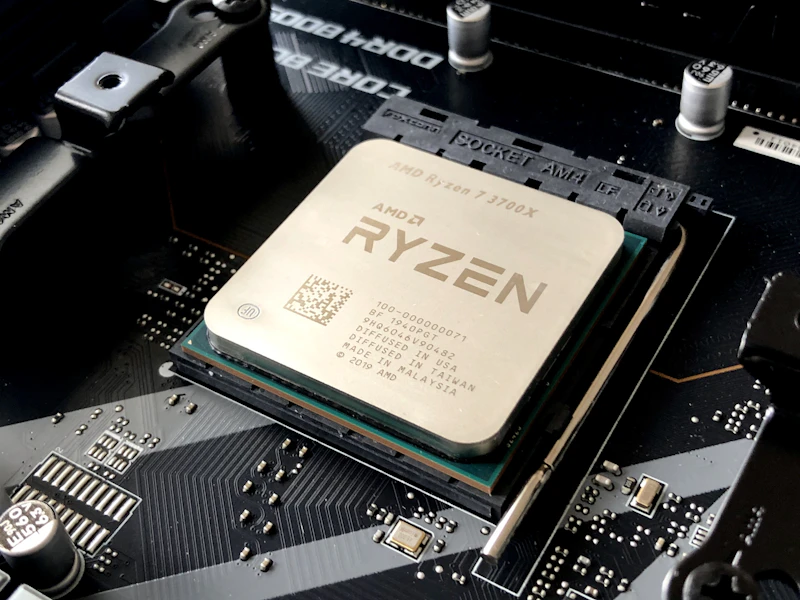
Methodology & Source Disclosure: This article is a comparative LPDDR5 memory-bandwidth, CUDA Tensor Core vs C7x DSP Matrix-Multiply, and deterministic real-time microcontroller analysis compiled from publicly released manufacturer specifications and hardware design files published by NVIDIA, BeagleBoard.org, Texas Instruments, and Orange Pi. All TOPS ratings, gigabyte-per-second bandwidths, power envelopes, and board dimensions reflect vendor-published datasheets. Representative illustration via Unsplash.
Entry-level edge AI development kits under $250 in late 2026 divide cleanly between memory-bandwidth-rich generative VLM supercomputers and deterministic, open-schematic industrial vision controllers: for robotics engineers running local Vision-Language-Action (VLA) policies, 3B–4B LLMs, and Isaac ROS visual SLAM without proprietary NPU compilation headaches, the $249 NVIDIA Jetson Orin Nano Super Developer Kit unlocks 67 Sparse INT8 TOPS (1,024 Ampere CUDA + 32 Tensor Cores) and 102 GB/s of 128-bit LPDDR5 bandwidth inside a configurable 7W–25W envelope. Conversely, for OEM automation builders who need 100% open-source PCB files, 10+ year industrial silicon availability, and microsecond motor control alongside multi-camera vision for $70, BeagleBoard.org's BeagleY-AI (50g, 85×56mm) pairs Texas Instruments' AM67A SoC (4.0 INT8 TOPS across dual C7x DSP/MMAs) with a dedicated 800MHz Arm Cortex-R5F real-time MCU, triple display outputs, and Wi-Fi 6 / BT 5.4.
1. $249 67-TOPS CUDA VLM DevKit vs $70 Open-Hardware TI AM67A SBC Matrix
The matrix below compares published hardware specifications for the NVIDIA Jetson Orin Nano Super ($249), BeagleBoard BeagleY-AI ($70), Orange Pi 5 Ultra ($119), and Raspberry Pi AI HAT+ 2 Kit (~$205 w/ RPi 5).
| Published Hardware Specification | Jetson Orin Nano Super ($249) | BeagleBoard BeagleY-AI ($70) | Orange Pi 5 Ultra ($119) | RPi 5 + AI HAT+ 2 (~$205) |
|---|---|---|---|---|
| Footprint & Assembly Weight | 103 × 90.5 × 34.8 mm / 176 g | 85 × 56 × 20 mm / 50 g Bare PCB | 89 × 56 mm / 60.5 g Bare PCB | 85 × 56 mm Stack (~95 g) |
| CPU & Real-Time Co-Cores | 6× Cortex-A78AE v8.2 @ 1.7GHz | 4× A53 @ 1.4G + 800MHz Cortex-R5F | 4× A76 + 4× A55 (RK3588) | 4× Cortex-A76 @ 2.4GHz |
| AI Compute Architecture | 1,024 Ampere CUDA + 32 Tensor (67 TOPS) | Dual C7x DSP + MMA (4.0 INT8 TOPS) | 6.0 TOPS 3-Core RKNN NPU | Hailo-10H 40 TOPS INT4 NPU |
| Memory Capacity & Bandwidth | 8GB 128-Bit LPDDR5 (102 GB/s) | 4GB LPDDR4 System Memory | Up to 16GB 496-Pin LPDDR5 | 8GB Host + 8GB Dedicated HAT |
| NVMe, Camera & Video I/O | 2× M.2 NVMe + 2× CSI-2 + DP 1.2 | PCIe Gen3 x1 + 2× CSI + 3× Display | PCIe 3.0 x4 + 4K60 HDMI-In + 3× CSI | Occupied PCIe x1 + 2× CSI |
| Hardware Openness & Longevity | Reference Carrier + Production SoM | 100% Open KiCad + TI 10-Yr Silicon | Proprietary SBC Layout | Proprietary HAT + RPi SBC |
| Power & Software Ecosystem | 7W / 15W / 25W — CUDA & TensorRT-LLM | 5V/3A USB-C — ONNX / TFLite / TVM | 5V/5A USB-C — RKNN-LLM | ~12W–18W — HailoRT GenAI |
2. Jetson Orin Nano Super Architecture: Why 102 GB/s 128-Bit LPDDR5 & Native CUDA Dominate Sub-$250 Edge GenAI
Autoregressive Transformer token generation is fundamentally memory-bandwidth bound: a 40-TOPS PCIe NPU choked behind a 1-lane bus or 34 GB/s 64-bit RAM stalls waiting for weights, whereas Orin Nano Super feeds 32 Ampere Tensor Cores across a wide 128-bit LPDDR5 interface.
┌──────────────────────────────────────────────────────────────────────────────┐
│   JETSON ORIN NANO SUPER ($249 67-TOPS) vs BEAGLEY-AI ($70 OPEN TI AM67A)    │
│                                                                              │
│  [JETSON ORIN NANO SUPER: 103×90.5mm + 6C A78AE + 1,024 CUDA / 32 Tensor]    │
│     │  ──► 8GB 128-Bit LPDDR5 @ 102 GB/s (+50% Bandwidth in 25W MAXN Mode)   │
│     │  ──► Dual M.2 Key M NVMe SSDs + 2× 22-Pin MIPI CSI-2 + 4× 10G USB 3.2  │
│     ▼  ──► Zero-Porting CUDA, PyTorch, TensorRT-LLM, Ollama, vLLM & Isaac ROS│
│  Design Focus: Local 3B–4B VLMs (Qwen2.5-VL / Llama-3.2), SmolVLA & VSLAM    │
│                                                                              │
│  [BEAGLEY-AI: 85×56mm / 50g Open-Source PCB + Texas Instruments AM67A SoC]   │
│     │  ──► Dual C7x DSPs + Matrix Multiply Accelerators (4.0 INT8 TOPS)      │
│     │  ──► Dedicated 800MHz Cortex-R5F Real-Time MCU + Jacinto Vision ISP    │
│     ▼  ──► microHDMI + OLDI LVDS Touch + MIPI DSI + 2× CSI + Wi-Fi 6 / BT 5.4│
│  Design Focus: Open-Design Factory HMIs, Deterministic PLC/Servo & YOLO      │
└──────────────────────────────────────────────────────────────────────────────┘
Three Engineering Advantages of the Jetson Orin Nano Super ($249):
102 GB/sUnified Memory Bandwidth +67 INT8 TOPS(25W MAXN): Boosting GPU clocks and LPDDR5 signaling unlocks up to 1.7× higher generative AI throughput—sustaining interactive token rates on Llama-3.2-3B, Qwen2.5-VL-3B, Gemma-2-2B, and SmolVLA directly onboard.- Zero Custom-NPU Quantization Friction (
CUDA+TensorRT-LLM+Ollama): Every new Hugging Face vision-language or diffusion architecture runs Day-1 on standard PyTorch/CUDA without waiting months for vendor-specific NPU graph compilers. - Dual
M.2 Key MNVMe Slots +4× 10Gbps USB 3.2 Gen 2+Dual CSI-2: Hosts fast multi-terabyte NVMe datasets alongside stereo global-shutter MIPI cameras and USB3 LiDARs.
3. BeagleBoard BeagleY-AI Architecture: Open-Source KiCad Freedom Meets TI AM67A's 800MHz Real-Time R5F & Triple Display
Commercial product teams turning a prototype SBC into a custom industrial PCB hit a wall when SoC datasheets require NDAs or Linux scheduling jitter corrupts high-speed stepper/CAN-bus loops.
Why Industrial & Open-Hardware Engineers Choose BeagleY-AI ($70):
- Heterogeneous
Dual C7x 4-TOPS MMA+800MHz Cortex-R5FReal-Time Core: While the quad Cortex-A53 cores run Debian Linux and the two C7x DSP/MMAs accelerate multi-camera YOLOv8/ONNX inference via TI Edge AI Studio, the isolated 800MHz Cortex-R5F executes sub-microsecond deterministic motor, encoder, and safety interlock loops. - 100% Open Hardware +
Triple Display(microHDMI + OLDI LVDS + DSI): Publishes complete schematic/layout files on an 85×56mm (50g) board featuring native OLDI LVDS industrial touchscreen connectivity, PCIe Gen 3 x1, TI BM3301 Wi-Fi 6 / BT 5.4, and TI's 10+ year industrial supply guarantee.
4. Official Sources, Schematics & Edge Compute Selection Guide
Primary Manufacturer Sources & Documentation:
- NVIDIA — Jetson Orin Nano Super Developer Kit (67 TOPS, 102 GB/s LPDDR5): nvidia.com/.../nano-super-developer-kit
- BeagleBoard.org — BeagleY-AI Open-Hardware TI AM67A 4-TOPS SBC: beagleboard.org/boards/beagley-ai
- Orange Pi — Orange Pi 5 Ultra 89×56mm RK3588 LPDDR5 & 4K60 HDMI-In SBC: orangepi.org/.../Orange-Pi-5-Ultra.html
Edge Platform Selection Summary:
- Choose the NVIDIA Jetson Orin Nano Super ($249) when you need 102 GB/s memory bandwidth, 67 TOPS of native CUDA/TensorRT-LLM compute, and Isaac ROS robotics acceleration.
- Choose the BeagleBoard BeagleY-AI ($70) when you want 100% open-source hardware schematics, an onboard 800MHz Cortex-R5F real-time MCU, 4-TOPS dual-camera vision, and industrial OLDI touchscreen support.
- Choose the Orange Pi 5 Ultra ($119) when you need 16GB LPDDR5, 8-core CPU muscle, and native 4K60 HDMI video capture in 89×56mm.
🔗 Related AI Hardware Benchmarked in This Report
NVIDIA Jetson Orin Nano Super Developer Kit ($249 67-TOPS Ampere GPU, 8GB 102GB/s LPDDR5 & 7W–25W) →
$249 compact generative AI developer kit (103×90.5×34.8mm, ~176g) pairing a 1,024-core NVIDIA Ampere GPU + 32 Tensor Cores (up to 67 Sparse / 33 Dense INT8 TOPS in 25W MAXN Super mode) and 6-core Cortex-A78AE CPU with 8GB 128-bit LPDDR5 at 102 GB/s bandwidth, dual M.2 NVMe slots, dual 22-pin MIPI CSI-2 camera lanes, and full CUDA / TensorRT-LLM / Isaac ROS support.
BeagleBoard.org BeagleY-AI ($70 50g Open-Hardware TI AM67A 4-TOPS Dual-C7x DSP & Cortex-R5F SBC) →
$70, 50-gram (85×56mm) 100% open-hardware single-board computer powered by the automotive/industrial-grade Texas Instruments AM67A Jacinto 7 SoC—uniting quad Cortex-A53 Linux cores, dual C7x DSPs with 4-TOPS Matrix Multiply Accelerators, a deterministic 800MHz Cortex-R5F real-time MCU, 4GB LPDDR4, PCIe Gen 3 x1, dual MIPI CSI cameras, triple concurrent display buses, and Wi-Fi 6 / BT 5.4.
Orange Pi 5 Ultra (89×56mm RK3588 6-TOPS NPU, 16GB LPDDR5, 4K60 HDMI-In, Wi-Fi 6E & PCIe 3.0 x4 SBC) →
60.5-gram (89×56mm) credit-card-class single-board computer packing the full 8nm Rockchip RK3588 SoC (8-core Cortex-A76/A55 + 6-TOPS NPU), up to 16GB LPDDR5 RAM, unsplit M.2 2280 PCIe 3.0 x4 NVMe storage, full-size HDMI 2.0 4K60 video input + HDMI 2.1 8K60 output, onboard Wi-Fi 6E / BT 5.3, and 2.5GbE.
Raspberry Pi AI HAT+ 2 (Hailo-10H 40 TOPS + 8GB RAM) →
Second-generation official Raspberry Pi 5 GenAI HAT pairing the 40-TOPS (INT4) Hailo-10H neural processor with 8GB of dedicated onboard LPDDR4X memory—running 1.5B–3B local LLMs and VLMs at 3 Watts without touching host Pi RAM.
📚 Related Deep-Dive Teardowns & Benchmarks
Browse All 158 Articles →Qualcomm RB3 Gen 2 Vision Kit ($399 QCS6490 12-TOPS Hexagon NPU & IMX577/OV9282 Dual-Cam) vs Khadas Edge2 Pro ($239 25g 5.7mm RK3588S2 6-TOPS 16GB SBC) vs RUBIK Pi 3 Comparison: Calibrated VIO vs Ultra-Thin SBC
A technical 6nm Hexagon 770 Tensor NPU vs 8nm RK3588S2 NPU, factory-calibrated VIO/SLAM camera mezzanine vs 5.7mm FPC density, and Linux toolchain comparison of the Qualcomm Dragonwing RB3 Gen 2 Vision Development Kit ($399, ~200g QCS6490 8-core Kryo 670 + 12-TOPS NPU + Triple ISP kit bundling a 12MP IMX577 + global-shutter OV9282 Vision Mezzanine, Wi-Fi 6E, and Qualcomm Linux / ROS 2 / AI Hub), Khadas Edge2 Pro ($239, 25g 82×57.5×5.7mm credit-card SBC with RK3588S2 6-TOPS NPU, 16GB LPDDR4X, 64GB eMMC, 3× CSI, 4× displays, and OOWOW), and Thundercomm RUBIK Pi 3 ($119).
Orange Pi 5 Ultra ($119 89×56mm RK3588 LPDDR5, 4K60 HDMI-In & Wi-Fi 6E) vs M5Stack LLM630 ($99 23.6g AX630C 12.8-TOPS INT4 Offline LLM Kit) vs Radxa ROCK 5B+ Comparison: Compact SBC vs 3W NPU
A technical memory-bandwidth, video-capture, and sub-3W Transformer-NPU comparison of the Orange Pi 5 Ultra ($119, 60.5g 89×56mm RK3588 SBC packing a 6-TOPS NPU, 16GB LPDDR5, PCIe 3.0 x4 NVMe, 4K60 HDMI-In + 8K60 HDMI-Out, Wi-Fi 6E, and 2.5GbE), M5Stack LLM630 Compute Kit ($99.90, 23.6g AXERA AX630C devkit delivering 3.2 INT8 / 12.8 INT4 TOPS with 4GB LPDDR4, 32GB eMMC, ESP32-C6 Wi-Fi 6, and StackFlow offline Qwen2.5/Whisper/YOLO11), and Radxa ROCK 5B+ ($149).
Seeed reComputer J4012 ($1,199 Jetson Orin NX 16GB 100-TOPS Box) vs Radxa ROCK 5B+ ($149 RK3588 24GB/32GB LPDDR5 & Dual M.2 SBC) vs LattePanda Mu Ultra Comparison: CUDA vs Dual-M.2 ARM
A technical TensorRT-CUDA, memory-bus, and PCIe-expansion comparison of the Seeed Studio reComputer J4012 ($1,199, 700g industrial aluminum edge AI box powered by NVIDIA Jetson Orin NX 16GB delivering 100 INT8 TOPS with 1,024 Ampere CUDA cores, 32 Tensor Cores, 16GB LPDDR5 at 102.4 GB/s, pre-flashed 128GB NVMe SSD, and CAN bus), Radxa ROCK 5B+ ($149, 100×75mm RK3588 SBC upgraded with up to 24GB/32GB LPDDR5, 6-TOPS NPU, dual M.2 PCIe 3.0 x2 slots, Wi-Fi 6, and 4K60 HDMI-In), and LattePanda Mu Ultra ($499).
LattePanda Mu Ultra (69.6×60mm Core Ultra 7 256V 115-TOPS SOM) vs Beelink SER9 Pro AI (Ryzen AI 9 HX 370 LPDDR5X-7500 + 4-Mic) vs ASUS NUC 14 Pro AI+ Comparison: Credit-Card SOM vs Voice Node
A technical form-factor, memory-bandwidth, and embedded-carrier comparison of the LattePanda Mu Ultra ($499, 69.6×60mm 26g credit-card x86 compute module powered by Intel Core Ultra 7 256V Lunar Lake delivering 115 total TOPS with 16GB on-package LPDDR5X-8533, 64GB eMMC, and open-source KiCad PCIe/Lite carrier boards), Beelink SER9 Pro AI ($849, 780g unibody mini workstation with AMD Ryzen AI 9 HX 370 80 TOPS, 32GB/64GB soldered LPDDR5X-7500 at ~120 GB/s, B1 AI 4-mic voice array + dual speakers, and 32dB MSC 2.0 vapor-chamber cooling), and ASUS NUC 14 Pro AI+ ($949).